
COLORADO SPRINGS, Colo. (KKTV) -The U.S. Geological Survey (USGS) and NASA are working to map minerals across the West.
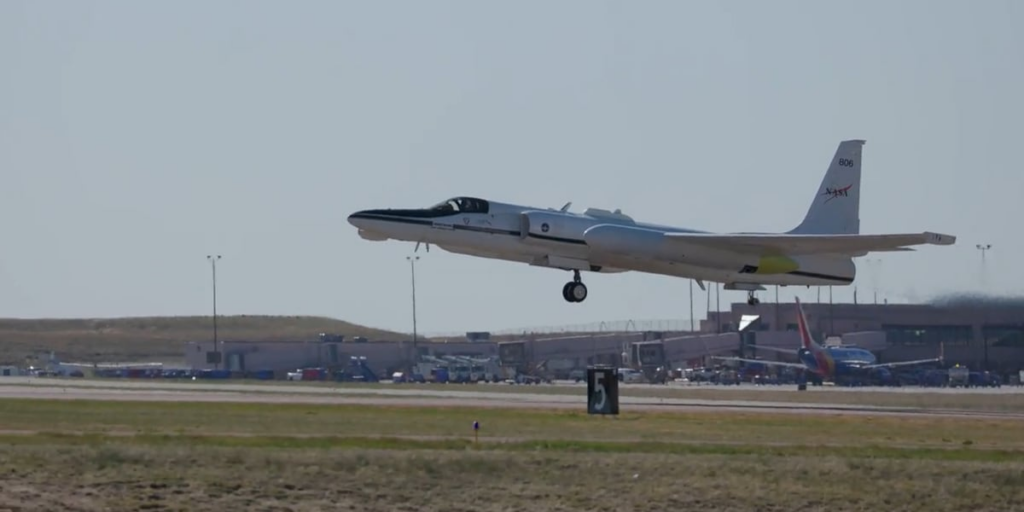
Research planes have been taking off from the Colorado Springs Airport and flying more than 12 miles up, using a special camera that reads how light reflects off the ground from approximately 65,000 to 70,000 feet in the air.
The plane used for the project is a NASA ER‑2 high‑altitude research aircraft, or a civilian variant of the U-2.
“There’s four pilots in the world that fly this for NASA,” NASA research pilot Dean Neeley said. “It takes two pilots each time. One pilot is flying the aircraft. The other one is a safety observer or co-pilot or a wingman driving the chase car that you saw earlier to help back him up because the tasking level gets pretty high.”
The work allows scientists to determine what kinds of rocks and minerals are below. The findings can help with energy resources, water supplies and even landslide risk.
States currently being researched include Colorado, Arizona, California, Idaho, Nevada, New Mexico, Oregon, Wyoming and Utah.
“After about three months, we can analyze the spectra, and we can detect the exact mineralogy. We can see where hot fluids have come through the earth, changed the rock composition, and potentially deposited metals behind with those fluids,” USGS Research Geophysicist Raymond Kokaly said. “So we can see that all when we analyze the data much later.”
Officials said the project is the largest airborne hyperspectral survey ever conducted, with more than one million square kilometers of data being collected across western states.
“We want to collect all of the Western U.S. states. So it’s still another four years to probably accomplish that goal. But as long as we can keep this mission going, we really want to do that,” USGS Research Geophysicist Raymond Kokaly said.
Scientists said they have already mapped more than 400 square miles across the western portion of the U.S.
Kokaly said the partnership between NASA and USGS has been integral to planning and executing the mission.
“We each bring our own specialties, knowledge of the rocks, knowledge of aircraft, knowledge of sensors,” he said. “And we’re combining that together to get the best possible observation of the mineral composition in the United States.”
Copyright 2026 KKTV. All rights reserved.