
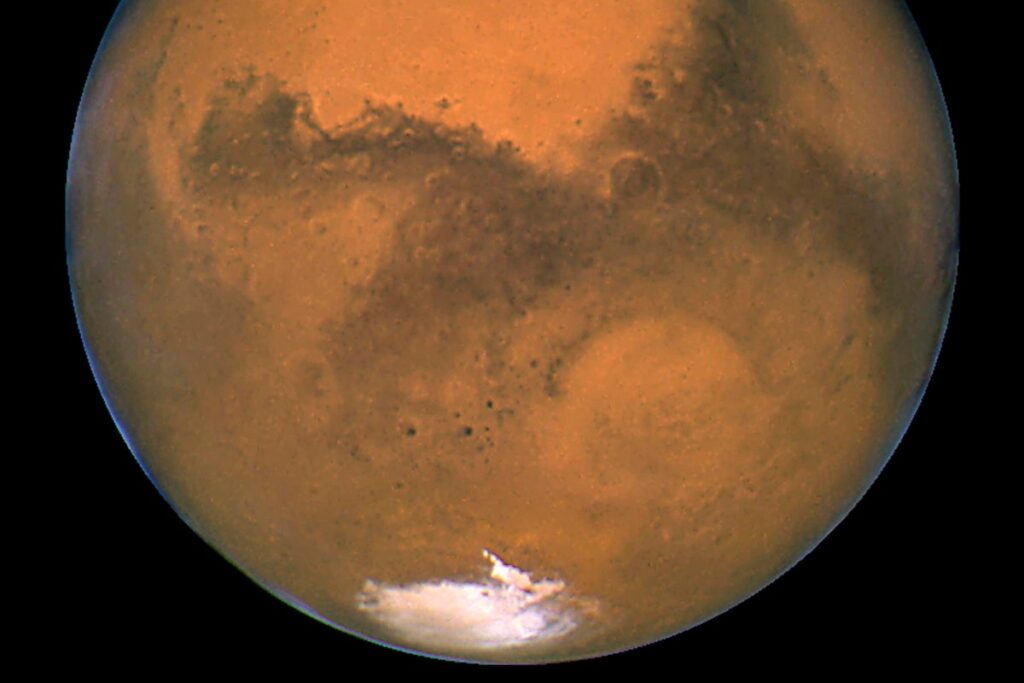
Astronomers have found a shortcut that could shave hundreds of days off a trip to Mars, leveraging a path taken by asteroids.
The distance between the Earth and the red planet changes constantly, depending on orbital position and velocity around the Sun. It’s the smallest when the Earth moves directly between the Sun and the neighbouring planet, a phenomenon that occurs roughly every 26 months and is known as the Mars opposition.
It would take between seven and 10 months to travel this distance even with the fastest spacecraft available.
However the newly discovered corridor, which opens during a close approach between the planets, could cut the total mission time to just 153 days.
When space agencies plan planetary missions, they estimate optimal routes and fuel needs by looking at the trajectory data of planets. But the latest corridor was discovered by looking at orbital data from asteroids.
Astronomers probed whether an asteroid’s path could be used to find hidden shortcuts in space. They particularly looked at the asteroid 2001 CA21, whose predicted path crossed the orbits of both Mars and the Earth.
Researchers looked at the asteroid’s close approach to Mars, a trajectory that could allow a spacecraft to take a more direct path to the planet. They then assessed the Mars opposition from 2027, 2029 and 2031 to see which offered the best conditions for a shorter trip and found that 2031 was the only year when the Earth-Mars geometry aligned with the asteroid’s orbital plane favourably.
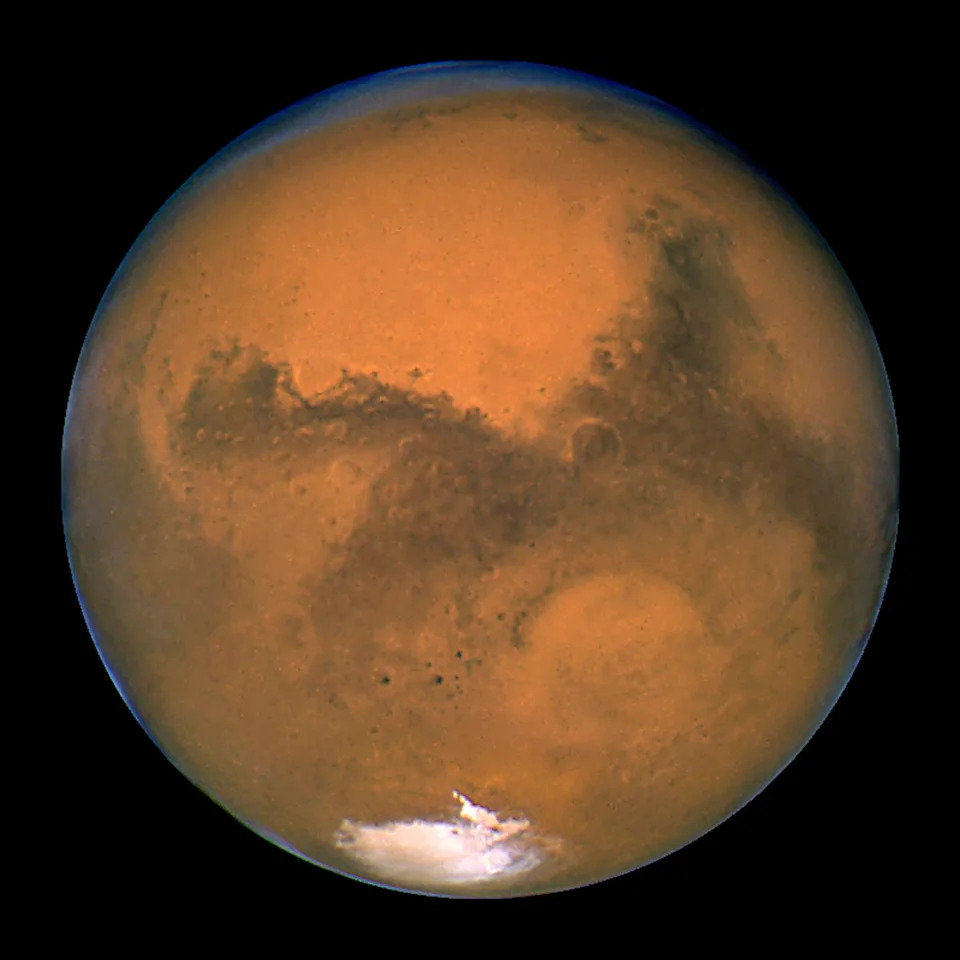
The red planet Mars (AFP via Getty)
“The 2031 Mars opposition supports two complete sub-year round-trip missions consistent with the CA21-anchored plane, illustrating how early small-body orbital data may contribute to the early identification of rapid interplanetary transfer opportunities,” the researchers said in a new study published in the journal Acta Astronautica.
Two quick round-trip paths between the Earth and Mars were identified from the analysis, including a 153-day rapid transfer corridor and a 226-day feasible path.
The finding, according to scientists, offers a new method to identify faster flight paths to other planets that traditional methods may miss.
“This study presents a novel geometric screening methodology for rapid interplanetary mission design,” they wrote.
Researchers hope future studies of the geometries of near-Earth asteroid paths can help in the rapid design of interplanetary missions.