
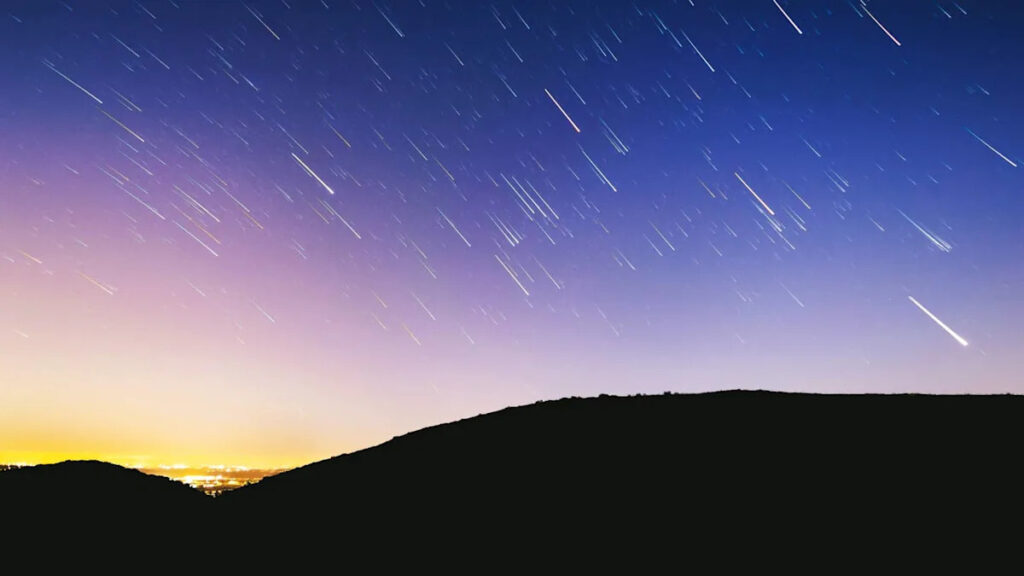
If you haven’t dusted off your stargazing skills in a while, this week is the perfect time to head outside. The Eta Aquariid meteor shower—one of the best meteor displays of the year—peaks May 5 and 6, when Earth passes through a cloud of debris left behind by Halley’s Comet.
This isn’t just any celestial event. The Eta Aquariids rank among the strongest meteor showers of the year, and what makes them particularly special is their origin story. The particles burning up in our atmosphere come from one of the most legendary comets in human history. According to Live Science, Halley’s Comet, which last graced our skies in 1986, left behind a trail of dust and rock as it orbited the sun. Now, Earth is passing through that ancient debris field, creating one of nature’s most reliable light shows, and the phenomenon isn’t expected to occur again until 2061—35 years from now.
What to Expect When You Look Up
For viewers in the Northern Hemisphere, expect to see between 10 and 30 meteors per hour at peak activity, according to the American Meteor Society. Those in southern locations—or lucky enough to be viewing from the Southern Hemisphere—can see up to 60 meteors per hour under ideal conditions. The particles enter Earth’s atmosphere at roughly 40 miles per second, creating fast, bright streaks that seem to radiate from the constellation Aquarius.
Here’s the tricky part, though: the moon apparently isn’t playing nicely this year. A waning gibbous moon that’s 84 percent full will brighten the night sky, potentially washing out the fainter meteors and reducing visibility. But don’t let that discourage you. While Eta Aquariids are viewed as the best from the Southern tropics, it’s still possible to spy them from other places in the world.
Related: 4 Zodiac Signs Will Have Secrets Revealed Under May’s Flower Moon in Scorpio
When and Where to Look
Best time: Just before dawn on May 6, when the moon dips lower toward the western horizon, and the radiant point climbs higher in the eastern sky.
Beat the moon’s glare: Position yourself with a large object, like a tree or building, between you and the moon to block its brightness.
Pick the right spot: A clear, dark location away from city lights will dramatically improve your chances of spotting these cosmic visitors.
Prepare for viewing: Bring a blanket, lie flat on your back, and give your eyes at least 20 to 30 minutes to adjust to the darkness—then look up towards the east or southeast. No telescope needed; these meteors are best viewed with the naked eye.
Don’t worry about missing the peak: The shower extends through the end of May, so if clouds roll in on peak night, you’ll have other opportunities to catch the show.
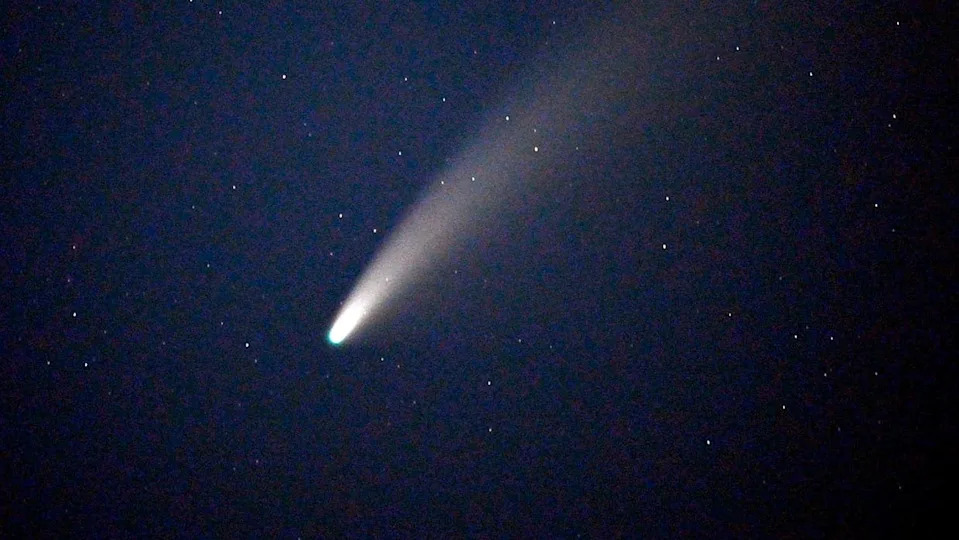
Whether you’re a seasoned skywatcher or just someone who appreciates a little cosmic magic, the Eta Aquariids offer a chance to witness something that connects us directly to history. After all, people watched Halley’s Comet pass by centuries ago, and now we get to celebrate its journey through space in a whole new way.
This story was originally published by Parade on May 5, 2026, where it first appeared in the News section. Add Parade as a Preferred Source by clicking here.