
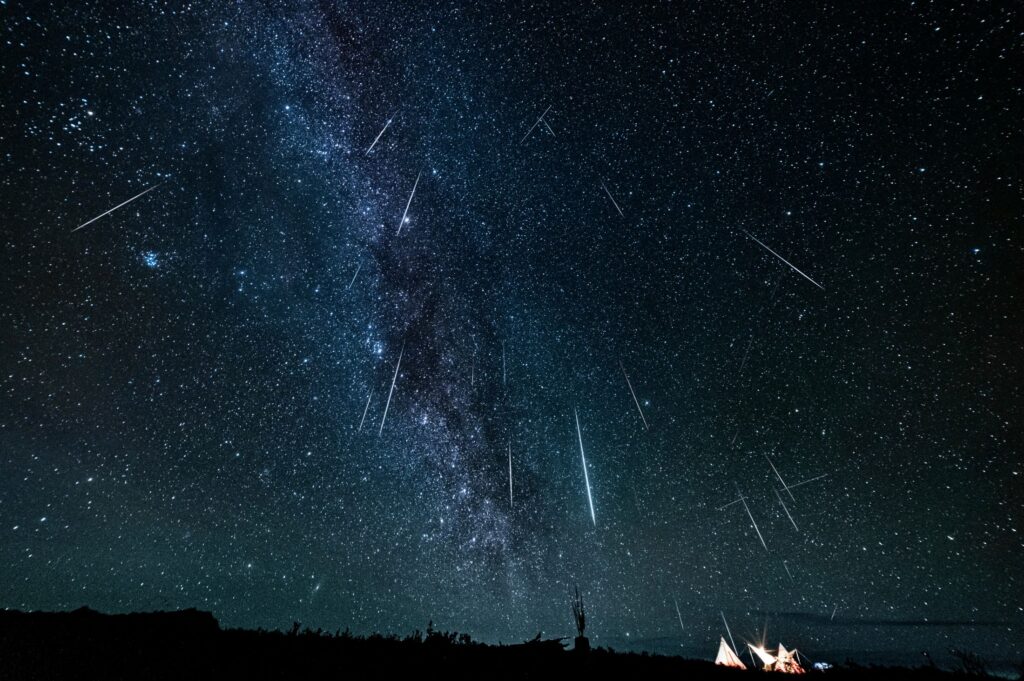
In early May, the night sky will be lit up by one of spring’s most spectacular astronomical events—the Eta Aquariid meteor shower. It will reach its peak on the night of May 5–6, offering stargazers a wonderful opportunity to see the swift “shooting stars.”
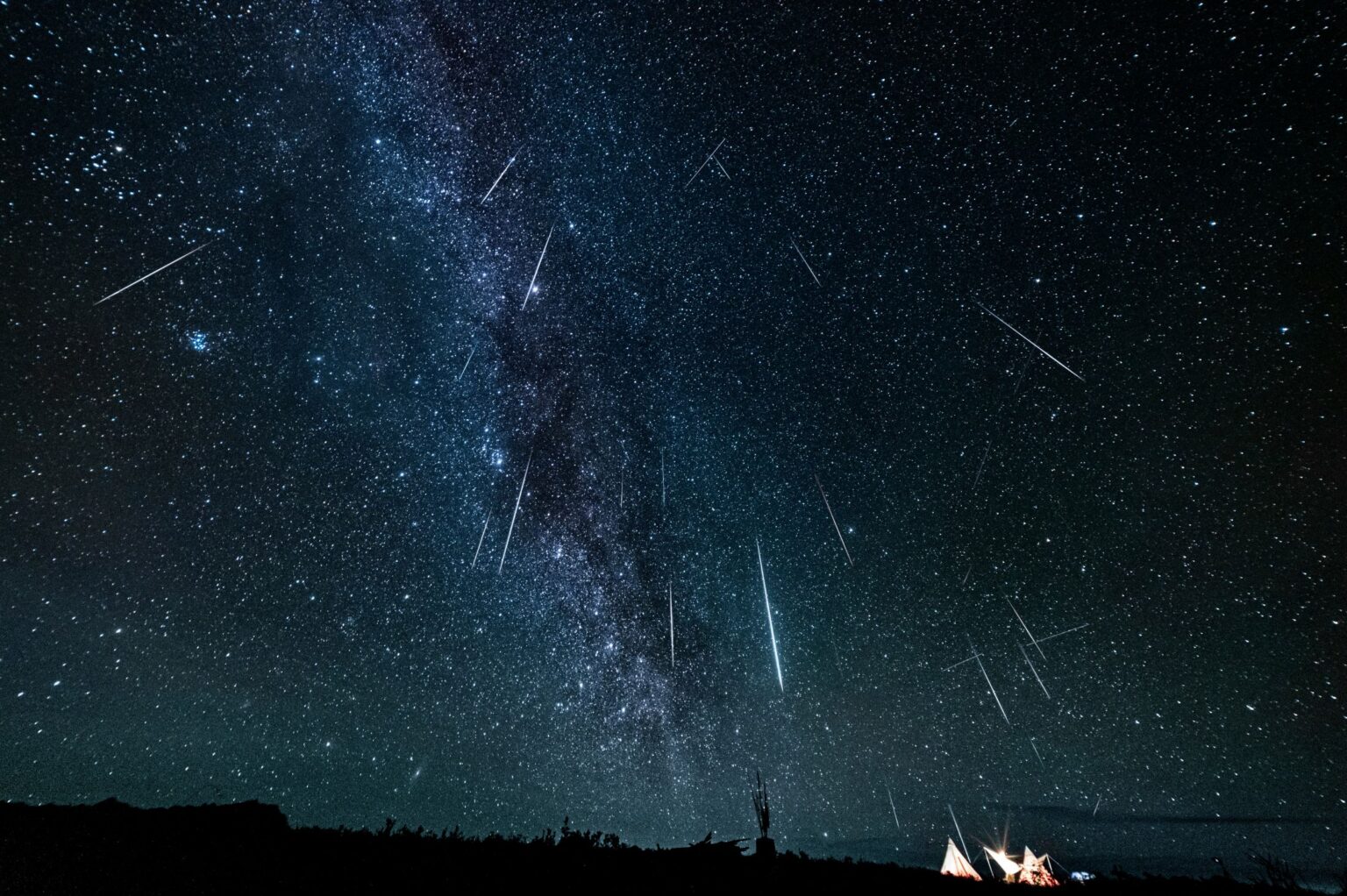 Illustration of a meteor shower. Source: Unsplash
This meteor shower is nothing less than a cosmic greeting from the famous Halley’s Comet. The comet approaches the Sun only once every 76 years. The last time this happened was in 1986, and the next visit is expected in 2061. The comet is currently far beyond Neptune’s orbit. However, it left behind a thick trail of dust. Twice a year, Earth crosses this orbital “path,” and when it does, we see meteor showers: the Orionids in the autumn and the Eta Aquariid in the spring.
Where do “meteor showers” come from?
The meteor shower gets its name from the radiant—an imaginary point in the sky from which the meteors appear to originate. It is located in the constellation Aquarius, not far from the star of the same name, Eta Aquarii. Of course, the star is 168 light-years away from us and serves merely as a visual reference point.
When Earth “crashes” into comet debris at tremendous speed, these tiny particles burn up in the atmosphere. They streak across the sky at speeds exceeding 65 km/s, leaving long, glowing trails in their wake. Occasionally, some of them are even very bright fireballs (bolides), though this is a fairly rare occurrence.
Observation conditions
The meteor shower will be most spectacular for residents of the southern tropics—under ideal conditions with a dark sky, up to 50 meteors per hour can be seen there. In the Northern Hemisphere, the radiant is low on the horizon, so the average intensity is typically 10–30 meteors.
This year, Earth’s natural satellite will somewhat spoil the astronomical spectacle. On the night of the peak, the Moon will be in its waning crescent phase, with 84% of its surface illuminated. Its bright light will “mask” the faint meteors, causing the apparent rate to drop to fewer than 10 per hour.
The best time for viewing is just before dawn on May 6, when the radiant will reach its highest point and the Moon will have set, clearing the sky of excess light. You won’t need any special equipment: just find a sufficiently dark place, let your eyes adjust to the darkness, and enjoy the show. But if you want to capture the event, you should get a good astrophotography camera.
We previously wrote about the Orionids—an annual “greeting” from Halley’s Comet.
According to livescience.com