
The Gael Linn cinema newsreel collection is a treasure trove of footage from the Ireland of the 1950s and 1960s. Some 250 of these short news stories are now available to view on the Irish Film Institute’s website (Amharc Éireann: A View of Ireland – IFI Archive Player) so you can watch gems such as John Huston and Arthur Miller attending the Galway Point to Point in 1960.
There’s footage from the opening of the bubblegum factory in Kilcock in 1959, with men in suits chewing gum in a serious fashion. Children, who would now be in their 70s, are lining up to see Santa in Dublin later the same year while glamorous couples are spinning around the dance floor in the Irish Amateur Ballroom Finals in 1963.
My eye was caught by the story: “The Thing Removed from O’Connell Bridge.” The parasitic shape-shifting alien known as The Thing severely traumatised a generation of children in the 1980s. Was it inspired by something that had appeared in Dublin decades earlier?
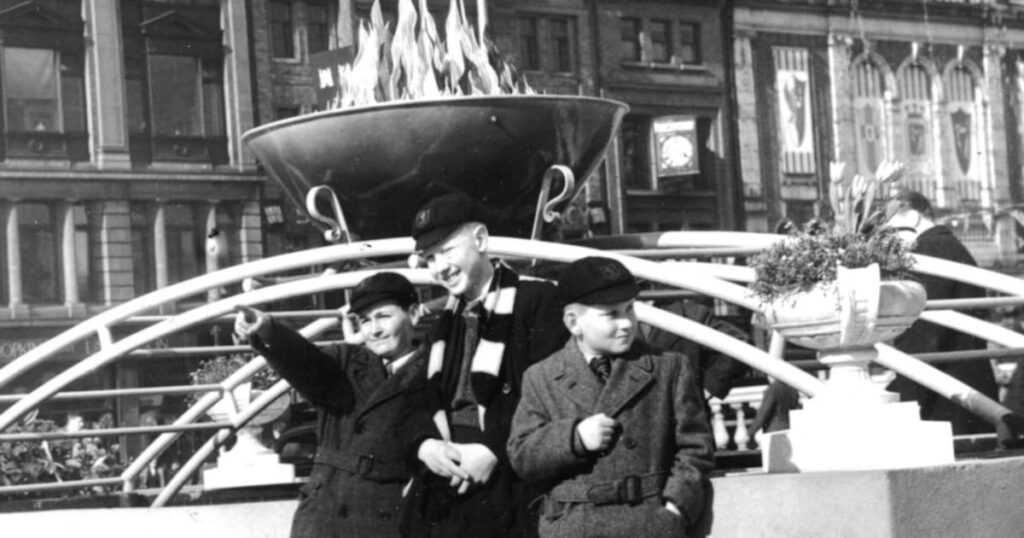
Further investigation revealed that “The Thing”, was the nickname given to the Bowl of Light at some stage during its short tenure on O’Connell Bridge.
When it was unveiled to celebrate the tourism festival An Tóstal on April 3rd, 1953, the Bowl of Light united people as never before. But not in a good way. Like the alien creature it shared its name with, it was universally loathed. The coloured plastic flames in a giant copper bowl of water at first bemused and then angered Dubliners.
On the night of its unveiling, there was a near riot with windows broken on O’Connell St and arrests made. The ponds of water surrounding the bowl were described as horse troughs and the words “monstrosity” and “horror” were used by irate letter writers to this newspaper.
So it seems that Trinity College Dublin student Anthony Wilson did the nation a favour when he engaged in high-jinks a few weeks after the water feature was unveiled. His solicitor later told Dublin District Court that his client had been at “a particularly good party” on the night of April 19th. He arrived with friends to O’Connell Bridge in the early hours and witnesses said they were standing under umbrellas, even though it was not raining, and appeared to be making speeches. According to this newspaper’s court report, “a fair amount of drink had been taken”.
Then the nimble 21-year-old climbed on to the structure, whipped off the coloured plastic flames and flung them into the Liffey. He then took off on foot, with the law in hot pursuit. He didn’t get too far in his dash for freedom and was apprehended on Aston Quay.
[ The odd ‘Bowl of Light’ on O’Connell BridgeOpens in new window ]
Later at the station, he said he had committed the act because he did not like the ornament. He was contrite though and had offered to try to retrieve the plastic flames from the Liffey. The offer was not taken up and the plastic flames were left in their watery grave. The bowl was removed soon after and replaced by flower beds. This created the challenge for Dubliners to come up with a new nickname for what remained, and the tomb of the unknown gurrier was born. Finally, as the Gael Linn newsreel shows, the entire structure was removed by a group of corporation workers in 1964.
But perhaps Dubliners got away lightly with this effort to mark An Tóstal, the doomed event which was put out of its misery in 1958. According to Brian P Kennedy’s book Dreams and Responsibilities, which traces the history of Irish arts policy, in 1951 Pan-American Airways proposed the holding of a national week to encourage visitors to Ireland. It would be held around St Patrick’s Day to generate more air travel at an offpeak time.
A far-sighted idea, indeed, but some of the ways the airline suggested marking the week were less than progressive. Pan Am executives floated the idea of a national park which might be called The Valley of the Fairies or The Home of the Leprechauns, and suggested beauty contests be held to find “a typical Irish colleen”.
Kennedy writes that the minister for industry and commerce Seán Lemass rejected the most Hollywood-like proposals put forward but went ahead with An Tóstal in 1953. Retired major general Hugo MacNeill was appointed as organiser of the festival and was on O’Connell Bridge for the grand unveiling of the Bowl of Light. It is not clear where he was when people started to pull flowers from their decorative pots to hurl at gardaí. History is silent on the type of flowers involved but the fact that MacNeill’s middle name was Hyacinth did not go unremarked.
“All in all, An Tóstal attracted more criticism than tourists,” Kennedy wrote.
Just like the Bowl of Light.