

News about Alien: Isolation 2 is finally on the radar again, but alongside a short announcement trailer comes one of the most consequential technical decisions Creative Assembly could have made for a sequel. After over a decade of silence, the studio confirmed via a job listing that the long-awaited sequel is being built on a new engine. Indeed, the sequel to Alien: Isolation will be developed on Unreal Engine 5, departing from the bespoke Cathode Engine that defined its look and feel.
Though that mention may seem strange to the uninitiated, that shift (originally discovered by GameObserver) is no minor footnote, but a foundational change that has the capacity to reshape everything from how the game renders light to how it handles its infamous AI. For a game so specifically built on complex systems of claustrophobia, dread, and a razor-sharp sense of atmosphere, the question of whether or not UE5 is the right tool for the job actually matters enormously.

Related
Information about a new Aliens video game currently in development leaks online, giving fans of the sci-fi franchise something to look forward to.
Why Alien: Isolation’s Engine Change Is Such a Big Deal
When Alien: Isolation launched in 2014, it was a bit of a revelation for both the genre and the mercurial Alien franchise itself. It wasn’t a perfect game, but it was a thematically pitch-perfect survival horror game that dared to slow down and trust its atmosphere to do most of the heavy lifting. That said, much of what made it so viscerally effective was inseparable from Cathode, the proprietary engine developer Creative Assembly built specifically for the game.
It sounds like techno-babble listed all at once, but the real-time radiosity lighting system, deferred rendering pipeline, and bespoke node-based scripting gave the developers granular, film-industry-level control over every element of the game, from every extremely common, suspiciously shaped shadow to every flicker of fluorescent ship light. Despite being developed for a totally different property, Cathode was a tailored instrument, so specifically apt for the aesthetic of Ridley Scott’s 1979 film that Creative Assembly hired lighting technicians from the film industry to work on it.
The Cathode Engine Certainly Wasn’t Perfect

That said, for all of its brilliance, Cathode wasn’t perfect and has undoubtedly become more of a liability with each passing year, leading some to even call for a remaster of Alien: Isolation. Built on a heavily modified version of an engine from 2008, it carried legacy architectural decisions that limited scale across platforms and contributed to several technical inconsistencies, especially for the PC port. More pointedly, it was a single-use engine, in this case—built, deployed, and effectively abandoned—leaving it wholly unsuited for modern hardware, modern workflows, or the ambitions of a AAA sequel in 2026.
What Unreal Engine 5 Brings to the Table
It’s true that to move away from Cathode is to surrender a proven toolkit whose strengths and limitations the studio understood, but UE5 is definitely not without merit. In particular, for a game like Alien: Isolation 2, UE5 features like Lumen (Epic’s fully dynamic global illumination system) could be a game-changer. Where Cathode’s radiosity lightmaps required intensive baking passes and caused disruption whenever environments were redesigned, Lumen recalculates lighting in real time, and if Alien: Isolation 2’s reveal trailer is anything to go by, it’s going to look fantastic in frame.
Additionally, UE5’s virtualized geometry system Nanite allows for film-quality assets without traditional polygon-budget penalties; that means the corridors of Alien: Isolation 2 could achieve a level of surface detail that would have been impossible before.
Despite how neatly those features fit with a franchise like Alien: Isolation, Unreal Engine 5 nonetheless carries real risks—risks the gaming community has loudly noted since its widespread adoption. For example, traversal stuttering (the jarring hitches that occur when UE5 games stream in new content) has been a persistent problem across multiple high-profile releases, one that even Epic has struggled to resolve in its own titles. For a game whose tension depends on unbroken immersion, a stutter at the wrong moment could shatter exactly the sort of sustained dread that made the original unforgettable when it actually worked.
The Full Picture: Weighing the Trade-offs
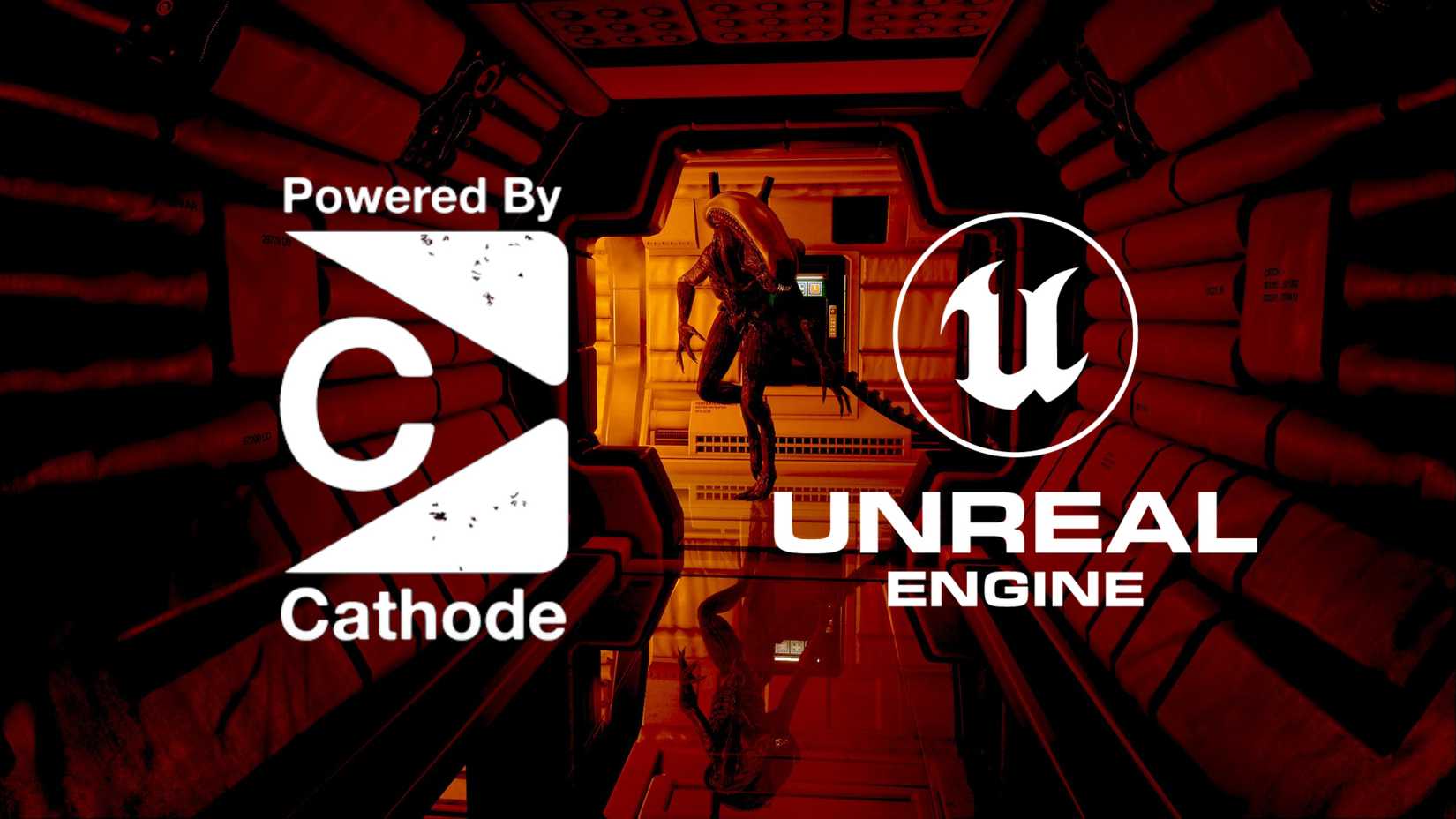
With all that said, the reality is that the shift to UE5 is a simple fact of viability; the Cathode engine has had no meaningful development since 2014. It was never updated for modern platforms, so the decision is arguably less a luxury (akin to Halo Studios move over to UE5) and more a necessity. Building a AAA sequel in 2026 on an engine that’s been shelved for over a decade would be an entirely different (and far more daunting) kind of challenge. Nonetheless, it’s fun to see how Unreal Engine 5 might measure up.
Pros of Unreal Engine 5
Lumen’s fully dynamic global illumination enables real-time, film-quality lighting without expensive baking passes — a direct upgrade to what Cathode’s radiosity system was attempting.
Nanite’s levels of surface detail across environments would be better than ever, without traditional performance trade-offs from polygon budgets.
Broader industry adoption means there’s a larger developer talent pool to develop and sustain long-term maintenance of the game.
UE5 can significantly reduce load times and support larger, more varied environments than Cathode could handle.
Epic’s ongoing engine updates mean the technology will continue to improve.
Widespread engine use also means modding communities and accessibility tools (such as photo mode unlockers) are likely to appear quickly at launch.
Cons of Unreal Engine 5
Bugs like traversal stuttering or shader compilation stutters remain a persistent and largely unsolved problem in UE5 titles.
Lumen and Nanite are computationally expensive, introducing optimization drains like GPU overdraw that can undermine performance.
The bespoke nature of Cathode — tooled specifically around the Alien aesthetic — gave the original a distinctive visual identity that a multipurpose engine may struggle to replicate.
The UE5 “look” has become increasingly recognizable across titles, risking a homogenization of visual style that could soften Alien: Isolation 2’s distinctiveness.
Creative Assembly has not shipped a major title on UE5, meaning there’s a learning curve on an unfamiliar engine.
Reasons to Keep the Faith
Beyond all this, there is an additional, meaningful cause for encouragement in terms of the personnel surrounding the sequel. Michael Bailey, who served as engine lead on the original Alien: Isolation, has returned to Creative Assembly. Someone like him likely understood Cathode’s strengths at the deepest possible level, so his presence suggests the studio is actively working to translate the technical instincts that made the first game exceptional into the new engine’s framework, and place Alien: Isolation 2 among the list of UE5 games that actually run well.
Ultimately, the concerns surrounding UE5 are legitimate, but the history here speaks for itself. Creative Assembly made arguably not only the greatest Alien game ever made, but also one of the finest horror experiences of that era, one that has only grown in reputation since. That track record doesn’t get erased by an engine change, so as long as these developers—who’ve already proven they can treat the Alien license with the seriousness and craft it deserves—are full steam ahead with this move, it seems alright to trust the process.

Released
October 7, 2014
ESRB
M for Mature: Blood, Strong Language, Violence