
Sarkar, E. & Chakraborty, P. Allelopathic effect of Amaranthus spinosus Linn. on growth of rice and mustard. J. Trop. Agric. 53, 139–148 (2016).
Steckel, L. E. Pigweeds in Tennessee (Univeristy of Tennesse, 2004).
Kaya, M. & Uygur, F. N. A new record for the flora of Turkey Amaranthus spinosus L. (Amaranthaceae). Turk. J. Bot. 24, 359–360 (2000).
Xian, S. Amaranthus Linnaeus. Flora China 5, 417–421 (2003).
Ganjare, A. & Raut, N. Nutritional and medicinal potential of Amaranthus spinosus. J. Pharmacogn. Phytochem. 8, 3149–3156 (2019).
Taia, W. K., Shehata, A. A., Elshamy, E. M. & Ibrahim, M. M. Biosystematic studies for some Egyptian Amaranthus L. taxa and their significance in their identification. Taeckholmia 40, 85–99 (2020).
Edwards, M. E. Spiny amaranth control and aminopyralid persistence in Kentucky pastures. (2010).
Pratt, D. B., Owen, M. D. K., Clark, L. G. & Gardner, A. Identification of the weedy pigweeds and waterhemps of Iowa (Iowa State University, University Extension, 1999).
Committee, F. & of, N. A. E. Magnoliophyta: Cucurbitaceae to Droserceae (Oxford University Press, 2015).
Baral, M., Datta, A., Chakraborty, S. & Chakraborty, P. Pharmacognostic studies on stem and leaves of Amaranthus spinosus Linn. Int. J. Appl. Biol. Pharm. Tech. 2, 41–47 (2011).
Wang, C., Liu, J., Xiao, H., Zhou, J. & Du, D. Floristic characteristics of alien invasive seed plant species in China. Acad. Bras. Cienc. 88, 1791–1797 (2016).
Costea, M., Weaver, S. E. & Tardif, F. J. The biology of Canadian weeds. 130. Amaranthus retroflexus L., A. powellii S. Watson and A. hybridus L. Can. J. Plant Sci. 84, 631–668 (2004).
Feng, J. & Zhu, Y. Alien invasive plants in China: Risk assessment and spatial patterns. Biodivers. Conserv. 19, 3489–3497 (2010).
Bajwa, A. A. Sustainable weed management in conservation agriculture. Crop Prot. 65, 105–113 (2014).
Bajwa, A. A., Mahajan, G. & Chauhan, B. S. Nonconventional weed management strategies for modern agriculture. Weed Sci 63, 723–747 (2015).
IUCN. The IUCN Red List of Threatened Species. Version 2025-1. (2025). https://www.iucnredlist.org
Kirtikar, K. R. & Basu, B. D. Indian Medicinal Plants Edn 2, Vol. Vol. 1, 649–651 (Int. B. Distrib., 2005).
Kumar, C. N. M., Guse, W. E. & Larsen, F. E. Propagation of plantsfrom specialized structures. A Pacific Northwest extensionpublication, Washington State University, Oregon State Universityand University of Idaho. p. 12. (2010).
Kusumaningtyas, R., Kobayashi, S. & Takeda, S. Mixed species gardens in Java and the transmigration areas of Sumatra, Indonesia: A comparison. J. Trop. Agric. 44, 15–22 (2007).
Vardhana, H. In vitro antibacterial activity of Amaranthus spinosus root extracts. Pharmacophore 2, 229–234 (2011).
Hakizimana, P., Maniragaba, A. & Nshimiyimana, F. X. Assessment of heavy metals in Amaranthus spinosus, Kigali, Rwanda. Int J Adv Res Publ 3, 7–12 (2019).
Gupta, K. & Wagle, D. S. Nutritional and antinutritional factors of green leafy vegetables. J. Agric. Food Chem. 36, 472–474 (1988).
Thompson, H. C. & Kelly, W. C. 1990. Vegetable Crops., in: 5th Edn. McGraw Hill Publishing Company Ltd., New Delhi. (1990).
Gonor, K. V., Pogozheva, A. V., Derbeneva, S. A., Trushina, E. N. & Mustafina, O. K. The influence of a diet with including amaranth oil on antioxidant and immune status in patients with ischemic heart disease and hyperlipoproteidemia. Vopr. Pitan. 75, 30–33 (2006).
Olajide, O. A., Ogunleye, B. R. & Erinle, T. O. Anti-inflammatory properties of Amaranthus spinosus leaf extract. Pharm. Biol. 42, 521–525 (2004).
Mamuru, S. A., Kaigamma, I. & Khan, M. E. Preliminary phytochemical screening and GC-MS analysis of aqueous and ethanolic extracts of Amaranthus spinosus leaves. J. Nat. Prod. Resour. https://doi.org/10.30799/jnpr.071.19050201 (2019).
El-Beheiry, M., Hosni, H. A., Sharaf El-Din, A., Shaltout, S. K. & Ahmed, D. A. Updating the checklist of the alien flora in Egypt. Taeckholmia 40, 41–65 (2020).
Boulos, L. Flora of Egypt Checklist – Revised Annotated Edition (Al Hadara Publishing, 2009).
Täckholm, V. Students’ Flora of Egypt 2nd ed. (Cairo University press, 1974).
Ellenberg, D. & Mueller-Dombois, D. Aims and methods of vegetation ecology Vol. 547 (Wiley, 1974).
Mahgoub, A. M. Measuring ecological preference for growth of the most influential weeds in weed community structure associated with agronomic and horticultural crops in Nile Delta, Egypt. (2020). https://doi.org/10.21203/rs.3.rs-30792/v1
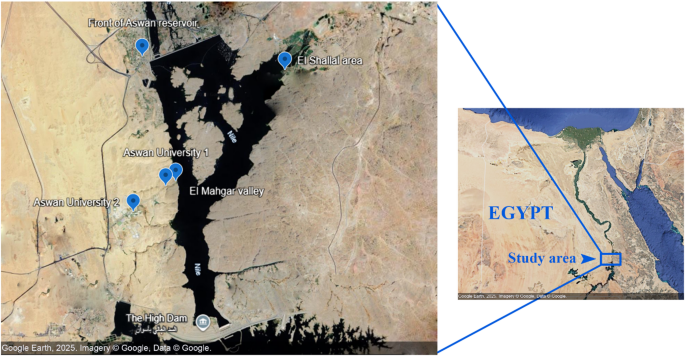
Badry, M. O., Radwan, T. A. A., Ayed, F. A. A. & Sheded, M. G. Floristic diversity of riparian plants in Aswan Reservoir at the Extreme South of the River Nile, Upper Egypt: A closed ecological system. Biosci. Biotechnol. Res. Asia 16, 595–609 (2019).
Ayed, F. A. Updating and characterization the plant list of islands in the reach one region of the Nile River, Egypt. Ph. D. Thesis, Aswan University, Egypt, PP. 215. (2025).
Boulos, L. Flora of Egypt, Volume 1: Azollaceae–Oxalidaceae 419 (Al Hadara Publishing, 1999).
Boulos, L. Flora of Egypt, Geraniaceae–Boraginaceae Vol. Vol. 2, 352 (Al Hadara Publishing, 2000).
Boulos, L. Flora of Egypt, Volume 3: Verbenaceae–Compositae 373 (Al Hadara Publishing, 2002).
Raunkiaer, C. Plant life forms 104 (Clarendon Press, 1937).
Bradley, S. Propagation basics 128 (Sterling Pub. Co. Inc., 2002).
Bryant, G. Plant Propagation A to Z: Growing Plants for Free 224 (Firefly Books, 2006).
Kumar, C. N. M. Propagation of plants by grafting and budding. In Apacific northwest extension publication 20 (Oregon State University and University of Idaho, 2011).
Shaltout, K. H., El-Din, S., Ahmed, A. & D.A Plant Life in Nile Delta pp. 231 (Tanta University, 2010).
Täckholm, V. Students’ flora of Egypt pp. 649 (Anglo-Egyption Bookshop, 1956).
Zohary, M. Flora Palaestina 346 (The Israel Academy of Science and Humanities, Israel. Jerusalem Academic Press, 1966).
Zohary, M. Flora Palaestina: part 2 (Platanaceae – Umbelliferae) 489 (The Israel Academy of Science and Humanities, Jerusalem Academic Press, 1972).
Feinbrun-Dothan, N. Flora Palaestina: part 3 (Ericaceae – Compositae) 481 (The Israel Academy of Science and Humanities, Jerusalem Academic Press, 1978).
Seif El-Nasr, M. & Bidak, L. Conservation and sustainable use of medicinal plants project: national survey, north western coastal region. First Quarterly Report. Mubarak City for Scientific Reserch and Technology Applications. p. 178. (2005).
Ali, A. H. Ecology and flora of plants of the Nile Islands in the area between Aswan and Esna. M.Sc. Thesis, Aswan University, Egypt, 221 pp. (2014).
Ali, A. H., Ayed, F. A., Atitoa, E. & El-Sayeda, M. A. Floristic diversity in hydro-closed ecosystem (lake between the two Dams, Aswan, 2020).
Hamada, F. A. Studies on the Riverian Vegetation of some Islands at Aswan Governorate, Egypt. (2004).
Springuel, I., El-Hadidi, N. M. & Ali, M. M. Vegetation gradient on the shores of Lake Nasser in Egypt. Vegetatio 94, 15–23 (1991).
Cervantes, E., Martín, J. J. & Saadaoui, E. Updated methods for seed shape analysis. Scientifica 2016(1), 5691825. https://doi.org/10.1155/2016/5691825 (2016).
Naz, S. et al. Application of scanning electron microscopy unraveling seed micromorphological characteristics in laticifers of family Apocynaceae and subfamily Asclepiadoideae. Kuwait J. Sci. 100477. https://doi.org/10.1016/j.kjs.2025.100477 (2025).
Williams, V. & Twine, S. Flame photometric method for sodium, potassium and calcium. Mod. Methods Plant. Anal. 2, 3–5 (1960).
Johnson, C. M. & Ulrich, A. Analytical methods for use in plant analysis (Bulletin of California Agricultural Experiment station, 1959).
Jackson, M. L. Soil Chemical Analysis Englewood Cliffs (NT Prentice Hall Inc, 1958).
Murphy, J. & Riley, J. P. A modified single solution method for the determination of phosphate in natural waters. Anal. Chim. Acta 27, 31–36 (1962).
Eaton, A. D., Clesceri, L. S., Franson, M. A. H., Rice, E. W. & Greenberg, A. E. 21 Standard methods for the examination of water & waste water. (2005).
Jackson, M. L. Soil chemical analysis 498 (Prentice–Hall of India, Private Limited, 1977).
Kilmer, V. J. & Alexander, L. T. Methods of making mechanical analysis of soil. Soils Sci. 86, 15–24 (1949).
Piper, C. S. Mechanical analysis. Soil and plant analysis, 368. (1947).
Allen, E., Grimshaw, H. M. & Rowland, A. P. Chemical Analysis in: Methods in plant Ecology. P. D. Moore and S. B. Chapman (eds.), 284–344. (1986).
McCune, B. & Mefford, M. J. PC-ORD: Multivariate Analysis of Ecological Data, Version 6.22 (MjM Software Design, 2011).
Minitab, L. L. C. Minitab. (2019). Retrieved from https://www.minitab.com
Abbas, A. M. et al. Vegetation analysis and environmental relationships of riverain plants in the Aswan Reservoir. Egypt. Plants. 10 (12), 2712. https://doi.org/10.3390/plants (2021).
Shaheen, A. M. Flora of date palm orchards in Egyptian Nubia. In Proc. 2nd Int. Conf. Biol. Sci (pp. 31–45). (2002).
Abd El-Ghani, M. M. & Fawzy, A. M. Plant diversity around springs and wells in five oases of the Western Desert, Egypt. Int. J. Agric. Biol. 8(2), 249–255 (2006).
Quézel, P. Analysis of the flora of Mediterranean and Saharan Africa. Ann. Mo. Bot. Gard. https://doi.org/10.2307/2398860 (1978).
Kassas, M. Ecological consequences of water development projects. and following Discussion) in The Environmental Future (Ed. Polunin, Nicholas, qv), pp.215 – 35. (1972).
Hamed, S. T., Sheded, M. G. & Badry, M. O. Floristic Composition of Some Riverian Islands at Qena Governorate-Egypt, in: 2nd International Conference,Minia Univ. Egypt. J. Bot., Minia Univ., pp. 299–322. (2012).
Shaltout, K. H. & Al-Sodany, M. Y. Vegetation analysis of Burullus Wetland: A RAMSAR site in Egypt. Wetlands Ecol. Manage. 16, 421–439 (2008).
Abd El-Ghani, M. M., Soliman, A. T., Hamdy, R. & Bennoba, E. Weed flora in the reclaimed lands along the northern sector of the Nile Valley in Egypt. Turk. J. Bot. 37, 464–488 (2013).
Nilsson, C., Ekblad, A., Gradfjell, M. & Cralberg, B. Long term effects of river regulation on river margin vegetation. J. Appl. Ecol. 28, 963–976 (1991).
Hassib, M. Distribution of plant communities in Egypt. Bull. Fac. Sci. Fouad I Univ. 29, 59–261 (1951).
Amer, W., Soliman, A. & Hassan, W. Floristic composition of Nile islands in Middle Egypt with special reference to the species migration route. J. Am. Sci. 11, 14–23 (2015).
Abd El-Ghani, M. M., Bornkamm, R., El-Sawaf, N. & Turkey, H. Plant species distribution and spatial habitat heterogeneity in the landscape of urbanizing desert ecosystem of Egypt. Urban Ecosyst. 14, 585–616 (2011).
Jog, S. K. et al. Can land use indicate wetland floristic quality and taxonomic distinctness?. Ecol. Indic. 78, 331–339 (2017).
Gabriel, S. 30% of all species lost by 2050 (BBC News, 2007).
Ahmed, D. A., Shaltout, K., Slima, D. F. & El-Masry, S. Threats affecting the distribution of Lygeum spartum Loefl. ex L. and its associated species in the Western Mediterranean desert of Egypt: Perspectives of conservation. J. Nat. Conserv. 72, 126351. https://doi.org/10.1016/j.jnc.2023.126351 (2023).
Bedair, H., Shaltout, K., Ahmed, D., Sharaf El-Din, A. & El-Fahar, R. Characterization of the wild trees and shrubs in the Egyptian Flora. Egypt. J. Bot. 60(1), 147–168 (2020).
Yasien, A. A. Assessing the impact of anthropogenic activities on the ecological quality of the Nile islands using remote sensing. MSc. Thesis. Faculty of Science, Aswan University, Egypt, p. 186. (2024).
Waterhouse, D. F. The major arthropod pests and weeds of agriculture in Southeast Asia: distribution, importance and origin. (1993).
McMullen, C. K. Flowering plants of the Galápagos (Cornell University Press, 1999).
Lazarides, M., Cowley, K. & Hohnen, P. CSIRO handbook of Australian weeds (CSIRO publishing, 1997).
Rahman, I. U. et al. Role of multivariate approaches in floristic diversity of Manoor Valley (Himalayan Region), Pakistan. Appl. Ecol. Environ. Res. 17, 1475–1498. https://doi.org/10.15666/aeer/1702_14751498 (2019).
Mashaly, I. A., El-Habashy, I. E., El-Halawany, E. F. & Omar, G. Habitat and plant communities in the Nile Delta of Egypt II. Irrigation and drainage canal bank habitat. Pak. J. Biol. Sci. 12(12), 885–895 (2009).
Mashaly, I. A., El-Halawany, E. F. & Omar, G. Vegetation analysis along irrigation and drain canals in Damietta Province, Egypt. Online Jour. Biol. Sci. 1(12), 1183–1189 (2001).
Shaheen, A. M., Sheded, M. G., Hamed, I. & Hamada, F. A. Botanical diversity of the flora of some islands in the Egyptian nubia. In: Proceeding of the First International Conference on Strategy of the Egyptian Herbaria. Journal of the Egyptian Botanical Society, Giza, Egypt, pp. 161–182. (2004).
Sheded, M., Hamed, S. & Badry, M. Vegetation analysis of six riverian islands in hyper-arid environments at Qena Governorate (Upper Egypt). Acta Bot. Hung. 56(3–4), 409–431 (2014).
Ali, M. M., Springuel, I. V. & Abdel-Fareid, I. B. Factors affecting aquatic macrophytes in irrigation and drainage of sugar cane fields in Upper Egypt. Bull. Fac. Sci. Assiut Univ. 32, 133–149 (2003).
Ahn, E. et al. A genome-wide association study of seed morphology-related traits in sorghum mini-core and Senegalese lines. Crops 4(2), 156–171. https://doi.org/10.3390/crops4020012 (2024).
Brenner, D. M. et al. Genetic resources and breeding of Amaranthus. Plant Breed. Rev. 19, 227–285 (2000).
Segura-Nieto, M. et al. Characterization of amaranth (Amaranthus hypochondriacus L.) seed proteins. J. Agric. Food Chem. 40, 1553–1558 (1992).
Billah, A., Hussain, M. M., Dastagir, M. G., Ismail, M. & Quader, A. Isolation of α-spinasterol from Amaranthus spinosus stems. Bol. Latinoam. Caribe Plantas Med. Aromat. 12, 15–17 (2013).
Franssen, A. S., Skinner, D. Z., Al-Khatib, K. & Horak, M. J. Pollen morphological differences in Amaranthus species and interspecific hybrids. Weed Sci. 49, 732–737 (2001).
Abu Taiab, M. J. et al. Analgesic activity of extracts of the whole plant of Amaranthus spinosus Linn. Int. J. Drug Dev. Res. 3, 189–193 (2011).
Mitra, P. K., Ghosh, D., Ghosh, T. & Mitra, P. Anti-peptic ulcer activity of the leaves of Amaranthus spinosus L. Rats. Mint J. Pharm. Med. Sci. 52–53. (2013).
Mishra, S. B., Verma, A., Mukerjee, A. & Vijayakumar, M. Amaranthus spinosus L.(Amaranthaceae) leaf extract attenuates streptozotocin-nicotinamide induced diabetes and oxidative stress in albino rats: A histopathological analysis. Asian Pac. J. Trop. Biomed. 2, S1647–S1652 (2012).
Kumar, R. P., Jindal, S., Gupta, N. & Rana, R. An inside review of Amaranthus spinosus Linn: A potential medicinal plant of India. Int. J. Res. Pharm. Chem 4, 643–653 (2014).
Chaudhary, M. A. et al. Evaluation of gut modulatory and bronchodilator activities of Amaranthus spinosus Linn. BMC Complement. Altern. Med. 12, 1–11 (2012).
Sukhorukov, A. P., Léger, J. F. & Chambouleyron, M. Two new species alien to the flora of Morocco: Amaranthus spinosus (Amaranthaceae) and Cardamine occulta (Brassicaceae). Flora Mediterr. 33, 31–38. https://doi.org/10.7320/FlMedit33.031 (2023).
Bojian, B., Clemants, S. E. & Borsch, T. : Amaranthus L. – Pp. 415–429 in: Wu, Z. Y., Raven P. H. & Hong, D. Y. (eds), Flora of China, 5. – Beijing & St. Louis (2003).
Feinbrun–Dothan, N. Flora Palaestina: part 4 (Alismataceae – Orchidaceae). 462 (The Israel Academy of Science and Humanities, Jerusalem Academic Press, 1986).
Holm, L., Doll, J., Holm, E., Pancho, J. V. & Herberger, J. P. World weeds: natural histories and distribution (Wiley, 1997).
http://www.itis.gov/servlet/SingleRpt/SingleRpt [WWW Document], n.d.
Kumar, A. et al. Comparative in vitro anthelmintic activity of three plants from the Amaranthaceae family. Arch. Biol. Sci. 62, 185–189 (2010).
Pal, M. Evolution and improvement of cultivated amaranths. III. Amaranthus spinosus-dubius complex. Genetica 43, 106–118 (1972).
POWO. Plants of the World Online. Facilitated by the Royal Botanic Gardens, Kew. Published on the Internet at (2053). http://www.plantsoftheworldonline.org/ (accessed 20 February 2025).
Sauer, J. Recent migration and evolution of the dioecious amaranths. Evolution https://doi.org/10.1111/j.1558-5646.1957.tb02872.x (1957).
Shaltout, K. H. & Al–Sodany, Y. M. Phytoecology of Omayed site (MedWetCoast Project, for Egyptian Environmental Affairs Agency, 2002). pp.89.
Singh, A. B. & Dahiya, P. Antigenic and allergenic properties of Amaranthus spinosus, a commonly growing weed in India. Ann. Agric. Environ. Med. 9(2), 147–151 (2002).
Sukhorukov, A. P., Kushunina, M., Reinhardt, C. F. & Vorster, B. J. First records of Amaranthus palmeri, a new emerging weed in southern Africa with further notes on other poorly known alien amaranths in the continent. Bioinvasions Rec. 10(1), 1–9. https://doi.org/10.3391/bir.2021.10.1.01 (2021).
WFO. World Flora Online Plant List. Available online at (2025). http://www.wfoplantlist.org (accessed February 2025).