
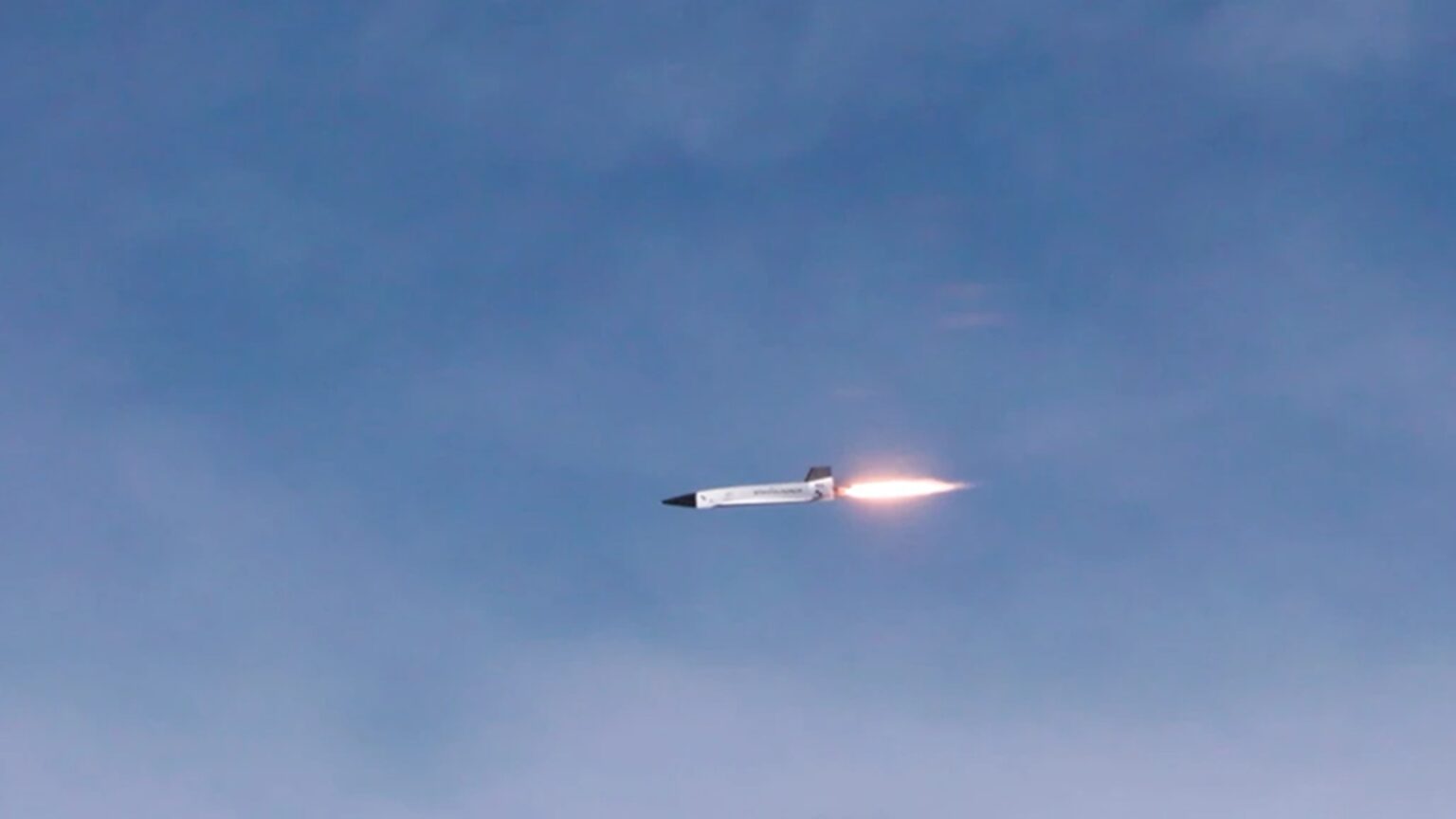
A US aerospace and defense company has taken a huge step towards operational hypersonic systems after recently completing a total of 10 consecutive flights with a reusable liquid rocket engine.
Colorado-based Ursa Major offers flight-proven capabilities for hypersonics, solid rocket motors, space mobility, and launch. And its Hadley engine has now flown 10 times, several of which at sustained hypersonic speeds with Stratolaunch, a private US aerospace firm.
As per Ursa Major representatives, the achievement shows not only performance, but also reusability, durability, and rapid turnaround, which are essential for real-world deployment.
“These flights aren’t demonstrations; they’re operational test bed missions,” Chris Spagnoletti, Ursa Major CEO, said. “Ten successful flights is proof that hypersonic capability is here.”
Reaching a milestone
Hypersonic systems are defined as vehicles capable of traveling at speeds above Mach 5, or five times the speed of sound (767 miles per hour). Yet, they have long been limited by challenges including cost, complexity, and single-use hardware.
To address the challenge, Ursa Major aims to normalize repeated use, which could significantly reduce per-flight costs and increase flight rates. “Across Ursa Major, we design and build to fly, refly, and scale,” Spagnoletti pointed out. “That’s how we increase flight cadence, drive down cost, and deliver real systems to the field faster, giving the warfighter capability they can count on, when it matters.”
Several of the recent missions were reportedly carried out using engines that had already been used before. This proved that essential components can survive the extreme thermal and mechanical stresses of hypersonic flights.
The company said the Hadley Engine is a flight-proven liquid oxygen (LOX)-based propulsion system made for hypersonic applications and space launch. “Hadley is Ursa Major’s foundational engine that has already flown hypersonic several times,” Spagnoletti continued.
The engine is produced with 80 percent additive manufacturing. It is additionally flexible and scalable. This enabled rapid iteration and faster progression to testing and flight. It also lets the engineers continuously improve its performance.
From prototype to flight
Designed for hypersonic and small launch use, the Hadley engine delivers 5,000 pounds-force (lbf) of thrust at sea level and up to 6,500 lbf in vacuum. It runs on liquid oxygen (LOX) and kerosene using an oxygen-rich staged combustion cycle for exceptional performance.
In earlier versions, it needed custom development, leading to longer lead times. Now, it is the first US-designed propulsion engine of its kind to achieve sustained hypersonic flight and return, flying with Stratolaunch’s Talon-A vehicle.
Ursa Major pointed out that the engine’s innovation and success have set a new standard for agile, cost-effective propulsion in defense and commercial sectors. “Hadley enables rapid iteration, reduced part count, and accelerated production timelines,” the company said.
The firm also revealed it is focused on higher flight rates, expanded production, and reliable US-built systems to meet rising hypersonic demand. “Ursa Major is only the third company in the United States to prove and refly a reusable, hypersonic liquid rocket engine,” Ursa Major concluded in a press release. The other two are SpaceX and Blue Origin.