
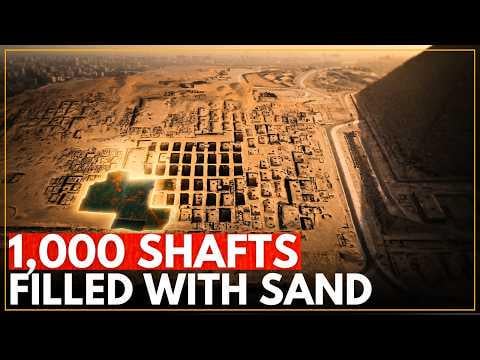
The Western, Eastern, and Southern Cemeteries at Giza contain roughly a thousand squared shafts cut straight into the limestone, typically 2-3 metres across. They're packed so closely together that walking between them is like navigating a labyrinth. Hermann Junker documented depths for maybe 30-40 of them during his excavations in the 1920s. The rest have never been formally measured. Camera drops into some shafts have exceeded 30 metres without reaching bottom. A 100-foot paracord lowered into one shaft ran out of rope before hitting anything. The deepest known shaft on the plateau: the Osiris Shaft near the Sphinx causeway: descends over 30 metres through three separate levels.
The conventional explanation is that these are tomb entrances. But the layout raises questions that have never been adequately addressed. The mastabas above them are arranged in ordered rows with consistent spacing, as if following a single coordinated plan. The sarcophagi found inside span dynasties from the Early Kingdom through the Late Period. You don't build hundreds of underground chambers simultaneously for rulers who won't be born for another two thousand years.
Full breakdown: https://youtu.be/BNVEGDoUvOE
by AwakenedEpochs