
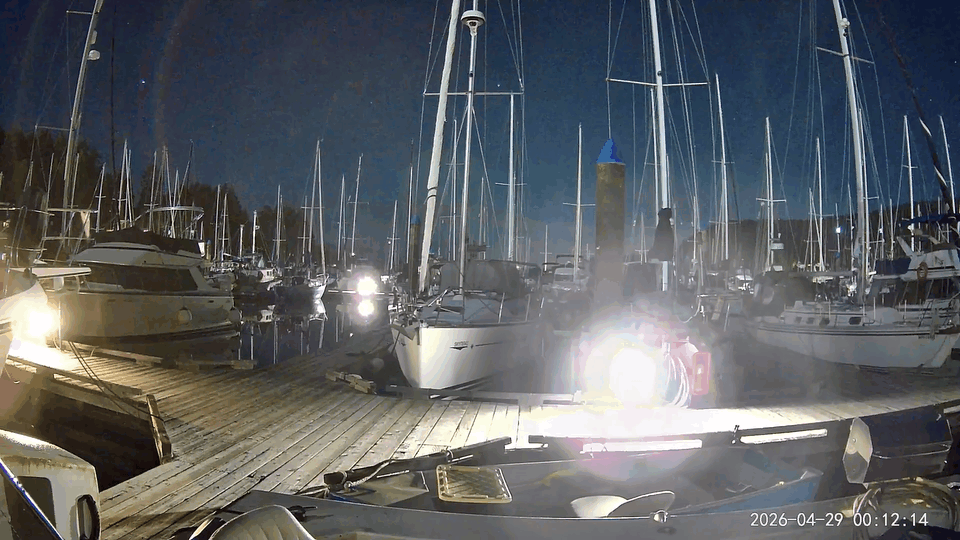
A meteor entered Earth's atmosphere above Vancouver Island, Canada, on April 29, 2026, and NASA tracked every second of it.
The object hit the upper atmosphere at 106,200 km/h and became visible at 90 km altitude — roughly the boundary between our atmosphere and space. It tore southwest across the sky for about 89 km before fragmenting at 62 km up, directly above the Pacific Ocean near a remote stretch of coastline called Yuquot.
The entire visible flight lasted five to six seconds and exploded multiple times along the way, leaving glowing trails and sparks that witnesses said looked like scattered embers. Some people heard loud booms minutes after the flash — sound traveling down from 62 km takes a while.
135+ eyewitness reports came in from as far south as Oregon and as far east as Spokane. NASA used the data to reconstruct the full trajectory. What's left of the rock is now somewhere on the Pacific seafloor.
Credit: Michael Roth
by Busy_Yesterday9455