
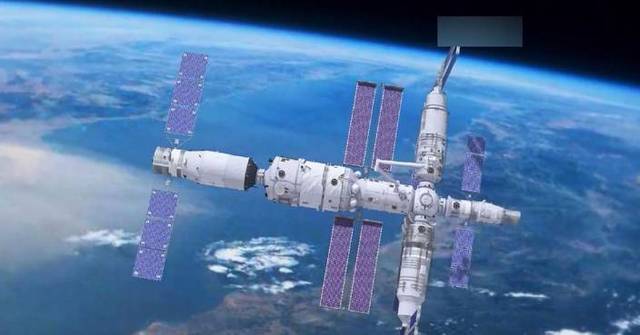
China’s Tiangong space station celebrates a notable anniversary on Wednesday, with this date marking exactly five years since the launch of the crucial core module which paved the way for the country’s permanent presence in space.
In the years that have followed, China has achieved numerous breakthroughs in space exploration since the Tianhe core module was put into orbit on April 29, 2021.
The assembly and construction of the space station continued with two science lab modules, Wentian and Mengtian, being launched and successfully docked in July and October of the following year.
Upon its completion in late 2022, Tiangong become one of two space stations currently in orbit, with the other being the International Space Station (ISS).
Up to now, a total of ten different astronaut crews, spanning the Shenzhou-12 to the Shenzhou-21 missions, have entered the space station and conducted a total of 26 extravehicular activities, including carrying out the assembly and maintenance of space station equipment, and completing the installation of space debris protection devices.
The space station also serves as a national-level space laboratory, where astronauts have conducted space science experiments and tests covering research areas of space life and human research, microgravity physics, space astronomy and earth science, and new space technologies and applications.
This year, China’s manned space program plans to conduct one cargo resupply mission and two manned flight missions.
In the future, the space station will host astronauts from China’s Hong Kong and Macao. It has also been confirmed that one Pakistani astronaut will also serve as a payload specialist for a short-term flight mission at a later date, with candidates currently in training.
China’s cooperation projects with the United Nations Office for Outer Space Affairs are also steadily advancing.
In the future, China will also send the Xuntian Space Telescope to the space station to set up its flagship space astronomy facility. The country will also upgrade its Long March-5B carrier rocket for the launch of new modules to the space station.
The breakthroughs made in the space station come as part of China’s ambitious space goals for the coming years, with the country pressing ahead with plans for a manned moon mission by 2030.
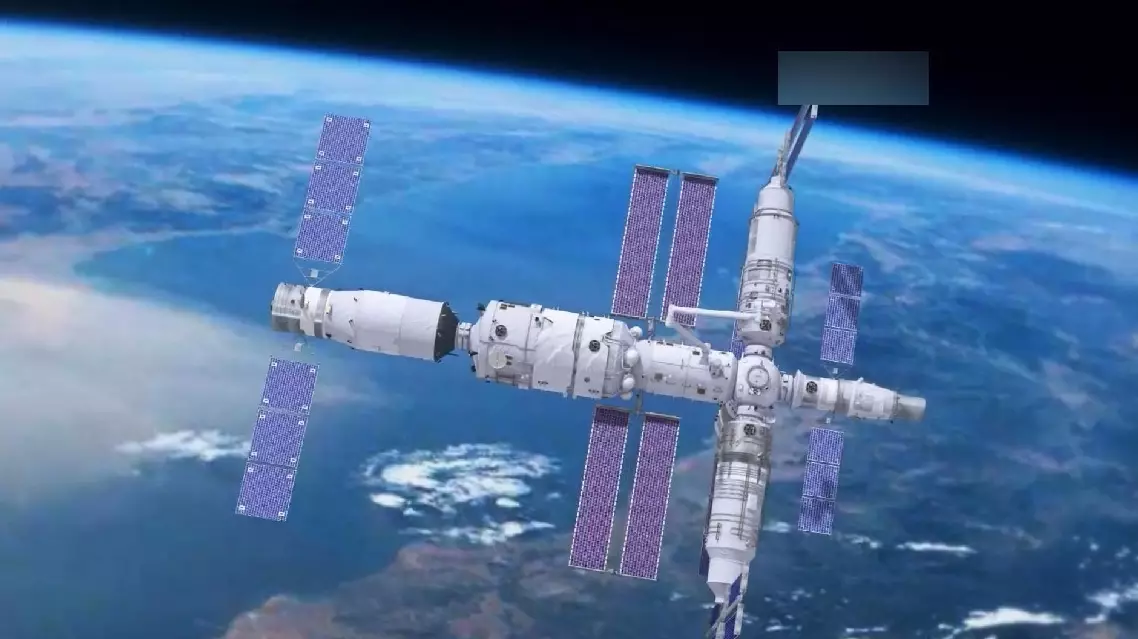
China’s space station witnesses momentous five years of transformation
The U.S. Federal Reserve on Wednesday decided to maintain its target range for the federal funds rate unchanged at 3.5-3.75 percent as high energy prices added inflation pressures.
This is the Fed’s third straight rate hold this year, matching market expectations.
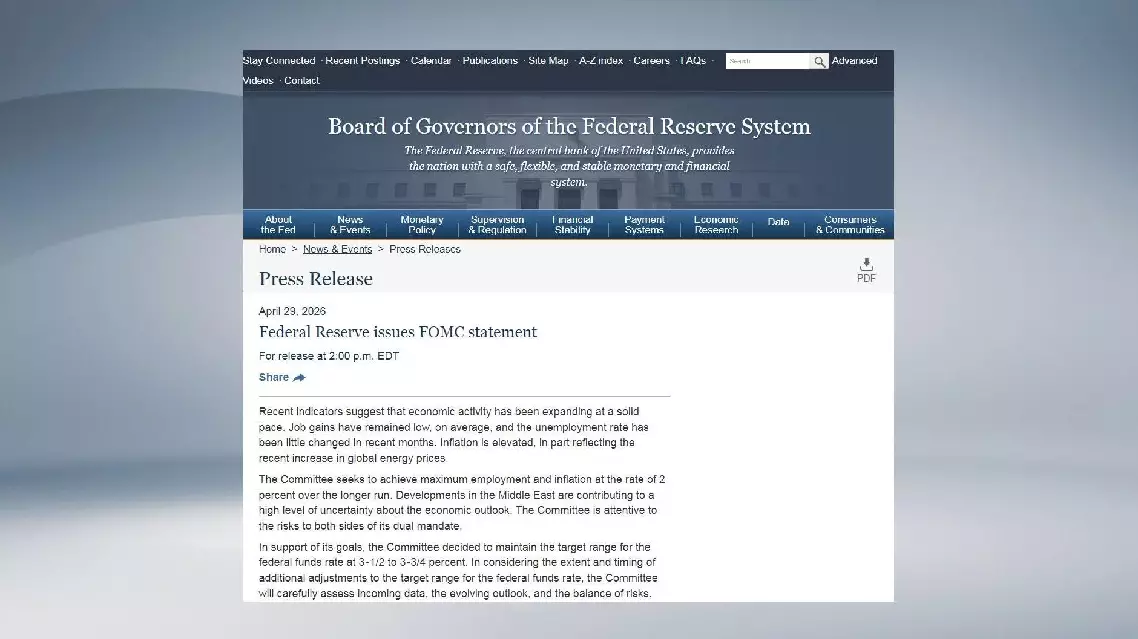
U.S. Fed keeps interest rate unchanged amid high energy prices