
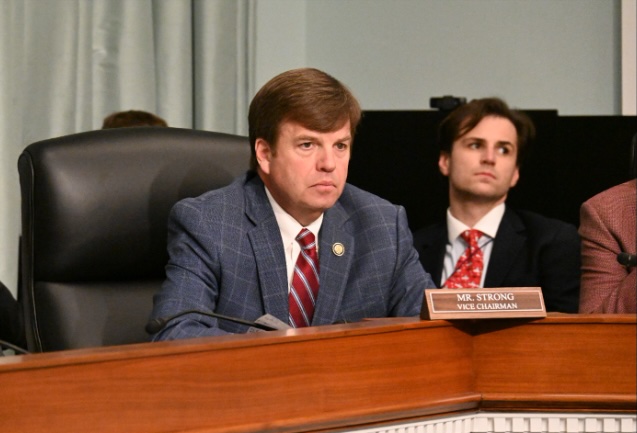
WASHINGTON — Alabama’s two appropriators who oversee NASA funding had similar lines of questioning for Administrator Jared Isaacman as they sought to bolster a key space program managed in Huntsville.
During budget hearings this week, U.S. Sen. Katie Britt, R-Ala., and U.S. Rep. Dale Strong, R-Huntsville, asked Isaacman about the future of NASA’s Space Launch System, managed at Marshall Space Flight Center, following President Donald Trump’s budget request for 2027 that calls for the use of commercial alternatives for lunar missions after Artemis V.
The SLS is the heavy launch vehicle used to send astronauts to the moon, as it did during the recent Artemis II mission. Britt and Strong are protective of the program that’s critical to the work done at NASA facilities in Alabama.
“SLS and Orion have also proven capabilities through their Artemis II launch that we all just saw. Explain to me why you… wouldn’t prioritize increasing the production rate of an already proven system and yet go ahead and make that transition?” Britt, a member of the Commerce, Justice and Science Subcommittee, asked Isaacman on Tuesday.
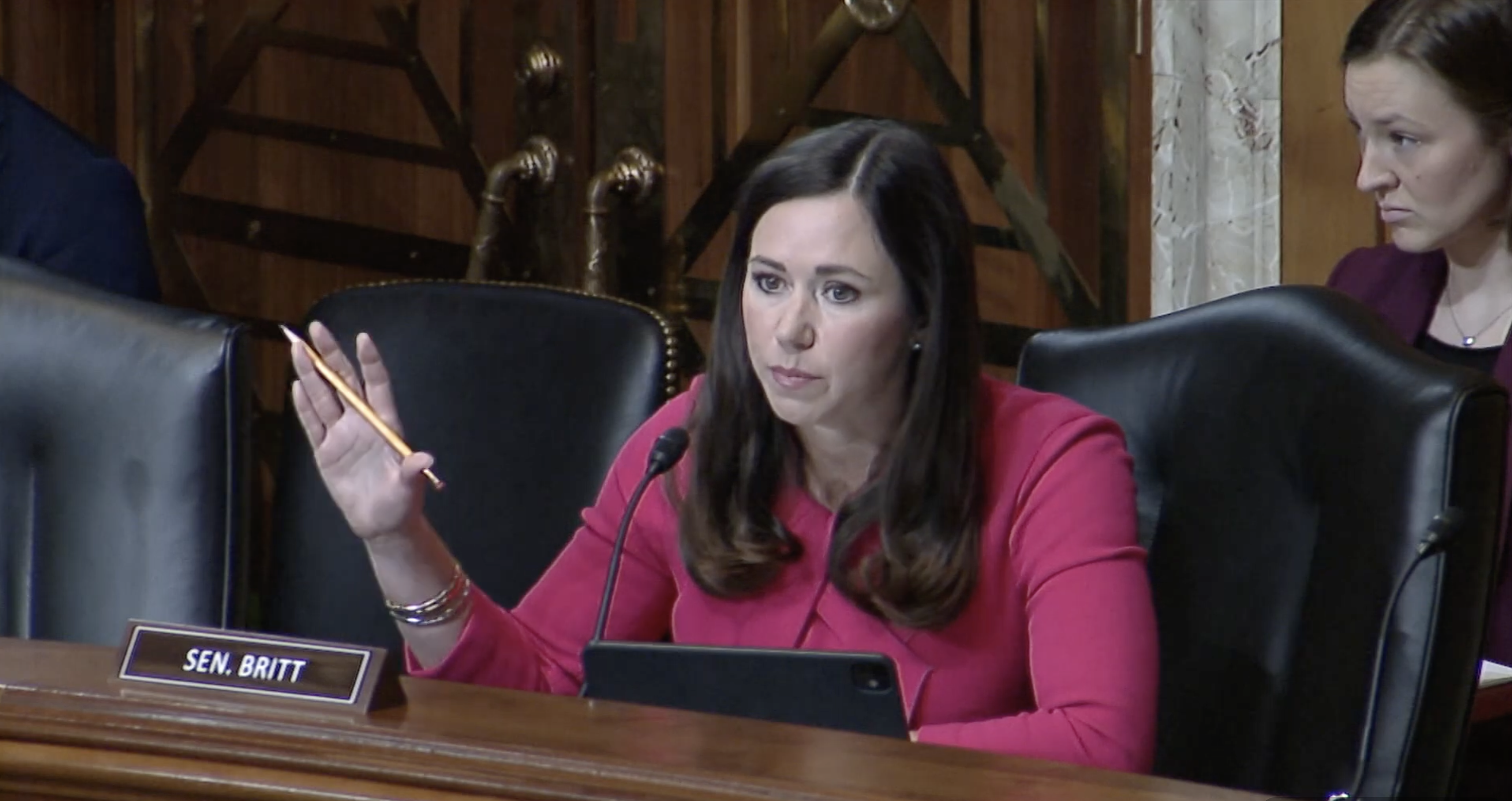
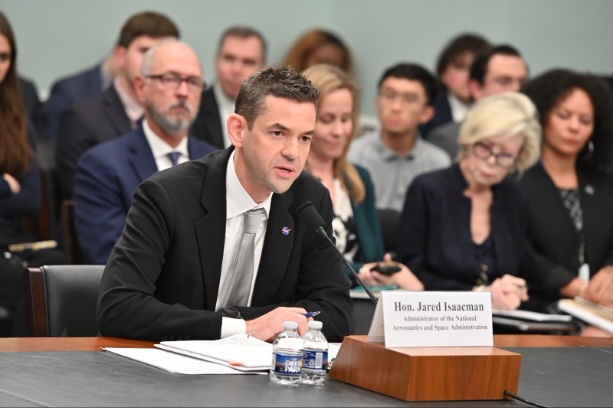
In response, the NASA chief, who was confirmed in December, said rather than making a transition, NASA aims to open the door for industry to produce a lower-cost SLS and Orion spacecraft system.
“The term commercial is basically what I refer to is alleviating some of the NASA burdens we impose on the suppliers,” Isaacman said. “Lockheed, Boeing, and (United Launch Alliance) have come back to us and said, ‘Hey, every time NASA comes and triple-checks our work (it) adds costs and delays hardware. Let us do SLS in a different way and we’ll be able to get it to you faster and more affordably.”’
Strong also asked about the future of the SLS during a House hearing on Monday. The congressman, who serves as the vice chair of the Commerce, Justice, and Science Subcommittee, emphasized, like Britt, that the current system is “the only proven rocket capable of meeting all the needs of deep space human missions.”
As NASA prepares to increase the cadence of lunar missions, Isaacman said NASA has put out a request for information to gather industry input on how to make that ramp-up possible. The Alabama lawmakers expressed their support for more lunar missions with less time in between launches.
Artemis III is set to launch next year. NASA hopes to land astronauts on the moon again by 2028. The One Big Beautiful Bill Act requires that the SLS be used for missions through Artemis V.
“I’m also grateful for your efforts to increase the SLS launch cadence and accelerate the Artemis program’s timeliness to ensure we beat China back to the moon,” Britt said.
Britt and Strong also highlighted Marshall’s work on nuclear thermal propulsion, a technology that uses a nuclear fission reactor to create a thrust for deep space missions.
“Nuclear thermal propulsion has the potential to reduce travel times for deep space missions, increase payload capability and provide mission flexibility,” Strong said.
The Huntsville Republican asked the administrator how the technology could be used in future Artemis missions.
During the House hearing, Isaacman gave Strong a full-throated endorsement of the technology, saying, “you will not find an administrator that is a greater champion of nuclear power and propulsion than me.”
“What we’re trying to do is demonstrate nuclear power and propulsion in a practical way as quickly as we can to get it out of the lab,” he said, adding that the downside is that the exhaust is radioactive.
Isaacman also confirmed to Britt that NASA would fully implement the $110 million allocated to nuclear thermal propulsion in the fiscal year 2026 appropriations measure.
The pair of Alabama lawmakers also asked Isaacman about his plans to bring more employees in-house instead of relying on contractors to do much of the work. He told Strong that the agency is trying to find a balance between outside expertise and having employees inside NASA who know how to build and launch rockets.
The NASA administrator appeared before multiple congressional panels over the past few days to testify on the agency’s proposed fiscal year 2027 budget. The White House proposed a $18.8 billion budget for the agency in 2027, or a $5.6 billion decrease from this year’s enacted level.
The plan is similar to last year’s proposed cuts that lawmakers wholly rejected. During the hearings, lawmakers again showed bipartisan opposition to those cuts. Britt did not specifically mention those budget cuts in her questioning, while Strong succinctly said that the proposed budget is “nothing but the starting point.”