
by Clarence Oxford
Los Angeles CA (SPX) Apr 26, 2026
NASA has delivered a compact device to the International Space Station that can produce sterile medical-grade IV fluid on demand by filtering drinking water already aboard the station, addressing a critical gap in medical readiness for future deep space missions.
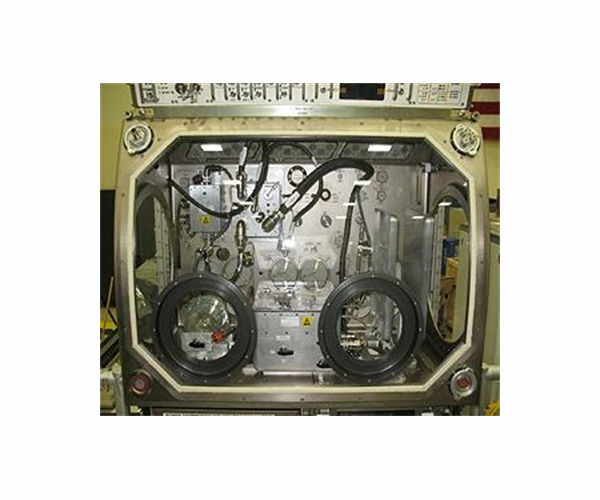
The system, called IntraVenous Fluid GENeration Miniaturized – IVGEN Mini – launched to the station on April 11 aboard the Northrop Grumman Commercial Resupply Services 24 mission. Demonstration operations are planned to begin in May, when crew members will run the system over two days to generate 10 liters of IV fluid. Those samples will be returned to Earth for laboratory analysis to confirm the fluid meets medical-grade requirements.
IV fluid is a standard component of every crewed NASA mission because it can address up to 30 percent of the medical conditions likely to arise in flight, including dehydration, burns and other acute conditions. But prepackaged IV fluid has a shelf life of only 16 months, making it unsuitable as a standalone supply for deep space missions that could last up to three years. IVGEN Mini addresses that problem by manufacturing fluid as needed from the station’s existing potable water supply.
The system works by connecting a large input bag of station drinking water to the IVGEN Mini unit, which filters out particulates and mineral ions. The processed water then flows into an output bag containing premeasured sodium chloride, producing a sterile saline solution that meets intravenous fluid standards. The current design generates 1.2 liters of fluid per hour.
Courtney Schkurko, engineering project manager at NASA Glenn Research Center, described the cargo efficiency case for the technology. On a mission to Mars, 100 liters of prepackaged IV fluid would occupy substantial cargo volume and carry expiration risk throughout the voyage. IVGEN Mini occupies a fraction of that space and produces fluid continuously within expiration, eliminating the logistical burden of stocking a perishable supply for an extended mission.
IVGEN Mini is a second-generation development. The original IVGEN system was demonstrated aboard the space station in 2010 but included additional sensing equipment that made it significantly larger. The miniaturized successor removes the gaseous nitrogen pumping mechanism used in the earlier design, replacing it with compact electric pumps that reduce both size and mass while refining the filtration process.
The system was developed at NASA Glenn with contributions from Sierra Lobo, Inc., and NASA’s Johnson Space Center. Requirements were set based on the expected range of medical events during a deep space mission, the fluid volumes needed to treat them, and the flow rate required for clinical use. The fluid produced must meet United States Pharmacopeia standards for pH, salinity, sterility and particulate content. None of the fluid generated during the ISS demonstration will be administered to crew.
IVGEN Mini is managed by NASA’s Mars Campaign Office as part of the agency’s broader program of technology development for human exploration of the Moon and Mars. A second set of demonstration operations is planned for fall 2026, and shelf-life testing of the system’s output is under development as the next phase of the program.
Related Links
NASA Glenn Research Center
Space Medicine Technology and Systems