
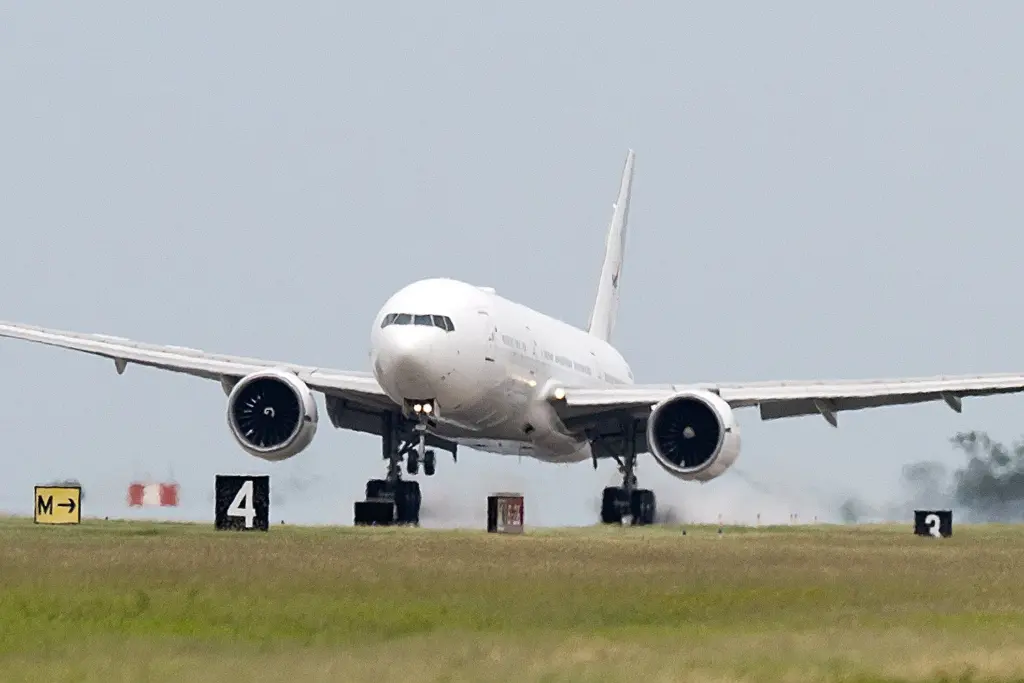
NASA has returned its modified Boeing 777 to service after more than a year of structural upgrades aimed at transforming the jet into its next airborne science laboratory.
The aircraft arrived at NASA Langley Research Center in Hampton, Virginia, on April 22 after completing a check flight and a three-hour ferry flight from Waco, Texas, where it had been undergoing modifications since January 2025.
“Airborne missions at NASA use cutting-edge instruments to explore and understand our home planet,” said Derek Rutovic, program manager for the Airborne Science Program at NASA Headquarters in Washington. “The 777 will be the largest airborne research laboratory in our fleet, collecting data to improve life on our home planet and extend our knowledge of the Earth system as a whole.”
NASA acquired the aircraft in 2022 as a replacement for its retired Douglas DC-8, which served as a flying laboratory for nearly four decades before being retired in 2024.
Follow Air Data News: WhatsApp | Google News | Instagram | LinkedIn | Twitter | Facebook
The 777 has been extensively modified to support scientific missions, including the installation of research stations, new wiring systems and external ports that allow instruments to be mounted beneath the fuselage.
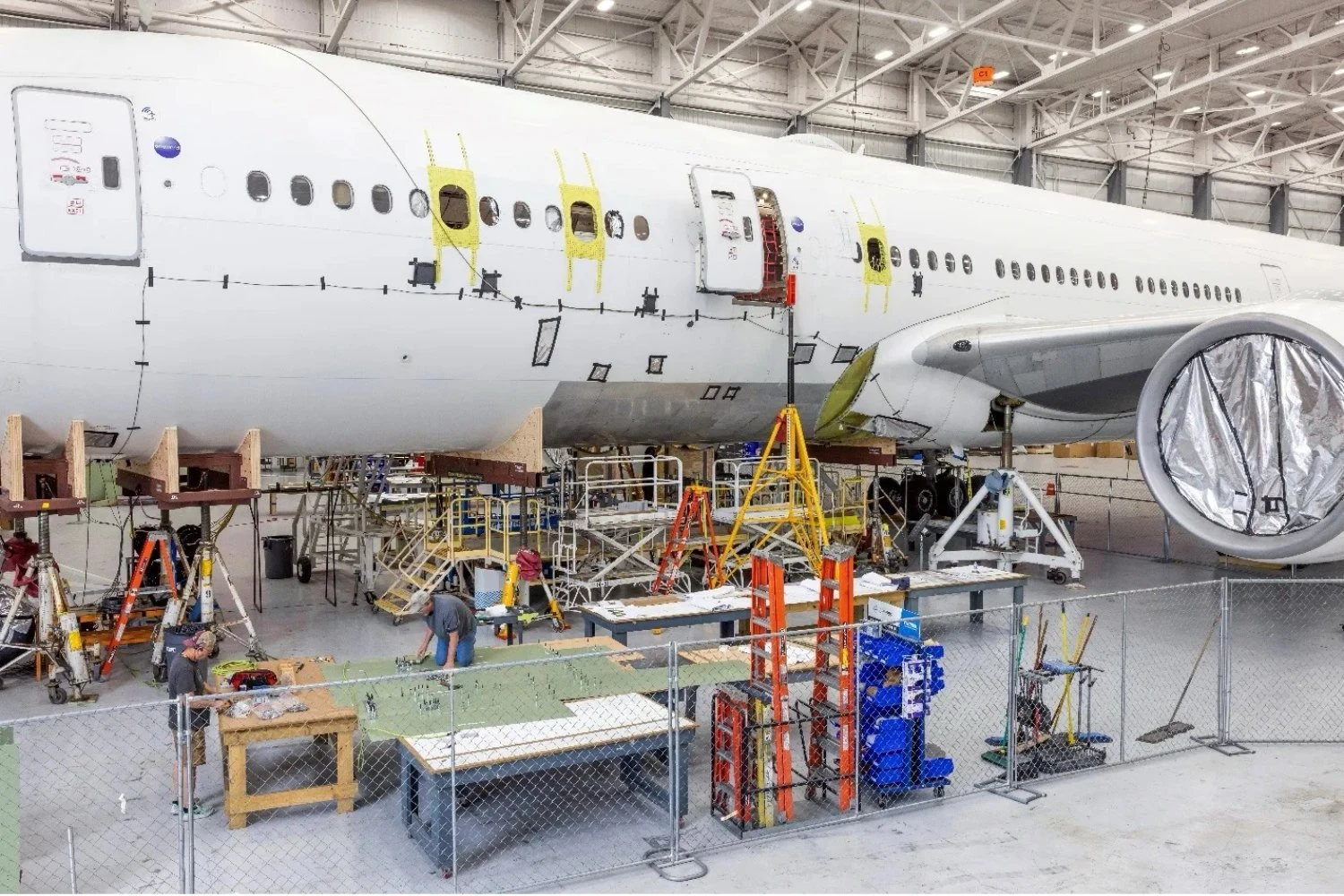 Widened windows along the NASA 777 will serve as viewports for a variety of scientific instrument sensors | L3 Harris
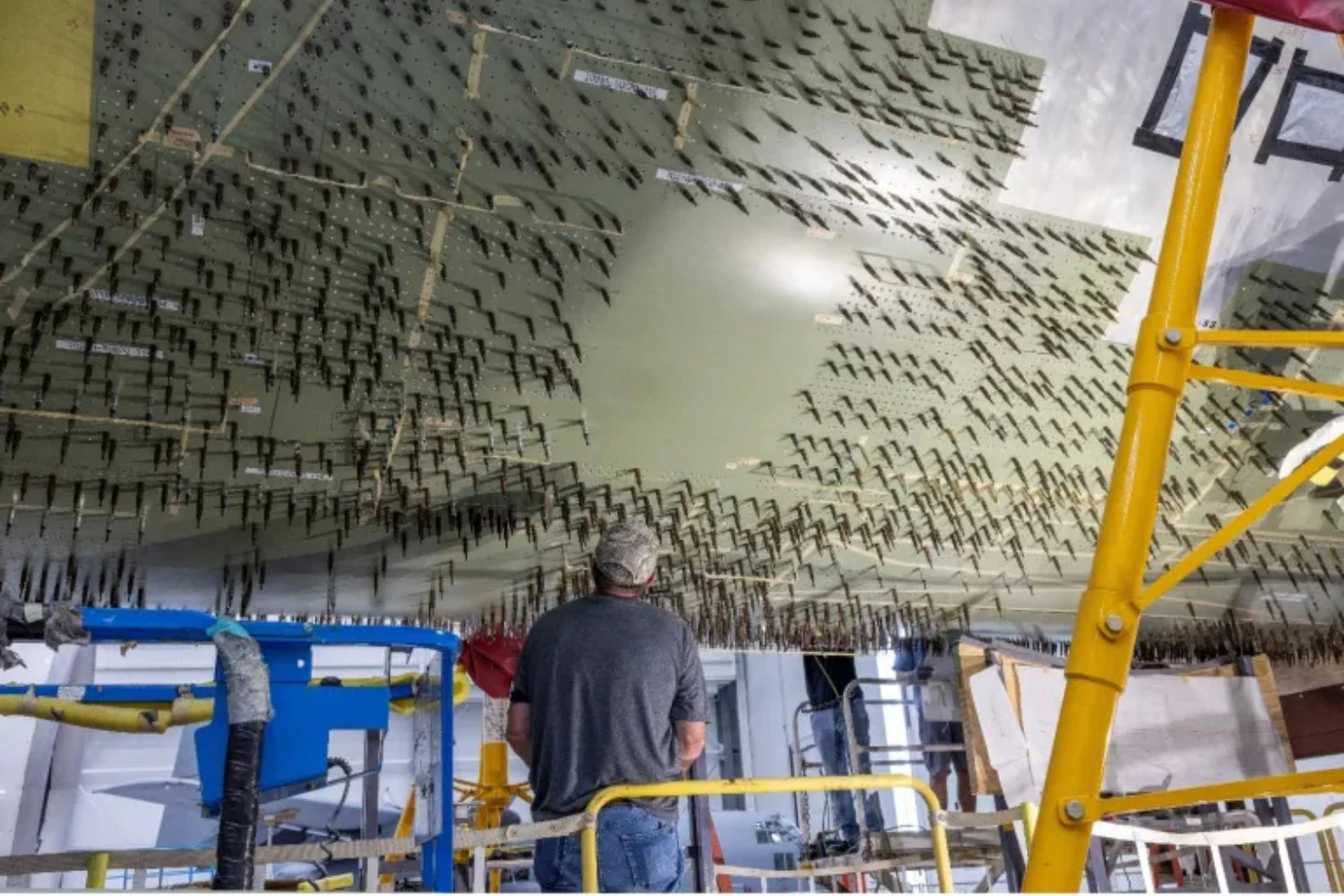 Temporary fasteners are utilized to map out hole patterns through four layers of reinforcement | L3 Harris
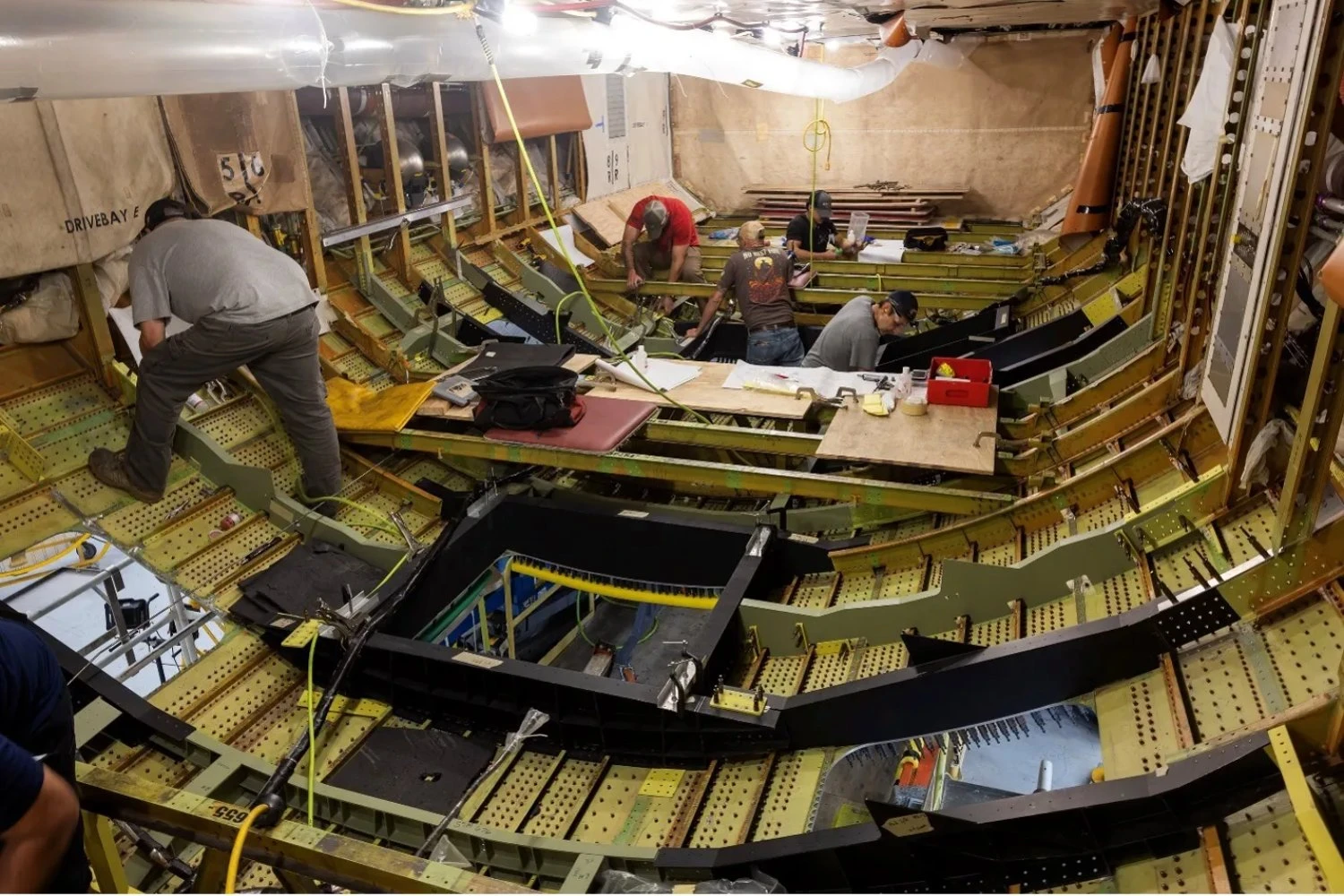 L3Harris installs viewports in the 777 aircraft cargo bay that will house advanced scientific instruments | L3 Harris
The aircraft will also carry sensors such as lidar systems and infrared imaging spectrometers used to collect atmospheric and environmental data during flight campaigns.
NASA said the larger platform will significantly expand its research capabilities, allowing the aircraft to carry between 50 and 100 researchers and as much as 75,000 pounds of scientific equipment on missions lasting up to 18 hours.
Its first mission is scheduled for January 2027 under the North American Upstream Feature-Resolving and Tropopause Uncertainty Reconnaissance Experiment, or NURTURE.
The campaign will study severe winter weather events, including snowstorms, extreme cold outbreaks and hazardous ocean conditions across North America, Greenland, Europe and parts of the Arctic and North Atlantic.
The structural modifications were carried out by L3Harris Technologies and Yulista, while additional cabin upgrades are being completed by NASA and HII.