
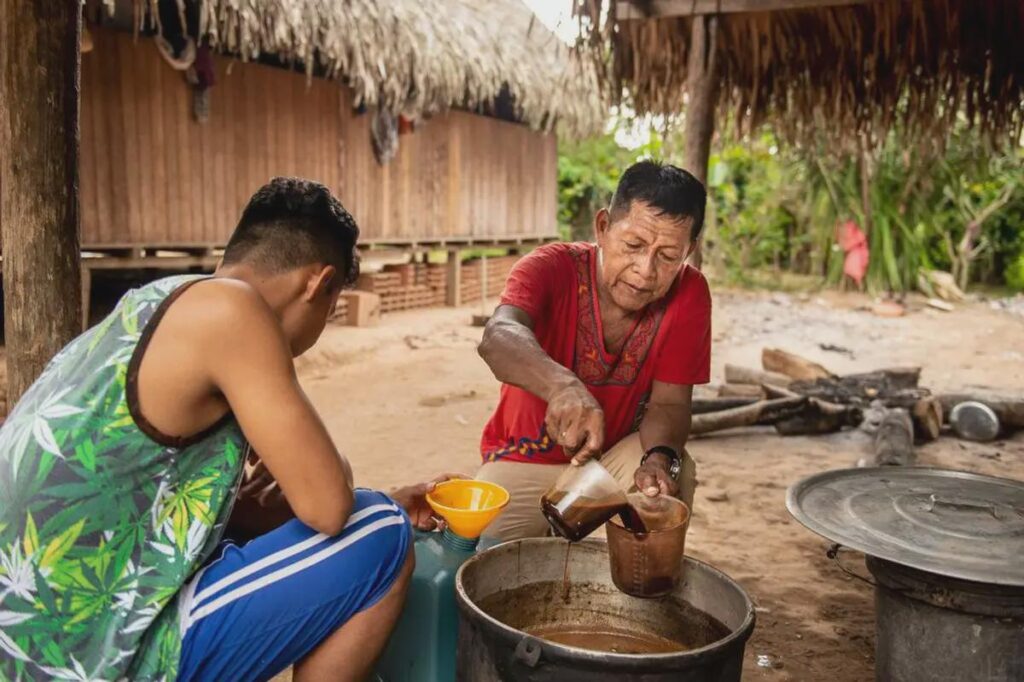
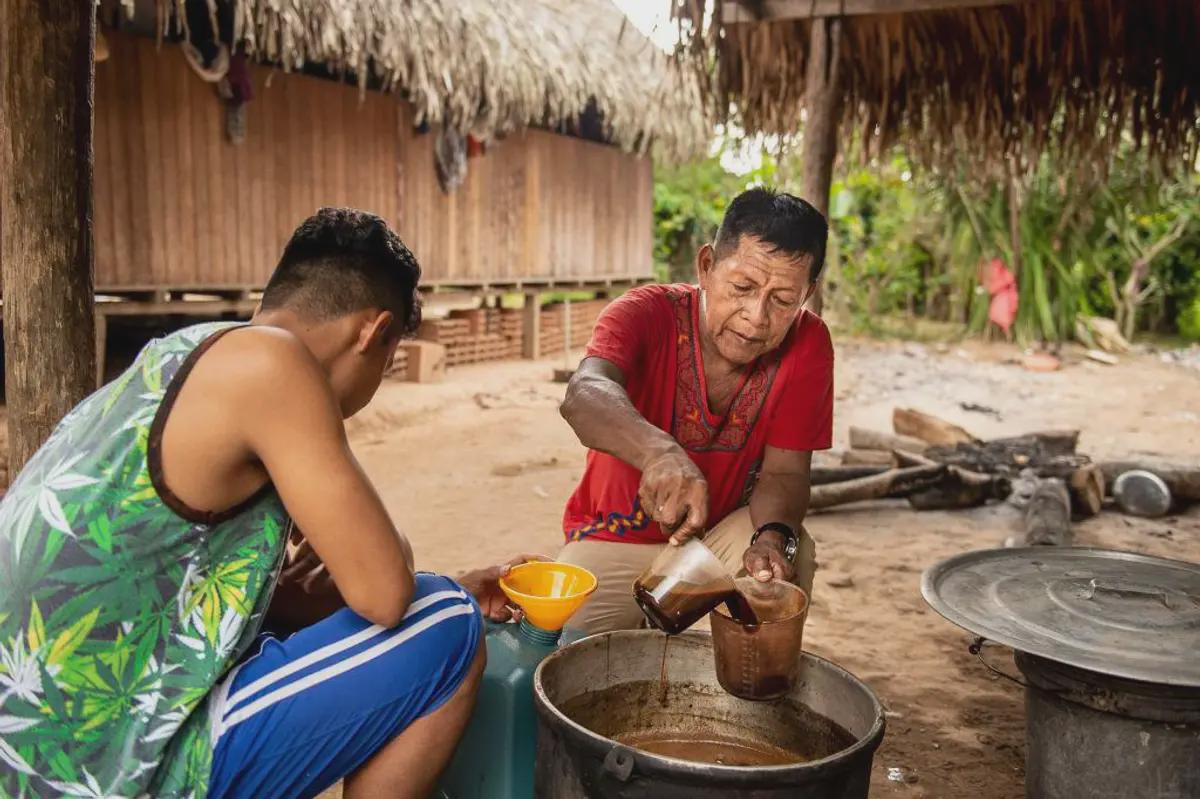
Amazonian ayahuasca brews are built around two main plants; Banisteriopsis caapi and Psychotria viridis — but traditional practitioners also add smaller amounts of other plants as admixtures, depending on tradition and purpose.
You can split those admixtures into two groups based on what the tradition says they're for.
Group 1 is plants added for observable reasons. Purging, stimulation, stronger visions, stronger body sensations. Things a practitioner can directly experience in a single ceremony and confirm or not.
Group 2 is plants added for non-observable reasons. Spiritual protection, communication with specific entities, energetic alignment. Things with no sensory check… you can't tell in one ceremony whether you were spiritually protected.
When modern pharmacology runs on both groups, the split is sharp. The observable-purpose plants all show pharmacological activity matching what the tradition claims — 7 out of 7 validated. The spiritual-purpose plants show 0 out of 4 supported for their stated mechanism. Same tradition, same brew, same ceremony, same practitioners. The split is along one line – could you see whether it worked.
Zoom out and the same pattern holds across traditional knowledge more broadly. The cultures we have good data on show high accuracy in the parts where reality could grade the prediction; tides, fire ecology, navigation, pharmacology — and drift in the parts where nothing could test them. The Maori maramataka predicts shellfish behavior at 95% accuracy because every tide tests it, and snapper-lunar effects at 52% because that signal is buried in noise. The Gunditjmara correctly encode 13 of 13 geological features of Budj Bim over 37,000 years of oral transmission, but the creation narratives transmitted with equal ceremonial care don't encode geological facts. Same transmission system, different feedback regimes, different outcomes.
The combinatorial problem with ayahuasca makes the pharmacology case especially striking. Amazonian flora is about 80,000 species. Random search against the full flora over 10,000 years has roughly a 2% chance of hitting an effective DMT + MAO-inhibitor combination. Against a pre-filtered set of ingestible species it rises to 72–78%. That's strong evidence the discovery wasn't random — it was guided iterative selection, with practitioners adjusting based on what they could observe.
If anyone's interested in the full framework, I wrote it up here: https://deeptimelab.substack.com/p/the-gradient-and-what-it-means
References: Ott 1999 on pharmahuasca, Riba et al 2003 on ayahuasca pharmacokinetics, Miller et al 2019 PNAS on 1000-year-old ritual bundles.
by tractorboynyc