
Topline
A brightening comet on a once-in-170,000 years visit to the inner solar system is becoming easier to find before sunrise — and Thursday, April 16, is an ideal time to see it before it gets too close to the sun. Comet C/2025 R3 (Pan-STARRS) may brighten further into the weekend, but comet-watchers recommend Northern Hemisphere observers view it as soon as possible while it is easy to find and in relatively dark skies. By early next week, it will rise later and be lost in the rising dawn — so grab a look while you can. Remember to check my feed for a daily comet tracker with sky-charts and tips for viewing comet Pan-STARRS throughout its fleeting visit.
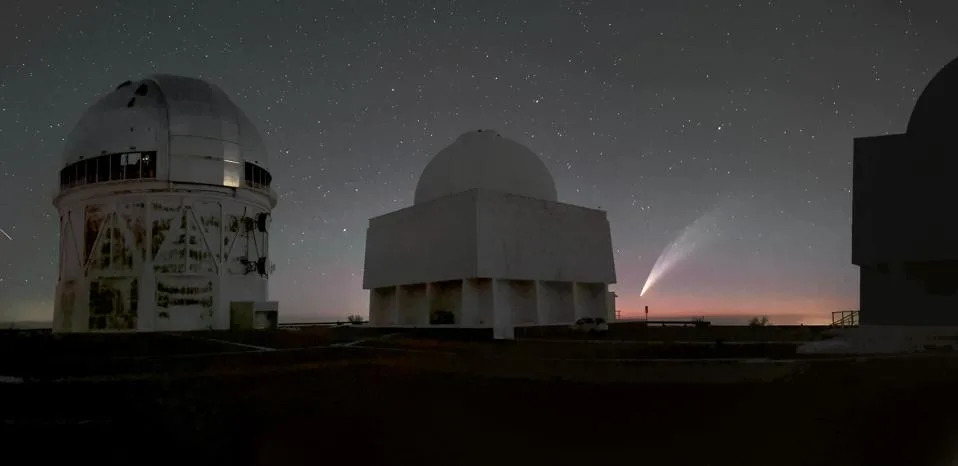
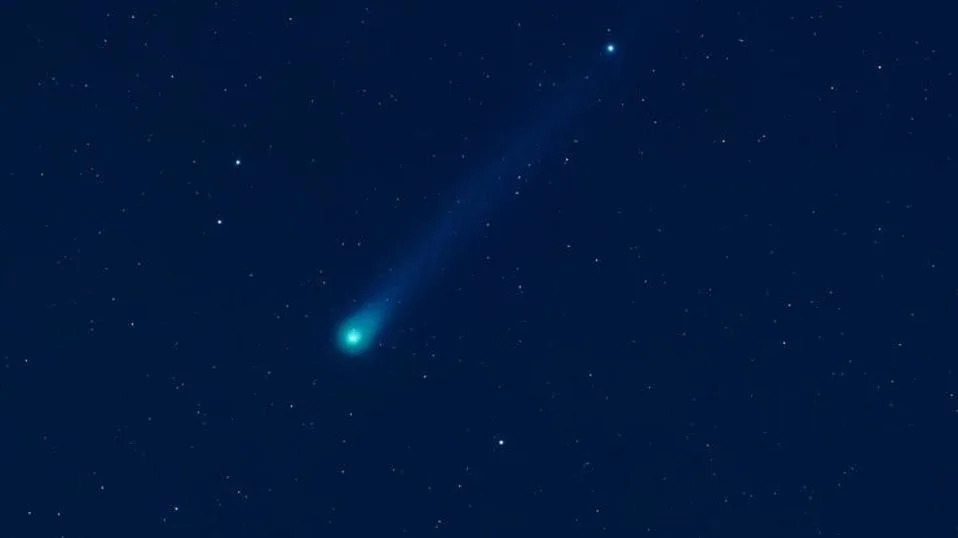
Comet Pan-STARRS, also known as comet C/2025 R3 (Pan-STARRS), is now visible before sunrise. (Image shows Comet C/2024 G3 (ATLAS)).
CTIO/NOIRLab/NSF/AURA/D. RojasKey Facts
Comet C/2025 R3 (Pan-STARRS) is visible from about two hours before sunrise until early next week, when it will fade into the glare of the sun. An unobstructed view of the eastern horizon is crucial.
On Thursday, April 16, the comet lies due east as near the heart of the Great Square of Pegasus, where it’s relatively easy to find.
According to the Comet OBServation database, the comet is currently shining at around magnitude +4.5 — right on the cusp of being a naked-eye object in very dark skies. However, it will likely require binoculars for most observers.
The comet will reach perihelion on Sunday, April 19, with its closest approach to Earth on Monday, April 27 (though by then it will be impossible to see from the Northern Hemisphere).
Observers in the Southern Hemisphere will be able to spot the comet from late April, after the comet passes perihelion, just after sunset on the western horizon.
It was discovered by the Pan-STARRS survey in Hawaii in September 2025 and is thought to orbit the sun roughly every 170,000 years.
Comet Tracker For Thursday, April 16
By April 16, the comet has closed to around 0.71 AU (106 million kilometers) from Earth while nearing 0.51 AU (76 million kilometers) from the sun, approaching perihelion as its coma and tail continue to develop.
Comet Pan-STARRS sits low in the eastern sky in the constellation Pegasus, firmly within the Great Square of Pegasus. Sky maps can be viewed and downloaded from The Sky Live and In-The-Sky.com.
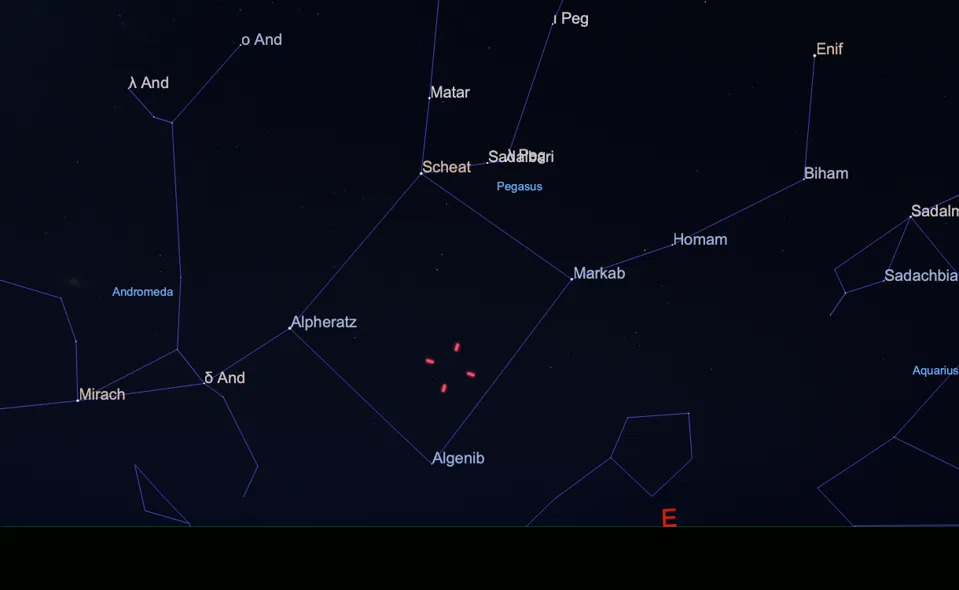
The position of comet C/2025 R3 (Pan-STARRS) 90 minutes before sunrise on April 16, 2026.
StellariumHow To Find Comet Pan-Starrs
For now, the comet appears as a faint, diffuse glow — easy to miss in twilight, but steadily brightening as it approaches the sun.
The key is to first locate the Great Square of Pegasus rising due east — a large, diamond-shaped pattern of four stars.
Look at the lower half of the Great Square for a small, misty patch of light.
A pair of 10×50 binoculars will make it much easier to locate.
How To Photograph A Comet
Capturing a comet is often easier than seeing it. Even if it appears faint to the naked eye, a camera — including a smartphone — can reveal far more detail. Mount your device on a tripod and use night or manual mode to take exposures of around 5-20 seconds. A DSLR or mirrorless camera with a wide-angle lens (around f/2.8) and ISO 800–3200 will typically show the comet as a small, greenish glow with a faint tail. Focus on a bright star first, then reframe, and experiment as the sky brightens — conditions will change very quickly as dawn approaches. However, even a short exposure can turn a barely visible smudge into something unmistakably comet-like.
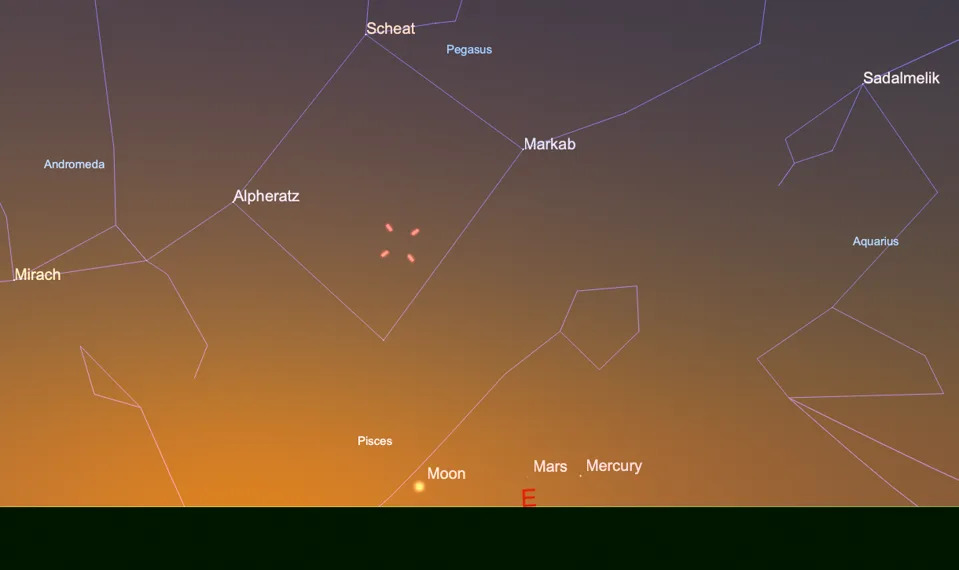
As the comet C/2025 R3 (Pan-STARRS) fades and sunrise approaches on April 16, 2026, a crescent moon, Mercury and possibly a faint Mars will become apparent close to the horizon.
StellariumWhat Else To Look For In The Dawn Sky
As the comet fades from view, a super-slim crescent moon and two planets will emerge. The easiest planet to find will be Mercury, while Mars may be visible between Mercury and the moon if conditions are exceptionally clear. If you do use binoculars, abandon them well before sunrise where you are.
What Is Pan-Starrs?
The name Pan-STARRS comes from the Panoramic Survey Telescope and Rapid Response System, a network of telescopes based at Haleakalā Observatory in Hawaii. Designed to scan the sky for moving and changing objects, Pan-STARRS plays a key role in discovering comets, asteroids and potentially hazardous near-Earth objects. It repeatedly images large areas of the sky, looking for anything that shifts position against the background stars. Comet C/2025 R3 was discovered by this survey in September 2025 — one of many icy visitors first detected by automated sky searches before becoming targets for observers around the world.
Check my feed for a daily “comet tracker” with sky charts and tips for finding Comet Pan-STARRS.
Further Reading
MORE FROM FORBES‘Comet Of The Year’ Vaporized — But Another Will Peak Late AprilBy Jamie Carter
MORE FROM FORBESHow To Photograph The Green Comets This Weekend, According To ExpertsBy Jamie Carter
MORE FROM FORBESAstronauts Share Spectacular Earth Images From Halfway To The MoonBy Jamie Carter

MORE FROM FORBESArtemis Astronauts See Earthrise, Earthset And A Total Solar EclipseBy Jamie Carter
MORE FROM FORBES11,000 Asteroids Have Just Been Found — 33 Are Near-Earth ObjectsBy Jamie Carter
MORE FROM FORBESAstronauts Share Spectacular Earth Images From Halfway To The MoonBy Jamie Carter
This article was originally published on Forbes.com