
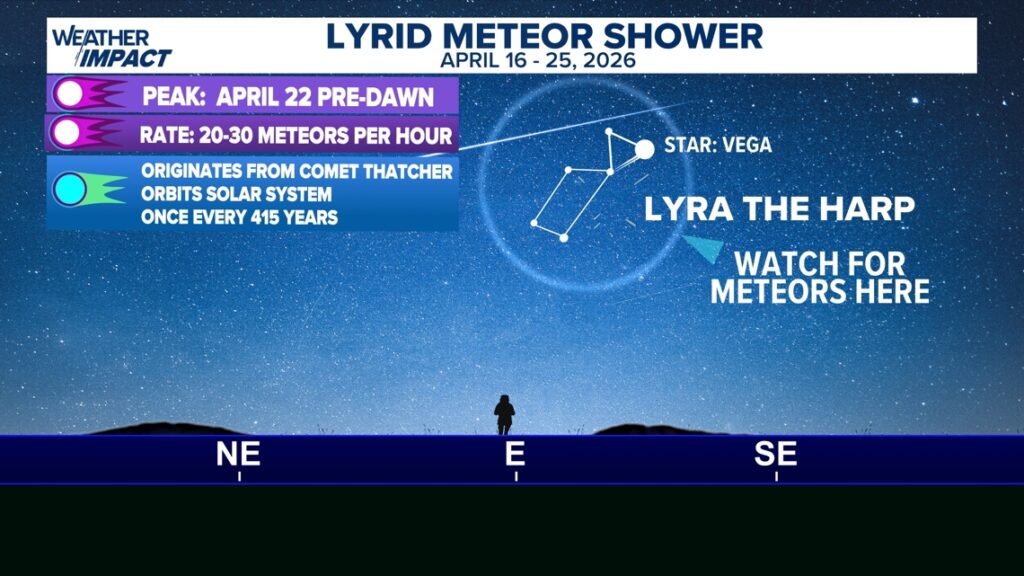
The Lyrid meteor shower peaks April 22, bringing a modest but bright display of shooting stars. Look toward the eastern sky after midnight for the best chance.
SAN ANTONIO — The Lyrid meteor shower, one of the oldest recorded celestial events, will reach its peak on the night of Wednesday, April 22, 2026, offering sky watchers a reliable springtime display of “shooting stars.”
Active each year from about April 16–25, the Lyrids typically produce around 10–30 meteors per hour under dark, clear skies, though occasional outbursts can briefly boost rates much higher. The meteors originate from debris shed by Comet C/1861 G1 (Thatcher), a long-period comet that orbits the Sun roughly every 415 years.
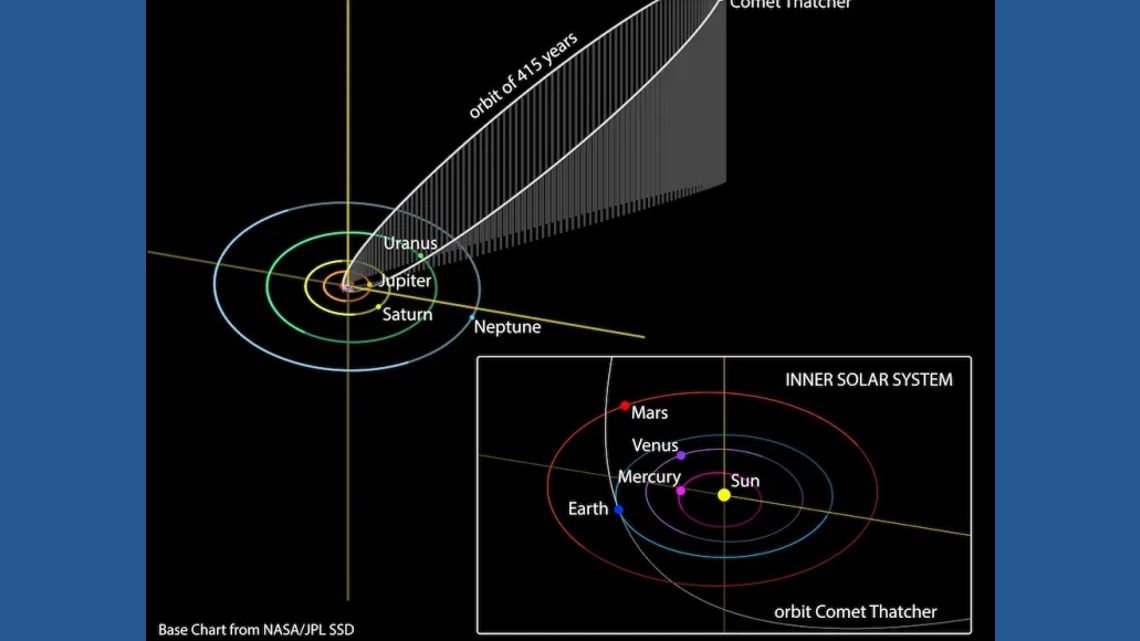
As Earth passes through this trail of dust and rocky particles, the debris burns up in our atmosphere, creating bright streaks of light—sometimes leaving glowing trails that linger for a few seconds.
To view the Lyrids at their best, head outside between late evening on April 21 and the early morning hours of April 22, when activity is strongest. The shower’s radiant lies in the constellation Lyra, near the bright star Vega in the northeastern sky, but you’ll often see more impressive meteors by looking slightly away from that point to catch longer streaks.
For the best experience, find a dark location away from city lights and give your eyes at least 20–30 minutes to adjust to the darkness.