
David Willetts served as Chair of the UK Space Agency from 2022-2026.
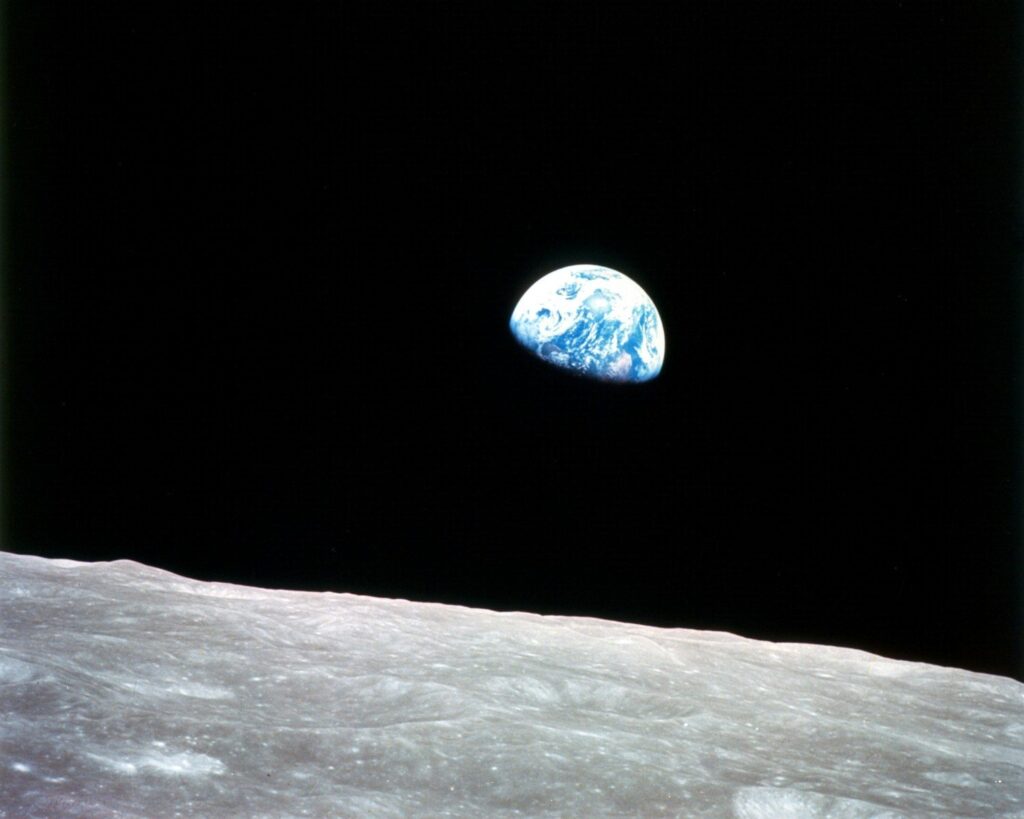
The Artemis mission captured the imagination – just as Apollo did over 50 years ago.
Peter Franklin’s column last week tried to locate Space on the political spectrum. That is hard to do as in many countries including Britain it enjoys cross-party support. But it is certainly however of great strategic significance.
Peter asks why we bother to put public funding into Space and run it partly as a Government programme.
One answer is that it is part of the discovery science for which we have provided public support for over a century. It is hard to reduce space exploration any more than other forms of scientific endeavour to economic calculation even though the long-term benefits are enormous. The official advice to Margaret Thatcher was against our joining the Large Hadron Collider as the economic gains from particle physics were not good enough but she is supposed to have scrawled across the brief “But it is very interesting” and so we joined.
Europe is involved in Space through the European Space Agency, an inter-governmental agency separate from the EU. Ministers turn up and challenge ESA to do more for economic growth but ESA do point out that the greatest public interest in their programmes is when they support exploration and discovery – such as the Rosetta mission landing on a comet or BepiColombo flying close to Mercury. British technology and science, including universities such as Leicester, Imperial and the Open University, plays an important part in such missions.
There is also however a much more pragmatic case for Space. Space activity keeps us at the technological frontier. It is an increasingly important part of national infrastructure. It is how we observe the Earth – from the extent of flooding after a disaster to tracking significant polluting methane leaks. The fall in the cost of launch has opened up access to space for many more services. Micro-gravity in low Earth orbit (strictly speaking it is not quite zero gravity) is a great environment for growing cells and crystals of higher quality more quickly. Entrepreneurial British companies are leading the way in manufacturing in space with mono-clonal antibodies for cancer treatments (Bio Orbit) and advanced materials for semi-conductors (Space Forge). Space is the ultimate location for harnessing solar power and then beaming it to Earth – not as a James Bond style laser beam but as intense microwaves. (Space Solar).
However satellites in orbit are vulnerable to solar weather – coronal mass ejections and geomagnetic storms. All space-faring nations gain from understanding this better. A sophisticated satellite to study this will be launched any time now. SMILE is a join European Chinese mission. That unusual collaboration brings us to the geo-politics of all this.
The original Apollo missions were all-American. Artemis is very different. The Canadian flag was visible alongside the American flag in the Artemis cabin because the Canadian Space Agency joined the project early on. Those images of the moon from Artemis showed a clear picture of the capsule on the left side of the photographs. It was the European service module providing the water, oxygen, power to the craft. In return for that contribution Europeans will be on future Artemis flights. It is a model of international collaboration very different from MAGA rhetoric. Even America now is not trying to do it all on its own.
American Presidents had been uninterested in missions to the Moon and beyond because they thought they had been there and done that. To be fair to Trump he revived US Space programme during his first presidency after Obama tried to cancel what became Artemis. He realised that China was catching up on them and could have the next astronaut on the moon. China is the new rival, like the old USSR – Russia was only let into the International Space Station after the collapse of the Soviet Union. China has been excluded and there is now a race to the moon. The Americans are aiming to get astronauts on the moon in 2028 but they haven’t yet got a fully tested functional lander so it might be delayed. The Chinese are aiming for 2030 but if anything they over-deliver. So this race could get very tight through 2029. The US Congress has passed legislation forbidding all direct communication and contract with China – it is going to make things tricky if there are rival lunar missions and then two lunar bases quite close together.
There is real military significance of all this. Space is the ultimate high ground.
Historically the UK has had privileged access to US space services through our Five Eyes partnership. That was not extended to all of Europe. The origin of GALILEO, the European alternative to American GPS was in meetings during the 1990s when the American military refused to guarantee that it would always be available to Europeans. When the EU started developing its GALILEO alternative, heavily based on British and German technologies, the Americans opposed it on the grounds it was unnecessary. Although we now beat up on ourselves for not spending enough on defence and becoming too dependent on the US this is not the only example of the US being quite wary of separate European defence capabilities in advanced technologies and trying to stop them.
Space is exciting science. It is bold human exploration. But it is also a crucial environment for complex geo-political rivalries too.