
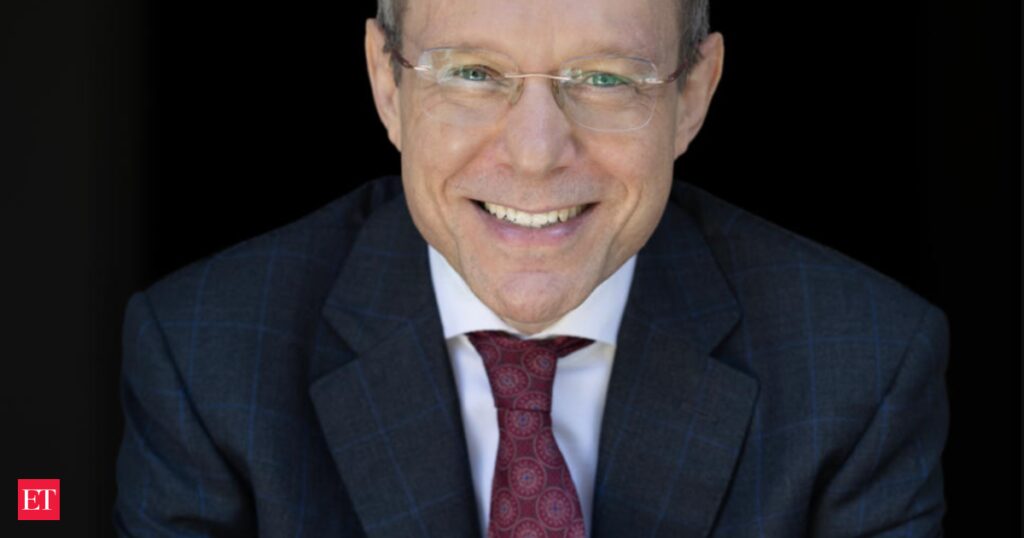
A growing list of unexplained deaths and disappearances involving US scientists has sparked speculation, but Harvard astrophysicist Avi Loeb has urged caution, saying there is no clear evidence of a coordinated pattern. His comments came after reports that William Neil McCasland, a retired Air Force general, vanished in mysterious circumstances after leaving his New Mexico home, becoming the ninth high-level researcher reported missing or dead in recent years.
A repairman last saw the 68-year-old retired Air Force general at his home in Albuquerque, New Mexico, on February 27. Authorities later confirmed that the retired Air Force general left his phone, prescription glasses, and a wearable device at home.
Speaking in an interview with Fox News, Loeb acknowledged that each case remains troubling but warned against drawing sweeping conclusions. “Each of them has a different expertise, but I think it looks like these cases are unrelated… I would caution of assigning too much significance to those,” he said. “Of course, each of these cases is a mystery that has to be resolved.”
No evidence of coordinated targeting, says Loeb
Loeb noted that while some individuals were linked to sensitive research, the available information does not suggest an organized effort. “It’s possible that there was someone aiming to harm those individuals, but I don’t think it shows some evidence for a plan… I would not be too concerned about this being coordinated,” he said. Live EventsHe added that the scientists’ fields varied widely, weakening claims of a single motive behind the incidents.
Classified research and espionage risks
The Harvard professor explained that as some of the scientists were connected to classified work, including Air Force technology programs and nuclear fusion research, such areas, per him, naturally carry security risks.“Some of these programs relate to the Air Force… others relate to nuclear fusion… which has important implications for energy sources, but also potentially for applications in space and national security,” Loeb said.
He acknowledged that individuals working on sensitive projects could face external interest. “Adversarial nations might be interested in some of these secrets… they could have operations either trying to get information… or perhaps even follow individuals,” he said, adding that “such [risks] come with the territory” for those involved in classified programs.
On alien life and government data
The conversation also touched on unidentified anomalous phenomena and the possibility of extraterrestrial life, which the physicists have long theorized. Loeb said he believes alien civilizations are likely, citing the vast number of stars in the universe.
“I think it’s very likely because there are 100 billion stars like the sun… there was plenty of time for those civilizations to develop, just like we did on Earth,” he said. “We just have the duty of searching for them… perhaps the government has some data… and I very much look forward to looking at this data if it comes public.”
List of missing US scientists
The missing scientists list includes several scientists and researchers who were reported missing in recent years. Monica Reza went missing on June 22, 2025, after being last seen hiking along Angeles Crest Highway, while Melissa Casias disappeared on June 26, 2025, with no breakthroughs in the investigation. Anthony Chavez was reported missing on May 8, 2025, after leaving his belongings at home, and retired Air Force general William Neil McCasland vanished on February 27, 2026, after last being seen near his residence.
Others on the list are scientists whose deaths were confirmed. Frank Maiwald, a NASA JPL principal researcher, died in Los Angeles on July 4, 2024, with no autopsy reportedly performed. Nuno Loureiro, an MIT nuclear science professor, was shot by an acquaintance, while Carl Grillmair, an astrophysicist connected to NASA-backed work, was shot outside his home in February 2026. Jason Thomas, a pharmaceutical researcher, was later found dead in Lake Quannapowitt in March 2026.
Avi Leob’s 3I/ATLAS theory
Recently, Avi Loeb was in the spotlight for suggesting an unconventional theory about a rare interstellar comet named 3I/ATLAS, which was discovered on July 1, 2025, by the ATLAS survey in Chile and is the only third such visitor from outside our solar system.
He suggested that 3I/ATLAS may be an artificial technological artifact rather than a natural comet, citing more than 15 anomalies. Loeb highlights its unusual trajectory, anomalous “anti-tail” jets, and high-velocity, metallic composition as signs it could be an extraterrestrial probe or spacecraft, possibly an alien mothership.
Add  as a Reliable and Trusted News Source