
 4 min read
Here’s what you’ll learn when you read this story:
It may seem like the universe is one enormous (if not infinite) unit, but new research suggests it could one day be torn apart.Researchers built a theoretical model of the cosmos to explore what quantum gravity might mean for the universe’s distant future.Depending on whether certain limits were positive or negative, the universe winds up getting shredded.
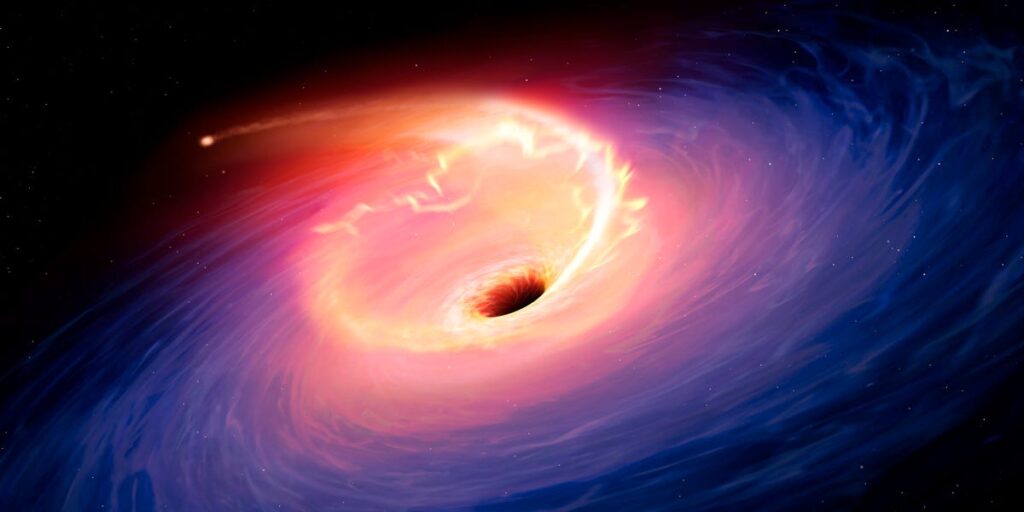
Seen from our blue marble as it spins among the hundreds of millions of star systems in the Milky Way, the universe around us looks like it’s one big cohesive whole. Everything that came onto the scene with the Big Bang 14 billion years ago immediately started expanding and is continuing to expand together as if the fabric of the cosmos is a single, enormous entity. That vision of unity might let most of us sleep at night, but what if the universe wasn’t actually cohesive, and instead existed as separate regions that would eventually pull away from each other and tear all the planets and moons and stars and galaxies we know to cosmic shreds? That’s the central idea behind the Big Rip theory: the universe’s expansion accelerates so dramatically that it eventually destroys all matter, from galaxies down to atoms.
Hold off on the doomsday prepping for a second, though—just because something could happen in theory doesn’t mean it’ll happen in reality. But to researchers Diego Castillo and Fernando Méndez of the University of Santiago, Chile, the possibility is intriguing. They wanted to see what would unfold if they created a cosmological model—a mathematical framework used to simulate the universe’s behavior— in which the universe consisted of two regions, and then those regions were affected by quantum gravity. Theories of quantum gravity attempt to merge gravity as it operates on a large scale with the often unfathomably small scales of quantum physics—a notoriously difficult unification, since the rules governing each realm seem fundamentally incompatible. Castillo and Méndez took their model and added the Generalized Uncertainty Principle (GUP), which extends a foundational idea from quantum physics to predict the smallest measurable length possible.
To understand the GUP, it helps to start with its foundation: the Uncertainty Principle, put forth by German theoretical physicist Werner Heisenberg in the late 1920s. In classical physics, all quantities can have exact values at the same time, but quantum physics challenges that idea. Take position and momentum—under the uncertainty principle, the more precisely the position of a particle is determined, the less precisely its momentum will then end up being determined. That’s why the two values can never be assigned simultaneously with precision. The GUP builds on this idea by applying it at the grandest possible scale, suggesting that just as there’s a limit to how precisely we can measure a particle, there’s also a minimum length below which nothing in the universe can be meaningfully measured. By incorporating the GUP into their two-region model, Castillo and Méndez were effectively asking what happens when quantum-scale limits on measurement are applied to the large-scale structure and fate of the universe itself.
Related Story
What Méndez and Castillo observed in their mathematical model of the cosmos was consistent with the Big Rip theory. The idea is that if dark energy grows stronger over time, its gravity will become so overwhelming that it will unbind these objects and scatter them throughout the darkness, essentially tearing the universe apart. This scenario only becomes more catastrophic if the universe is divided into two regions and the GUP is factored in. For such a phenomenon to happen, one region can even go without a cosmological constant or any starting momentum, but both regions need a positive deformation limit.
“GUP deformation naturally induces communication between the two cosmological patches, in a way reminiscent of non-commutative models,” the researchers said in a study recently published in Universe. “The deformation becomes dynamically relevant at late times, leading to a super-accelerated evolution that culminates in a Big-Rip-type behavior.”
Related Story
Deformation parameters are limits to how an object can be warped under certain conditions. There’s also another parameter necessary to enable the Big Rip, and that’s the relationship between the size of deformation parameters and the time at which the universe is torn apart. The larger the parameter values, the sooner it ends up shredding itself, while lower values will delay the inevitable and (no doubt) draw a collective sigh of relief from doomsday preppers everywhere. Another reason you might not need to start stocking bunker shelves with extra toothpaste and toilet paper just yet is that the universe can only be annihilated if the parameter values are positive. With negative values, the math collapses and the two regions of the universe are separated, meaning one would end up contracting while the other would completely freeze.
While their theory seems worthy of its own sci-fi movie, Castillo and Méndez are careful to point out that their calculations only represent what would happen in the vacuum of space. If it were factored in, the presence of matter could bring about a drastic change in their model’s behavior. Because matter exerts gravity, its gravitational attraction could either delay or accelerate the tearing of spacetime—so they plan to modify the hypothesis by including matter and testing it again in the future.
“We [studied] how this interaction affects the expansion dynamics,” they said. “The results indicate that for positive values of the deformation parameter, the coupling induces an acceleration that leads to a Big Rip singularity in finite time, even in the absence of a cosmological constant.”
Best-Selling Products We Recommend

The Best AirPods
 Apple AirPods Pro 3
Now 20% Off
Best Portable Power Station
 Jackery Explorer 1000 Plus Portable Power Station
Now 44% Off
Compact Power Bank
 Anker Nano Power Bank
Now 23% Off
Best Overall Portable Jump Starter
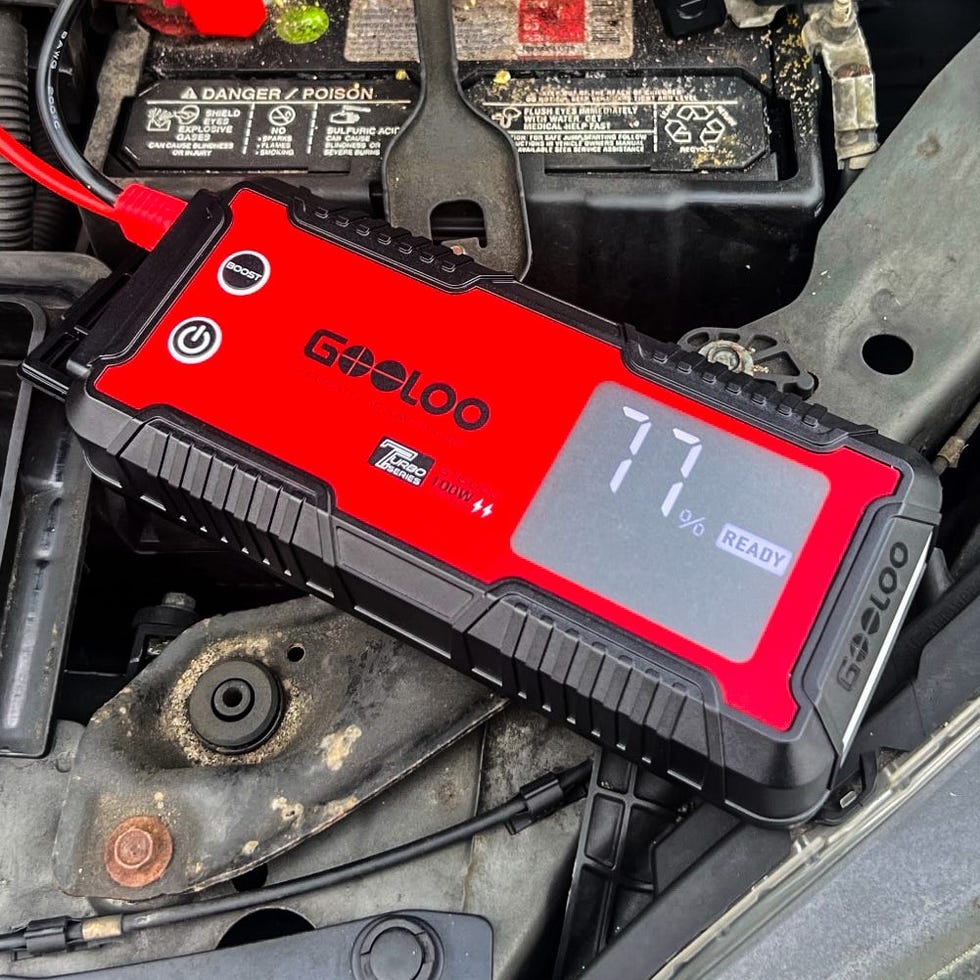 GOOLOO 6000A Portable Jump Starter
Now 18% Off
Best Value Drone
 Potensic ATOM SE GPS Drone
Now 20% Off
Best Overall Robot Vacuum

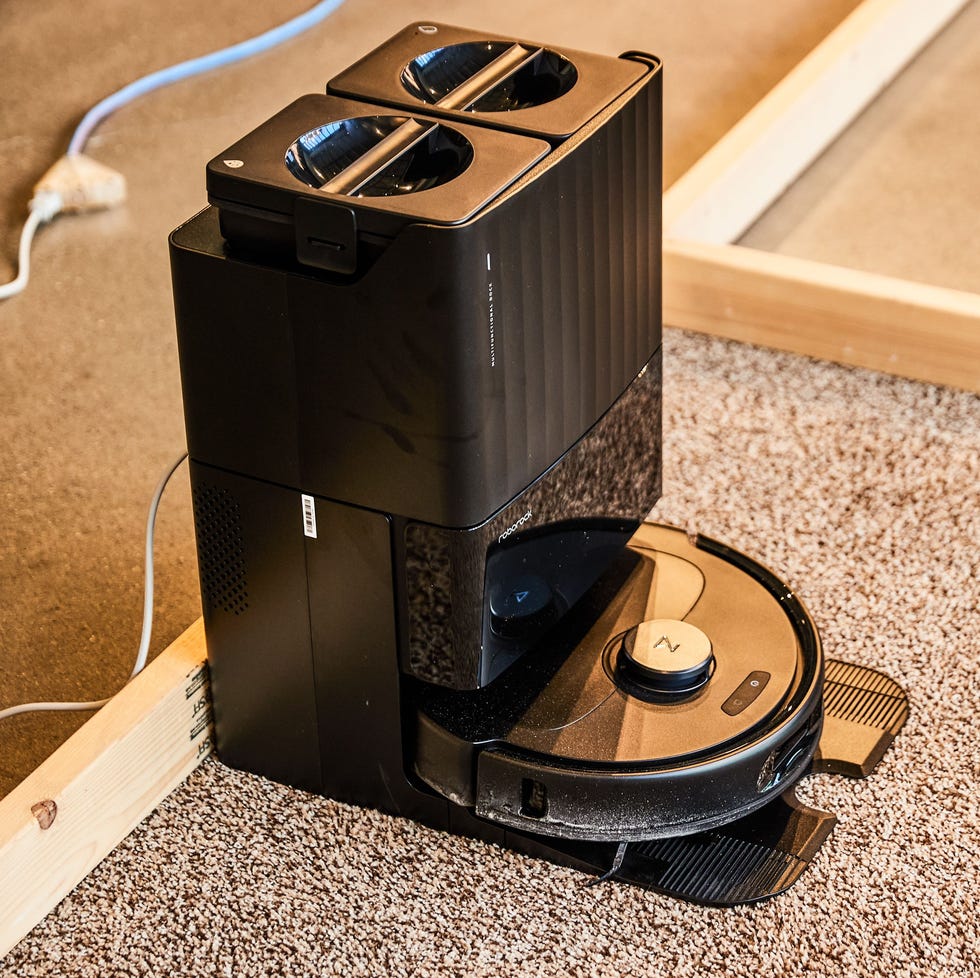 roborock Qrevo Series Robot Vacuum and Mop
Now 38% Off
Best Overall Photo Scanner
 Epson FastFoto FF-640 High-Speed Photo Scanning System
Now 11% Off
Best Vacuum for Pet Hair
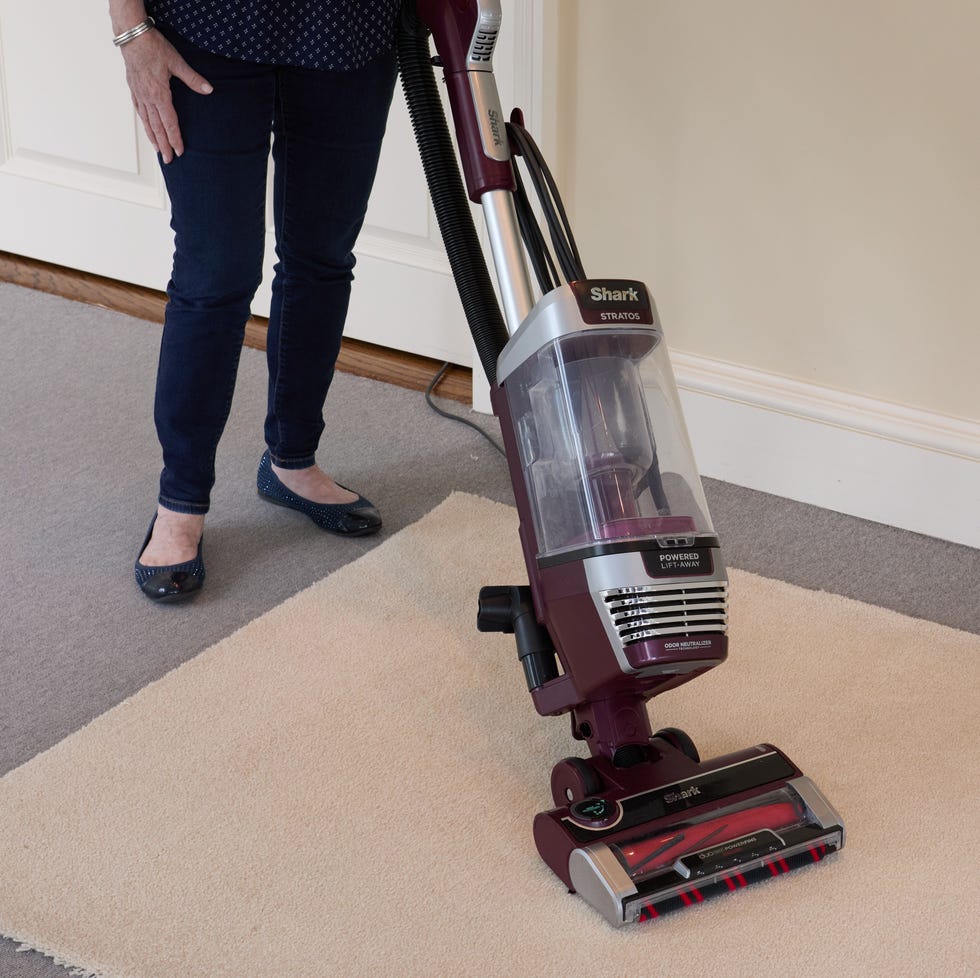 Shark Stratos Upright Vacuum
Now 43% Off