
For decades, crystalline research in space has been an invaluable tool for advancing scientific understanding. From the first American space missions to programmes led by Russia, China, Japan and Germany, more than 160 semiconductor crystal growth experiments have been performed in microgravity since 1973. At least 86% of these experiments showed measurable improvements in one or more key material metrics relative to terrestrial growth.
Despite this compelling scientific record, space-based crystal growth has remained largely experimental. Most efforts to date have focused on demonstrating what is possible in microgravity, rather than on building systems designed to operate reliably and repeatedly without human intervention.
At Space Forge, our work begins with that difference in intent. When we set out to generate plasma aboard our ForgeStar-1 satellite, our aim wasn’t to study plasma behaviour in isolation. Instead, we wanted to determine whether the extreme conditions required for vapour-phase crystal growth could be created, stabilised and controlled autonomously in orbit as part of a future manufacturing process. That question – whether space-enabled materials science can move beyond the laboratory and toward production-capable systems – defines the significance of our recent demonstration.
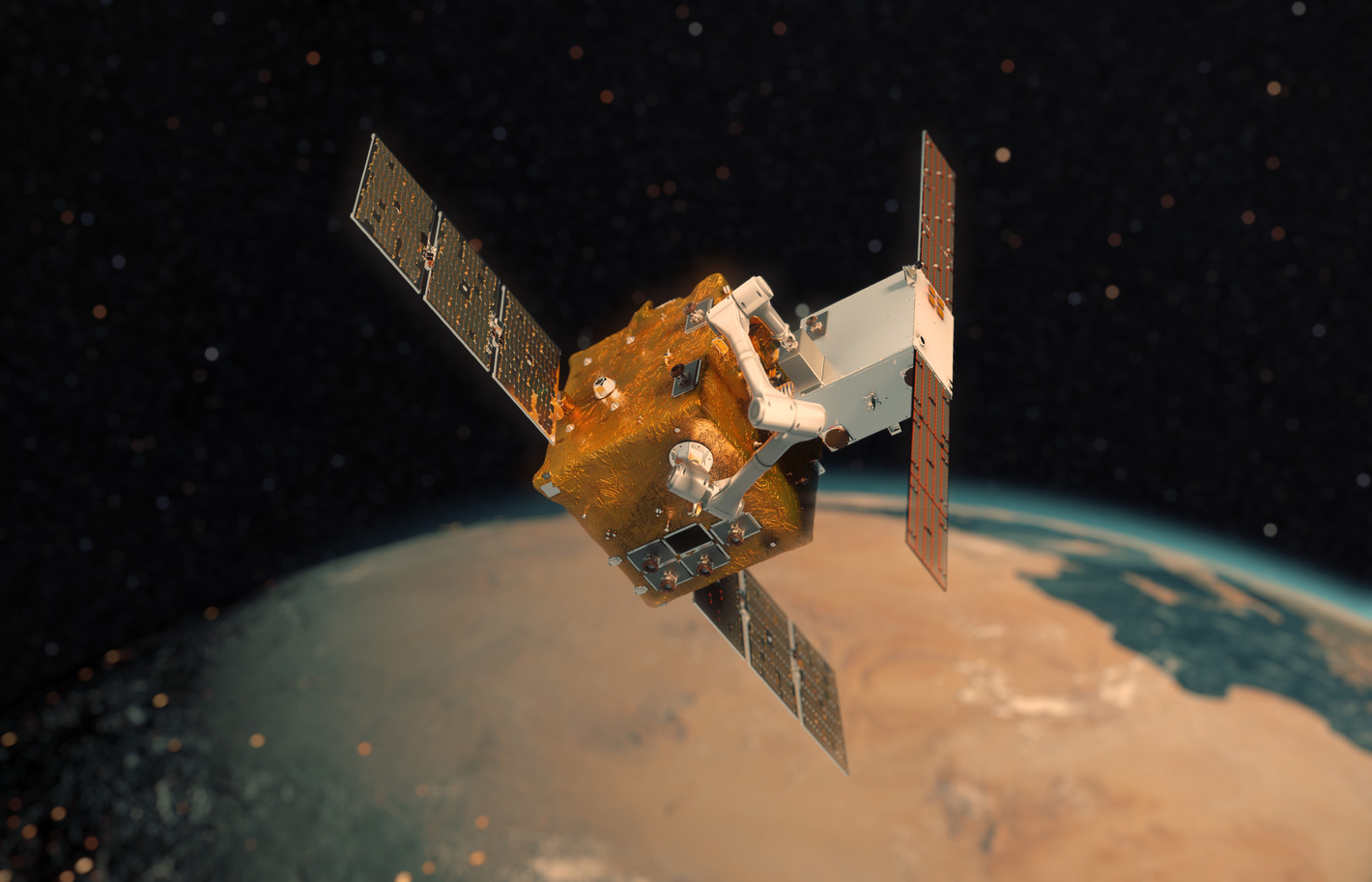
ForgeStar-1 marks the first time that a commercially developed satellite has autonomously generated and controlled an RFdriven plasma system in orbit with production intent. For us, that milestone represents a shift in how space-based plasma systems are conceived, designed and ultimately used.
From spaceborne research to production-oriented systems The International Space Station (ISS) is an extraordinary research platform: a crew-tended lab where experiments can be installed, monitored, adjusted and repaired in orbit. For plasma science in particular, this environment has enabled detailed studies of behaviour in microgravity, providing insights that have directly informed terrestrial research and modelling.
The crew-tended environment is a defining strength. Experiments on the ISS benefit from direct human oversight, flexible operating procedures and the ability to intervene when something behaves unexpectedly. It’s what makes the ISS an incredible place to do scientific research.
But a human-tended laboratory is not the same as a production environment. Systems designed for the ISS operate within a pressurised habitat, share infrastructure with life-support systems and assume that human intervention is available when needed. Those characteristics make the ISS exceptionally well suited to research, but fundamentally different from an industrial platform.
Space Forge is tackling a different problem. We’re designing systems that must operate without human intervention. Once ForgeStar-1 is in orbit, there is no opportunity to adjust a valve manually, retune an RF system, or tweak subsystems mid-process. The system must execute its sequences, detect deviations and respond autonomously without fail.
That requirement for autonomy changes everything.
Designing plasma for autonomy
The plasma system aboard ForgeStar-1 is based on microwave plasma-enhanced chemical vapour deposition (MWPECVD). On Earth, MWPECVD systems are typically monitored continuously. Operators can adjust microwave power, gas flow, pressure and temperature in response to changes in plasma behaviour, chamber conditions or deposition rate.
For the laboratory community, this approach opens new avenues for research. Space-grown materials provide a unique opportunity to study defect formation, thermal transport and growth mechanisms under conditions unattainable on Earth
In orbit, that model does not apply. ForgeStar-1 operates with limited communication windows, fluctuating power availability as it moves between sunlight and eclipse and temperature swings that can exceed 100°C. Under these conditions, plasma generation cannot rely on manual tuning or real-time human decision-making.
Instead, the system is designed to be fully autonomous from the outset. Microwave power is delivered in carefully controlled ISM radio bands, avoiding interference with spacecraft communications. Gas flow systems regulate pressure within tight tolerances, while exhaust and replenishment mechanisms maintain the chemical environment required for plasma stability. All of this is coordinated by onboard control electronics and software that execute pre-programmed sequences and respond dynamically to changing conditions.
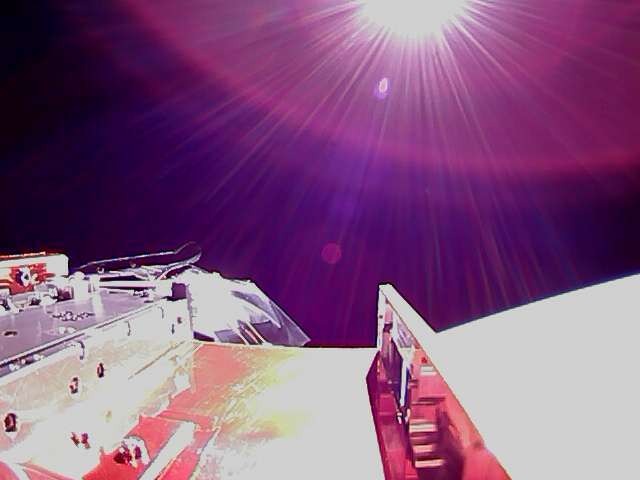
Diagnostic data – covering plasma stability, power delivery and chamber behaviour – is returned to Earth during brief communications windows. The emphasis is not on volume of data, but on relevance: the measurements required to assess performance, refine control strategies and build confidence in repeatability.
The successful plasma strike aboard ForgeStar-1 therefore demonstrates more than the ability to generate plasma in space. It validates that a complex, RF-driven materials processing system can be designed, launched, powered and controlled autonomously in orbit – a prerequisite for any form of scalable manufacturing beyond Earth.
Why space changes the growth environment
Operating a free-flying orbital platform also fundamentally changes the growth environment. On Earth, even the most advanced vacuum chambers contend with residual gases from outgassing, interactions with chamber walls and contamination introduced during handling and operation. These factors influence plasma chemistry and material growth, placing limits on achievable purity and uniformity.
Most efforts to date have focused on demonstrating what is possible in microgravity, rather than on building systems designed to operate reliably and repeatedly without human intervention
In orbit, a free-flying spacecraft operates in an inherently cleaner environment. Combined with the absence of convection in microgravity, this ultra-high-quality vacuum removes major sources of instability during vapour-phase growth. Thermal conditions can be managed more predictably, and impurity incorporation is significantly reduced.
These conditions are particularly relevant for wide- and ultra-wide bandgap materials such as gallium nitride, silicon carbide, aluminium nitride and diamond – materials that underpin technologies ranging from power electronics and advanced communications to quantum systems and high-performance computing. As performance demands increase, the limits of these systems are increasingly set by material quality rather than circuit design alone.
Plasma as the enabling step
Plasma generation itself is not the end goal. In semiconductor manufacturing, the true benchmark is not whether extreme conditions can be created, but whether they can be sustained with sufficient stability to support controlled crystal growth over time.
Our successful plasma strike aboard ForgeStar-1 confirms that the strict conditions required for vapour-phase crystal growth can be created and controlled on an autonomous platform in low Earth orbit. It also marks the beginning of a more challenging phase: turning a one-off demonstration into a repeatable and reliable process.
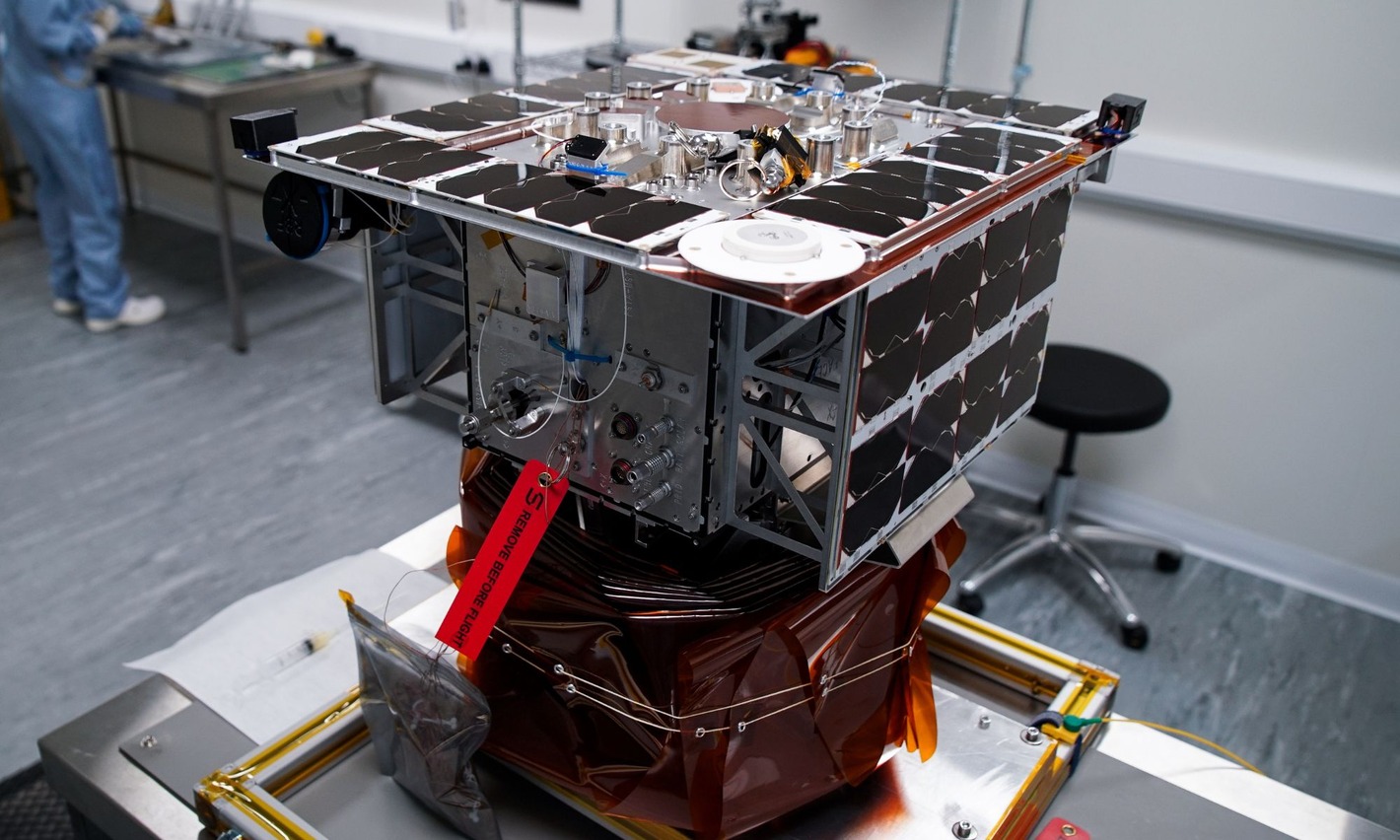
Power remains a central constraint. Continuous plasma operation can require more energy than a small satellite can supply indefinitely, necessitating duty cycles that alternate between growth phases and recharge phases. Thermal management presents further challenges, as cooling efficiency varies dramatically between sunlight and eclipse. Maintaining stable growth conditions across these cycles requires careful system-level design and control.
These challenges will be familiar to anyone who has worked to translate a laboratory process into a production environment. What differs is the context: the same principles of process stability, diagnostics, and repeatability apply, but they must function autonomously in a dynamic orbital environment.
Bridging orbital growth and terrestrial manufacturing
Our long-term vision is not to replace terrestrial manufacturing, but to complement it. While space offers unparalleled conditions for crystal growth, the scale, throughput and integration demanded by global supply chains are best achieved on Earth.
In our model, seeds grown on free-flying orbital manufacturing platforms are returned to Earth and scaled at our materials processing facility, based at the Centre for Integrative Semiconductor Materials (CISM). This hybrid approach combines the advantages of space-derived material quality with the maturity and capacity of terrestrial processing, producing materials that cannot be achieved through Earth-based methods alone.
For the laboratory community, this approach opens new avenues for research. Space-grown materials provide a unique opportunity to study defect formation, thermal transport and growth mechanisms under conditions unattainable on Earth. Insights gained from orbital processes may, in turn, inform improvements in terrestrial techniques.
A shift in how plasma is used in space
Plasma research on the ISS has been – and continues to be – essential for advancing fundamental understanding. Our work at Space Forge does not seek to replace that legacy. Instead, it builds upon it by asking a different question: not how plasma behaves in space, but how it can be used reliably as part of an industrial process.
By demonstrating autonomous plasma generation with production intent, ForgeStar-1 marks a step toward treating space not just as a laboratory, but as a viable manufacturing environment. For us, that moment represents plasma leaving the laboratory – and beginning its transition into a new industrial context.


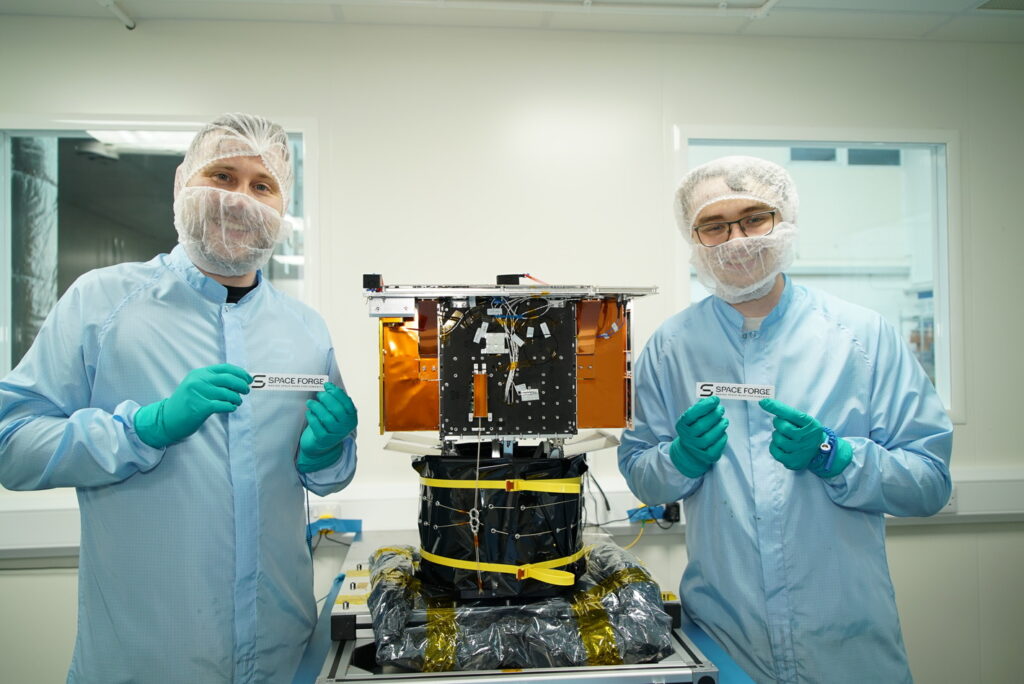
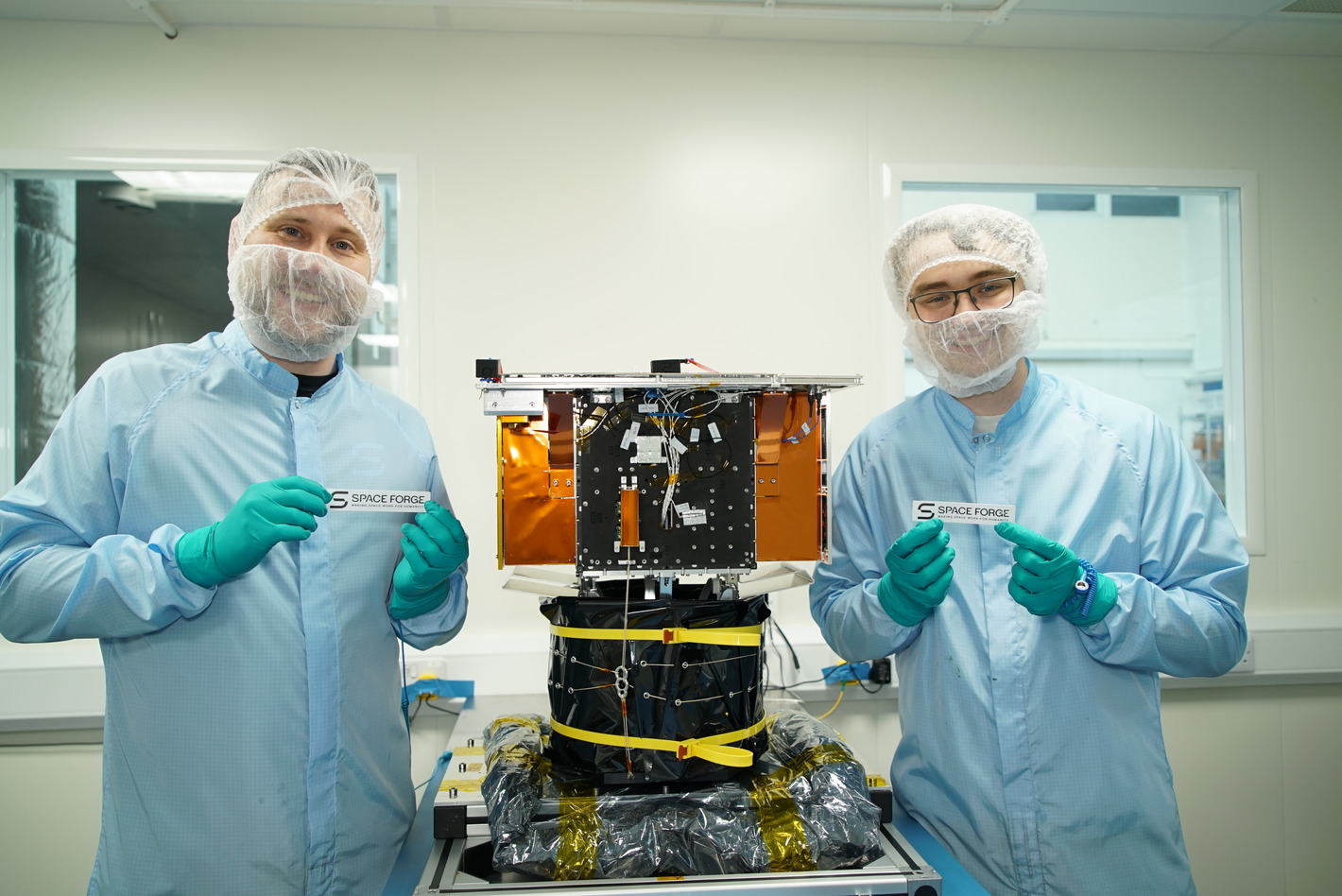
Dr Ed Smith is head of materials Research at Space Forge (left)
Dr Andrew Griffiths is lead CVD engineer at Space Forge
Factory focus
UK space science maintains an emphasis on manufacturing
Besides Space Forge, the UK Space Agency (UKSA) has awarded contracts to two other UK companies to investigate producing advanced materials in Low Earth Orbit, where microgravity, natural vacuum and extreme temperatures could aid creation of products “difficult, expensive, or impossible to manufacture on Earth”.
BioOrbit received £250k for its ‘PHARM’ study to manufacture drugs in microgravity, to enable formation of more perfect, reproducible protein crystals for drug formulations. OrbiSky’s ‘SkyYield’ study won £295k to design a payload to process ZBLAN fluoride glass in microgravity. The specialist optical fibre can transmit light with up to 100 times less signal loss than traditional silica fibre, with potential for telecommunications and medical imaging.
Additionally, British firm Astroscale UK has won a €399k European Space Agency contract to design the world’s first in-orbit satellite refurbishment and upgrading service IRUS.