
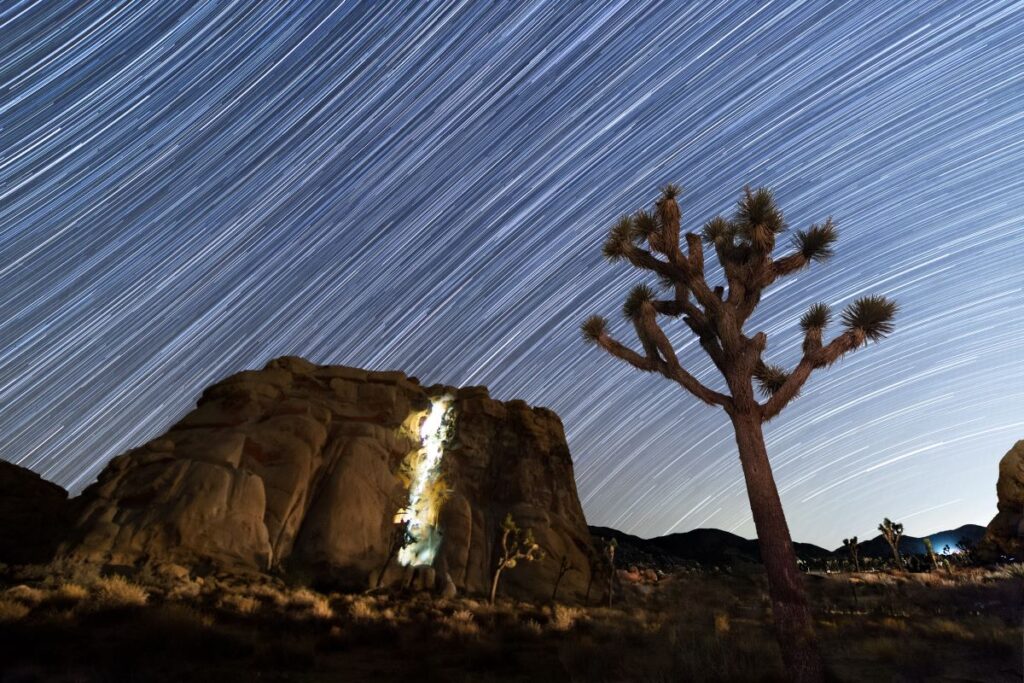
Star trails captured at Cyclops Rock in Joshua Tree National Park. Photo by Hannah Schwalbe via NPS.

–
Staff Writer
·
April 12, 2026
Space: the final frontier… For a few weeks each year, the infinite cosmos comes a little closer to us mere mortals, giving us a glimpse of the wonders out there. And one of them is a meteor shower.
The Lyrid meteor shower is the oldest known astronomical phenomena of its kind. People have been watching it for more than 2,000 years, and even ancient records from China describe it as a sudden “rain of stars” in the sky.
Meteor showers happen when Earth passes through a trail of dust and small rocks left behind by a comet. In this case, the source is a comet called C/1861 G1 Thatcher. When these tiny pieces hit Earth’s atmosphere, they burn up and create bright streaks of light. These are the meteors we see.
Most years, you can expect around 10 to 20 meteors per hour, while some rare years bring short bursts of higher activity with over 100. The best part? The phenomenon is visible to the naked eye under completely dark conditions. Still, for an improved experience, you could use binoculars or a telescope.
When and where to see the Lyrid meteor shower
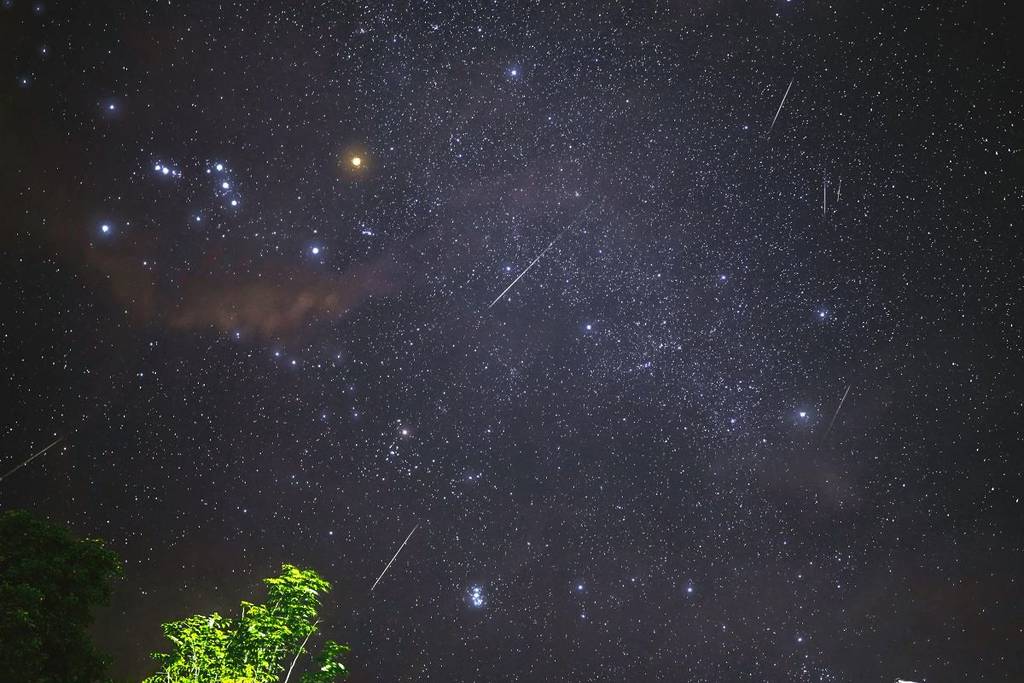 Image by Armand Alcordo Jr. on Pexels
The Lyrids will be active from April 15 to April 29, 2026, with the peak happening on the night of April 21 into the early hours of April 22.
The best time to watch is after midnight, when the sky is darkest, and the radiant point in the constellation Lyra is higher in the sky. If you want the best view, you need to get away from city lights. Here are some good options within driving distance: