

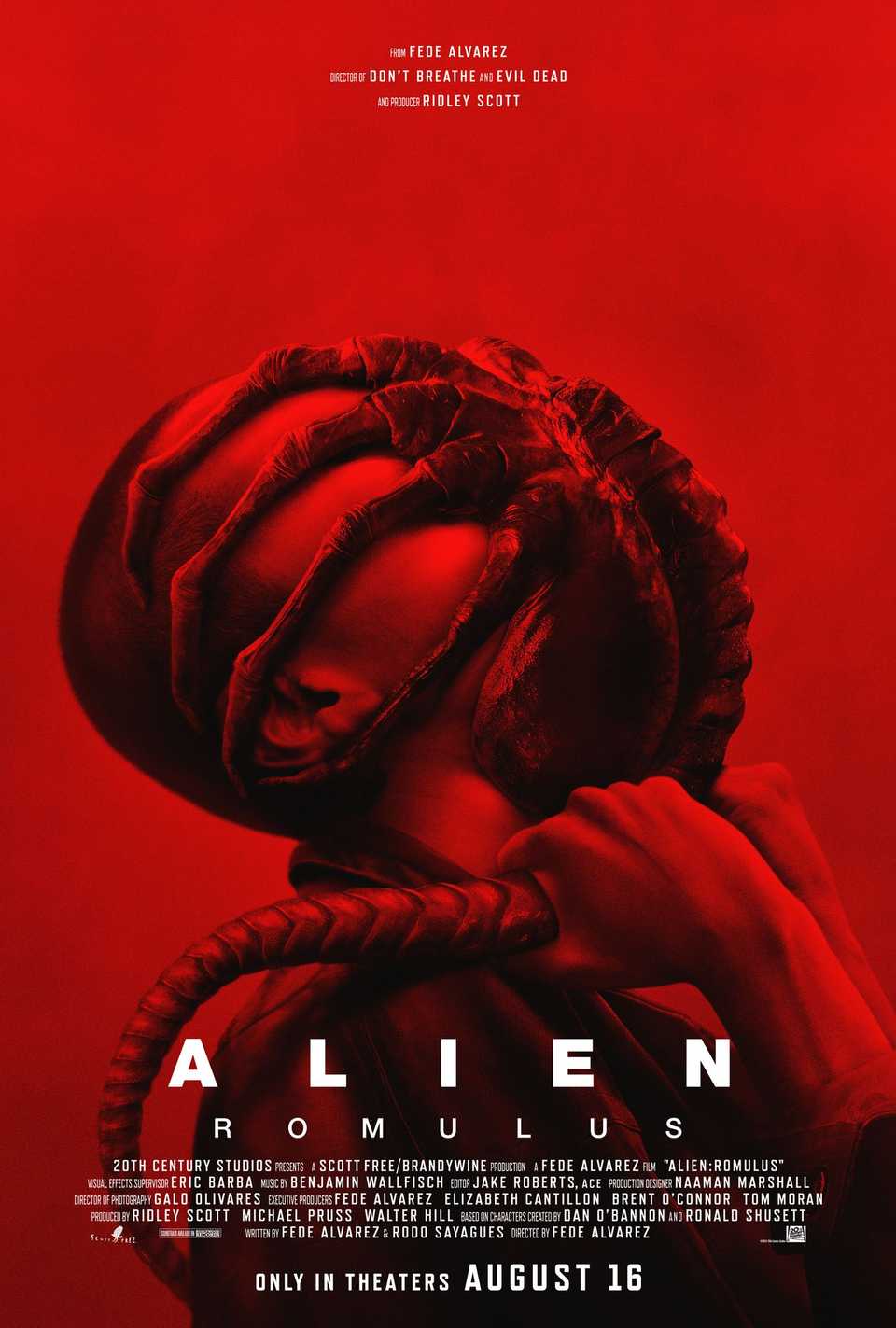
Streaming success often reveals which films have lasting impact, and Alien: Romulus is proving its staying power on HBO Max. After generating more than four times its $80 million budget at the box office, the film has surged back into the spotlight, driven by sustained audience engagement rather than novelty. That continued momentum reflects a clear understanding of what has defined the Alien franchise for over four decades.
Directed by Fede Álvarez, Romulus does not attempt to overhaul the series or reshape its identity. It operates with a firm grasp of the mechanics that have always made these films effective. The tension is deliberate, the environments are controlled, and the narrative remains focused on survival within systems that treat human life as expendable. Romulus is a film that recognizes what works and commits to executing those elements with precision. Its continued success stems from that discipline, reinforcing the idea that Alien: Romulus continues to thrive because it understands and applies the franchise’s core mechanics on every level.
‘Romulus’ Understands How to Build and Sustain Tension

The Xenomorph lurking in Alien: Romulus.Image via 20th Century Studios
Tension in Romulus is built through containment and spatial awareness, both of which are handled with careful direction. Álvarez establishes each environment with clarity before allowing it to become restrictive, ensuring that the audience has an understanding of the space before it turns hostile. This approach creates a sense of control that gradually gives way to pressure as movement becomes limited and options begin to disappear. Escalation in Romulus follows a direct chain of cause and effect. Every decision produces consequences that shape the next sequence, which allows the narrative to build without interruption. Álvarez maintains that progression without relying on resets or pauses, keeping the film locked into a steady rise in intensity. That control ensures the tension remains consistent rather than suffering from the fluctuation between peaks and lulls.
The structure places Romulus in direct alignment with Alien and Aliens, both of which rely on clear geography and deliberate escalation to sustain pressure. Álvarez draws from that foundation while maintaining a focused approach to pacing and progression, with the result being a film that feels cohesive from beginning to end. Cailee Spaeny anchors that structure with a performance rooted in survival. Her reactions remain consistently grounded in the reality of the situation, which reinforces the film’s commitment to immediacy. The performance echoes the stability associated with Sigourney Weaver in early Alien entries, giving the film a human center that supports its tension. Because of that alignment between direction and performance, the film sustains pressure without losing clarity.
Collider Exclusive · Sci-Fi Survival Quiz
Which Sci-Fi World Would You Survive?
The Matrix · Mad Max · Blade Runner · Dune · Star Wars
Five universes. Five completely different ways the future went wrong — or sideways, or up in flames. Only one of them is the world your instincts were built for. Eight questions will figure out which dystopia, galaxy, or desert wasteland you’d actually make it out of alive.
💊The Matrix
🔥Mad Max
🌧️Blade Runner
🏜️Dune
🚀Star Wars
TEST YOUR SURVIVAL →
01
You sense something is deeply wrong with the world around you. What do you do?
The first instinct is often the truest one.
APull on every thread until I understand the system — then figure out how to break it.
BStop asking questions and start stockpiling — food, fuel, weapons. Questions don’t keep you alive.
CKeep my head down, observe carefully, and trust no one until I know who’s pulling the strings.
DStudy the patterns. Every system has a rhythm — learn it, and you learn how to survive it.
EFind the people fighting back and join them. You can’t fix a broken galaxy alone.
NEXT QUESTION →
02
In a world of scarcity, what resource do you guard most fiercely?
What we protect reveals what we believe survival actually requires.
AKnowledge. If you understand the system, you don’t need resources — you can generate them.
BFuel. Everything else — movement, power, escape — runs on it.
CTrust. In a world of fakes and informants, a truly reliable ally is rarer than any commodity.
DWater. And after water, information — the two things empires are truly built on.
EShips and credits. The galaxy is big — you survive it by being able to move through it freely.
NEXT QUESTION →
03
What kind of threat keeps you up at night?
Fear is useful data — if you’re honest about what you’re actually afraid of.
AThat reality itself is a lie — that everything I experience has been constructed to keep me compliant.
BA raid. No warning, no mercy — just the roar of engines and then nothing left.
CBeing identified. Once someone with power decides you’re a problem, you’re already out of time.
DBeing outmanoeuvred — losing a political game I didn’t even know I was playing.
EThe Empire tightening its grip until there’s nowhere left to run.
NEXT QUESTION →
04
How do you deal with authority you don’t trust?
Every dystopia has a power structure. Your approach to it determines everything.
ASubvert it from the inside — learn its rules well enough to weaponise them against it.
BIgnore it and stay out of its reach. The further from any power structure, the better.
CAppear to comply while doing exactly what I need to do. Visibility is the enemy.
DManoeuvre within it carefully. You can’t beat a system you refuse to understand.
EResist openly when I have to. Some things are worth the risk of being seen.
NEXT QUESTION →
05
Which environment could you actually endure long-term?
Survival isn’t just tactical — it’s physical, psychological, and very much about where you are.
AUnderground bunkers and server rooms — cramped, artificial, but with access to everything that matters.
BOpen wasteland — brutal sun, no shelter, constant movement. At least the threat is honest.
CA dense, rain-soaked city where you can disappear into the crowd and nobody asks questions.
DMerciless desert — extreme heat, no water, and something enormous living beneath the sand.
EThe fringe — backwater planets and busy spaceports where the Empire’s attention rarely reaches.
NEXT QUESTION →
06
Who do you want in your corner when things fall apart?
The company you keep is the clearest signal of who you actually are.
AA tight crew of believers who’ve seen behind the curtain and have nothing left to lose.
BOne or two people I’d trust with my life. Any more than that and someone talks.
CNobody, ideally. Alliances are liabilities. I work alone unless I have no choice.
DA community bound by shared hardship and mutual survival — people who need each other to last.
EA ragtag team with wildly different skills and total commitment when it counts.
NEXT QUESTION →
07
Where do you draw the line — if you draw one at all?
Every survivor eventually faces a moment that tests what they’re actually made of.
AI won’t harm the innocent — even the ones who’d report me without hesitation.
BI do what I have to to protect the people I’ve chosen. Everything else is negotiable.
CThe line shifts depending on who’s asking and what’s at stake.
DI draw a long-term line — nothing that compromises my people’s future, even if it’d help now.
ESome lines, once crossed, can’t be uncrossed. I know which ones they are.
NEXT QUESTION →
08
What would actually make survival worth it?
Staying alive is one thing. Having a reason to is another.
AWaking others up — dismantling the illusion so no one else has to live inside it.
BFinding somewhere — or someone — worth protecting. A reason to keep moving.
CAnswers. Understanding what I am, what any of this means, before time runs out.
DLegacy — shaping the future in a way that outlasts me by generations.
EFreedom — for myself, for others, for every world still living under someone else’s boot.
REVEAL MY WORLD →
Your Fate Has Been Calculated
You’d Survive In…
Your answers point to the world your instincts were built for. This is the universe your temperament, your survival instincts, and your particular brand of stubbornness were made for.
The Resistance, Zion
The Matrix
You took the red pill a long time ago — probably before anyone offered it to you. You’re a systems thinker who can’t help but notice the seams in things.
You’re drawn to understanding how the system works before figuring out how to break it.
You’d find the Resistance, or it would find you — your instinct for spotting constructed realities is the machines’ worst nightmare.
You function best when you have access to information and the freedom to act on it.
The Matrix built an airtight prison. You’d be the one probing the walls for the door.
The Wasteland
Mad Max
The wasteland doesn’t reward the clever or the well-connected — it rewards those who are hard to kill and harder to break. That’s you.
You don’t need comfort, community, or a cause larger than the next horizon.
You need a vehicle, a clear threat, and enough fuel to outrun it — and you’re good at all three.
You are unsentimental enough to survive that world, and decent enough — just barely — to be something more than another raider.
In the wasteland, that distinction is everything.
Los Angeles, 2049
Blade Runner
You’d survive here because you know how to exist in moral grey areas without losing yourself completely.
You read people accurately, keep your circle small, and ask the questions others prefer not to answer.
In a city where humanity is a legal designation rather than a feeling, you hold onto something that keeps you functional.
You’re not a hero. But you’re not lost, either.
In Blade Runner’s world, that distinction is everything.
Arrakis
Dune
Arrakis is the most hostile environment in the known universe — and you are precisely the kind of person it rewards.
Patience, discipline, and political awareness are your core strengths — and on Arrakis, they’re survival tools.
You understand that the long game matters more than any single victory.
Others come to Dune and are consumed by it. You’d learn its logic and earn its respect.
In time, you wouldn’t just survive Arrakis — you’d begin to reshape it.
A Galaxy Far, Far Away
Star Wars
The galaxy far, far away is vast, loud, and in a constant state of violent political upheaval — and you wouldn’t have it any other way.
You find meaning in being part of something larger than yourself — a cause, a crew, a rebellion.
You’d gravitate toward the Rebellion, or the fringes, or whatever pocket of the galaxy still believes the Empire’s grip can be broken.
You fight — not because you have to, but because standing aside isn’t something you’re capable of.
In Star Wars, that willingness is what makes all the difference.
↻ RETAKE THE QUIZ
Why ‘Romulus’ Is Working So Well On Streaming
Romulus’ presence in HBO Max’s Top 10 indicates strong reengagement to audiences who are responding to its structure and pacing. Streaming environments reward films that maintain forward momentum, and Romulus is built to sustain that movement. Álvarez structures the narrative so that each sequence advances the story while increasing stakes, which keeps viewers engaged from start to finish. That momentum plays into exactly how audiences watch films on streaming platforms. Once Romulus begins to tighten its focus, it continues to move forward without distraction. This makes it easy to commit to the film and difficult to step away from before it reaches its conclusion. The pacing supports completion, which contributes to its visibility and continued performance.
Thematically, the film remains aligned with the core ideas of Alien, which continue to resonate and culminate into one of the most successful sci-fi franchises of all time. Corporate exploitation and disregard for human life are central to the narrative, shaping both the conflict and the stakes. Modern audiences continue to connect with these themes, arguably more so than ever, particularly within science fiction and survival horror. Álvarez integrates these ideas into the structure of the film, ensuring they are present in both the narrative and the tension it creates. That combination of momentum, thematic focus, and controlled direction positions Romulus as a strong fit for streaming.
‘Romulus’ Is A Disciplined Entry That Strengthens The Franchise

An alien snarling into the camera in ‘Alien: Romulus.’Image via 20th Century Studios
Romulus reinforces the Alien franchise by maintaining continuity with its established tone and visual language. Álvarez draws on the foundation set by Ridley Scott, particularly in the use of industrial design and controlled visual composition. These elements connect the film to the broader series while supporting its own narrative identity. The film includes recognizable elements that longtime fans will identify, but it does not depend on nostalgia alone to carry the experience. Álvarez maintains cohesion across tone, tension, theme, and structure, ensuring that each element supports the others. This level of consistency allows Romulus to function as a complete entry within the franchise while reinforcing its core identity.
That identity remains rooted in survival, confinement, and the consequences of unchecked systems. Romulus adheres to those principles with discipline, which strengthens its position within the series. It contributes to the franchise by reinforcing what defines it at a foundational level, rather than expanding beyond those boundaries. Its durability is evident in its continued relevance beyond its theatrical release. The film continues to hold up under sustained audience attention, which positions it as a stable and effective entry to the wider Alien universe.
The ongoing success of Alien: Romulus can be traced to discipline, control, and clarity. Every aspect of the film reflects a commitment to executing the core mechanics that define the franchise. That consistency carries through from its theatrical performance to its current presence on HBO Max, and its streaming success is not incidental to simply being on a new platform. Its success is a direct result of a film that maintains focus, builds tension with precision, and engages with themes that remain relevant to modern audiences. Alien: Romulus lands because it treats the foundation of its franchise as something to execute, not reinterpret. Romulus proves the franchise never needed reinvention, just creatives who understand it.
Release Date
August 16, 2024
Runtime
119 Minutes
Director
Fede Alvarez