
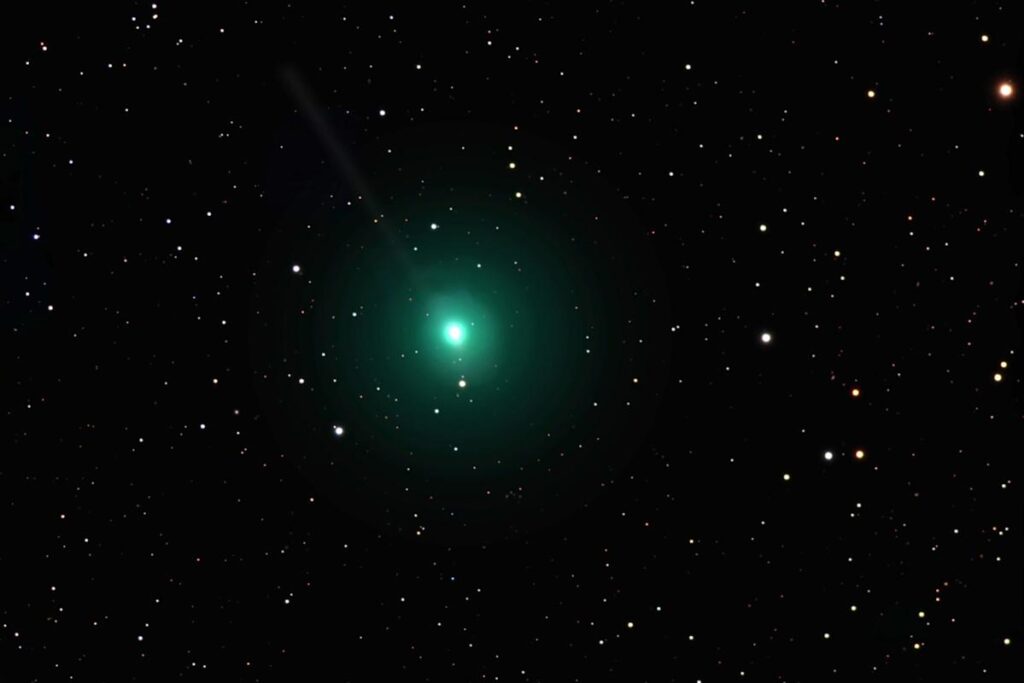
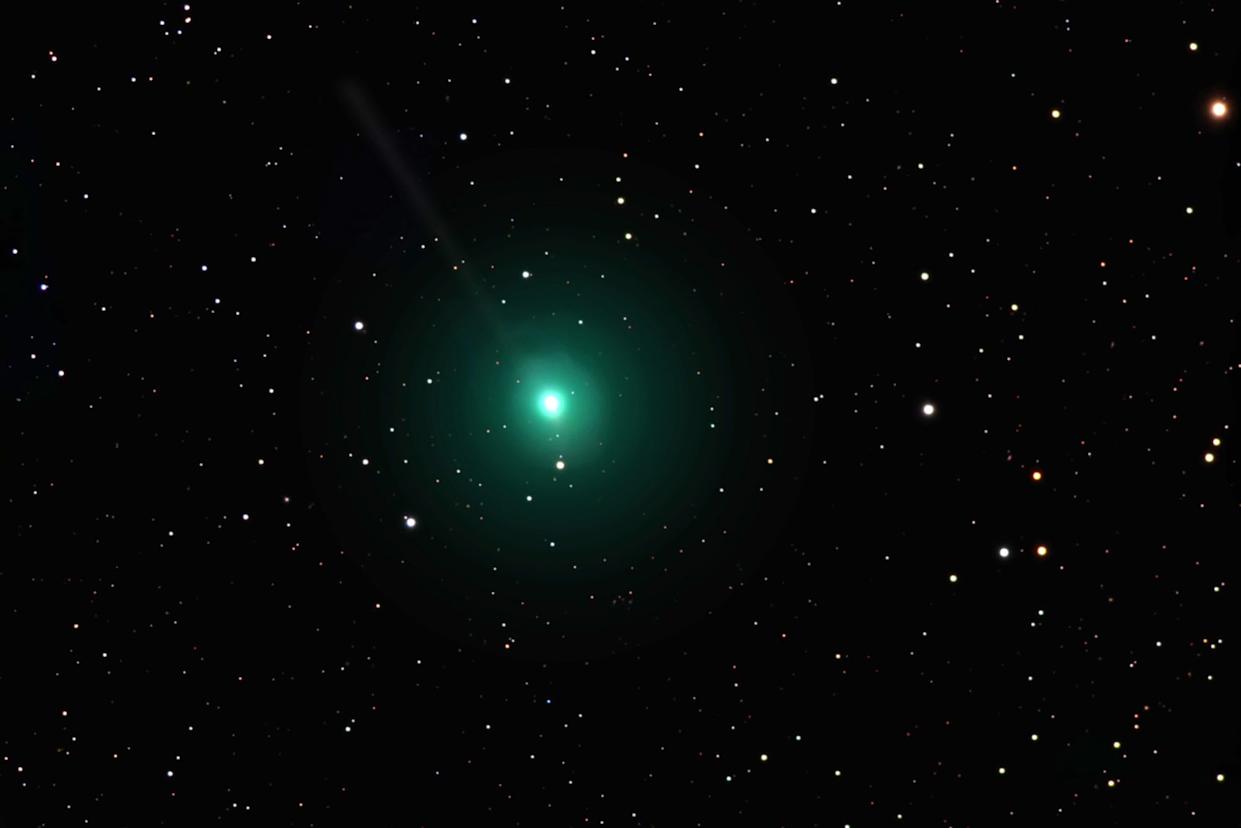
Comet 3I/ATLAS
Credit: Getty
NEED TO KNOW
Comet C/2025 R3 (Pan-STARRS) orbits the sun every 170,000 years, making its appearance extremely rare
Best viewing is in the northern hemisphere before sunrise near the constellation Pegasus through April 20
Astronomers recommend binoculars for spotting the comet, which could reach a magnitude of +2 to +3 brightness
A rare celestial visitor is slipping into the dawn sky, and it hasn’t passed through our corner of the solar system since prehistoric times.
Comet C/2025 R3 (Pan-STARRS) — discovered on Sept. 7, 2025, by the Pan-STARRS survey telescope at Haleakalā in Hawaii — is becoming brighter as it approaches the inner solar system.
Astronomers estimate the comet completes an orbit around the sun roughly every 170,000 years, making this cosmic cameo especially rare, per Space.com.
Over the next several mornings, however, the comet becomes easier to spot as it heads toward perihelion on April 19, when it will pass about 0.5 astronomical units from the sun.
Given that this isn’t an intense “sungrazer,” astronomers say it’s unlikely to break apart like some comets that venture too close to the Sun.
In the meantime, here’s everything you need to know about this cosmic spectacle.
When to see the comet Pan-STARRS?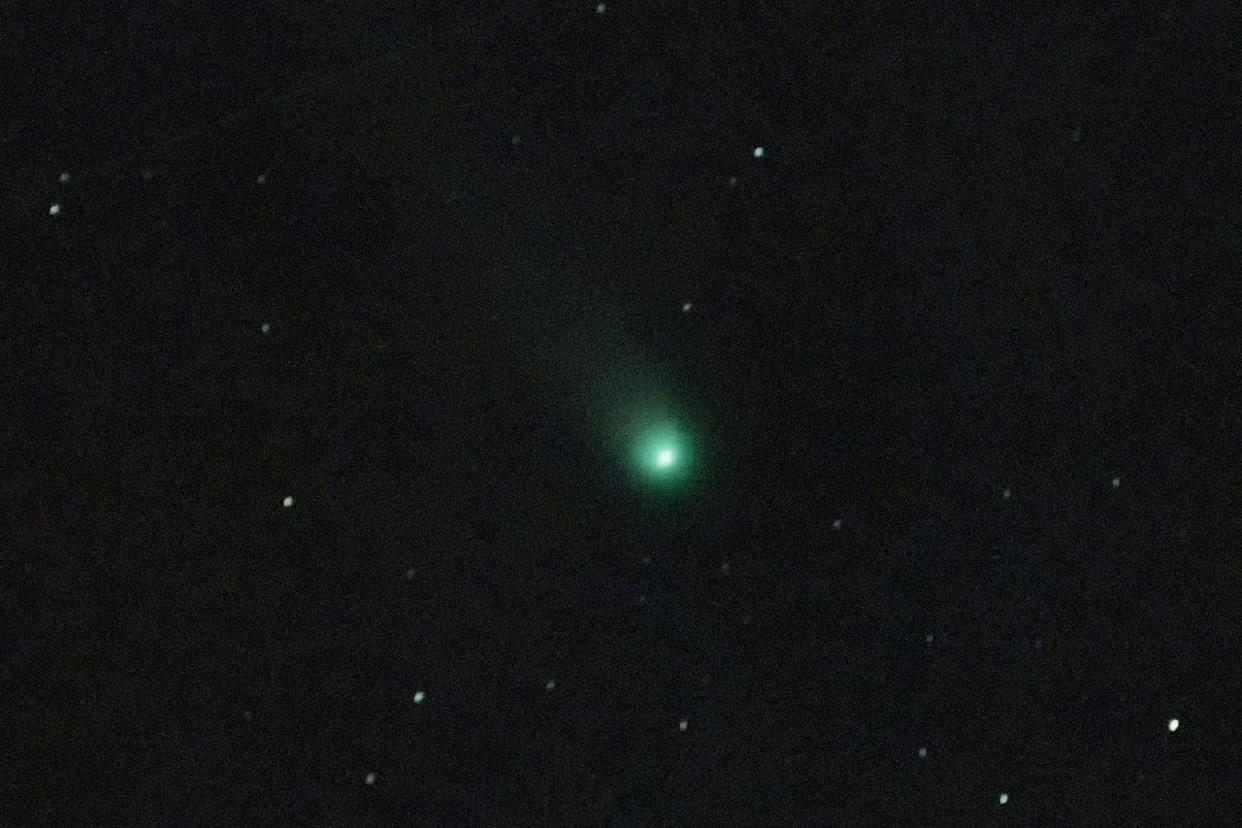
Comet C/2025 A6 (Lemmon)
Credit: Davide Pischettola/NurPhoto via Getty
Observers in the northern hemisphere have the best chance to see the comet now through April 20, when it appears in the predawn sky. The ideal viewing time is about 90 minutes before sunrise, when the comet rises above the eastern horizon.
Viewing conditions improve this week, thanks to darker skies as the moon wanes following the last quarter phase on April 10 and approaches a new moon on April 17, creating optimal conditions. Although the comet reaches its closest approach to Earth on April 27, it will likely no longer be visible from the northern hemisphere at that point.
Where to see the comet Pan-STARRS?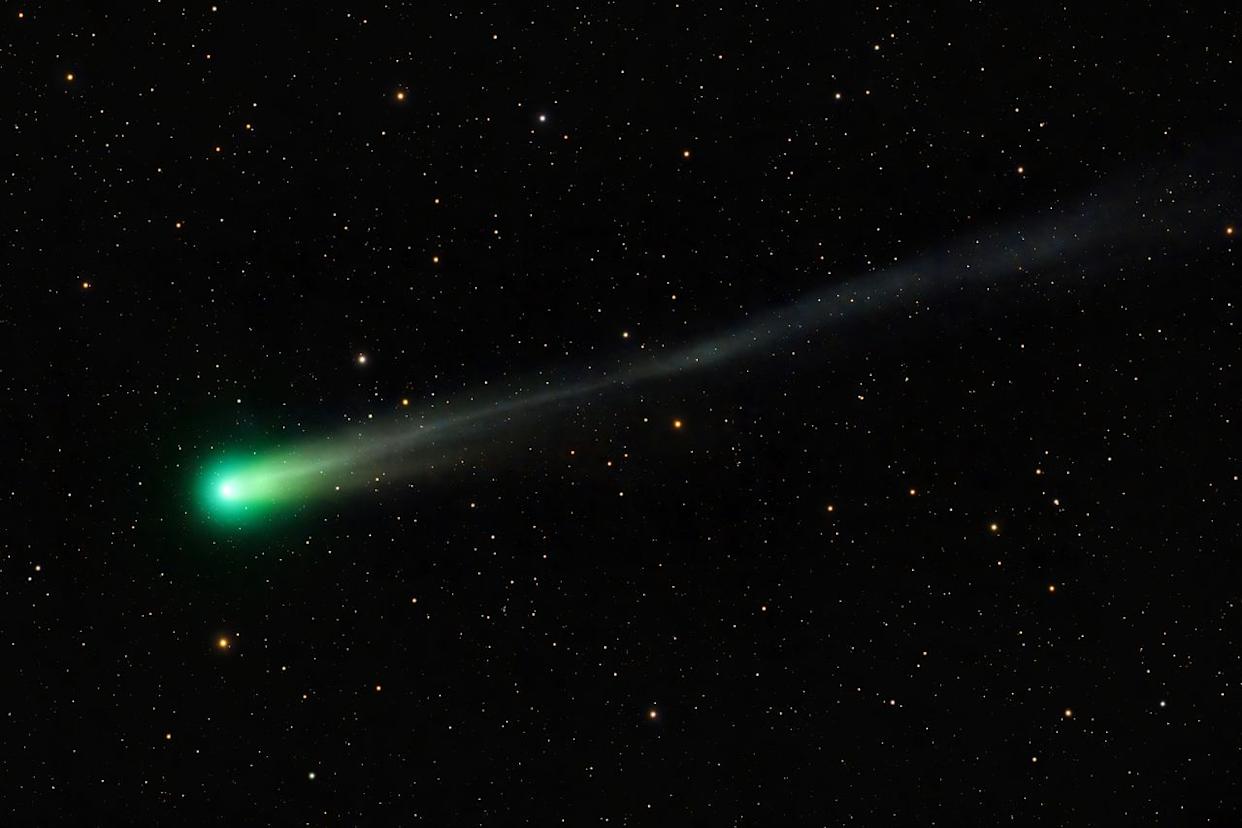
Comet C/2025 A6
Credit: Getty
Look low in the eastern sky within the constellation Pegasus, where the comet is currently passing near the famous Great Square of Pegasus, a diamond-shaped pattern of four bright stars, per The Sky Live. Observers can locate the comet by identifying the star Markab, at the lower corner of the square, where the comet appears just above it and is gradually moving toward Algenib.
Given that the comet sits close to the horizon, a clear eastern view free of buildings or trees is essential.
How to see the comet Pan-STARRS?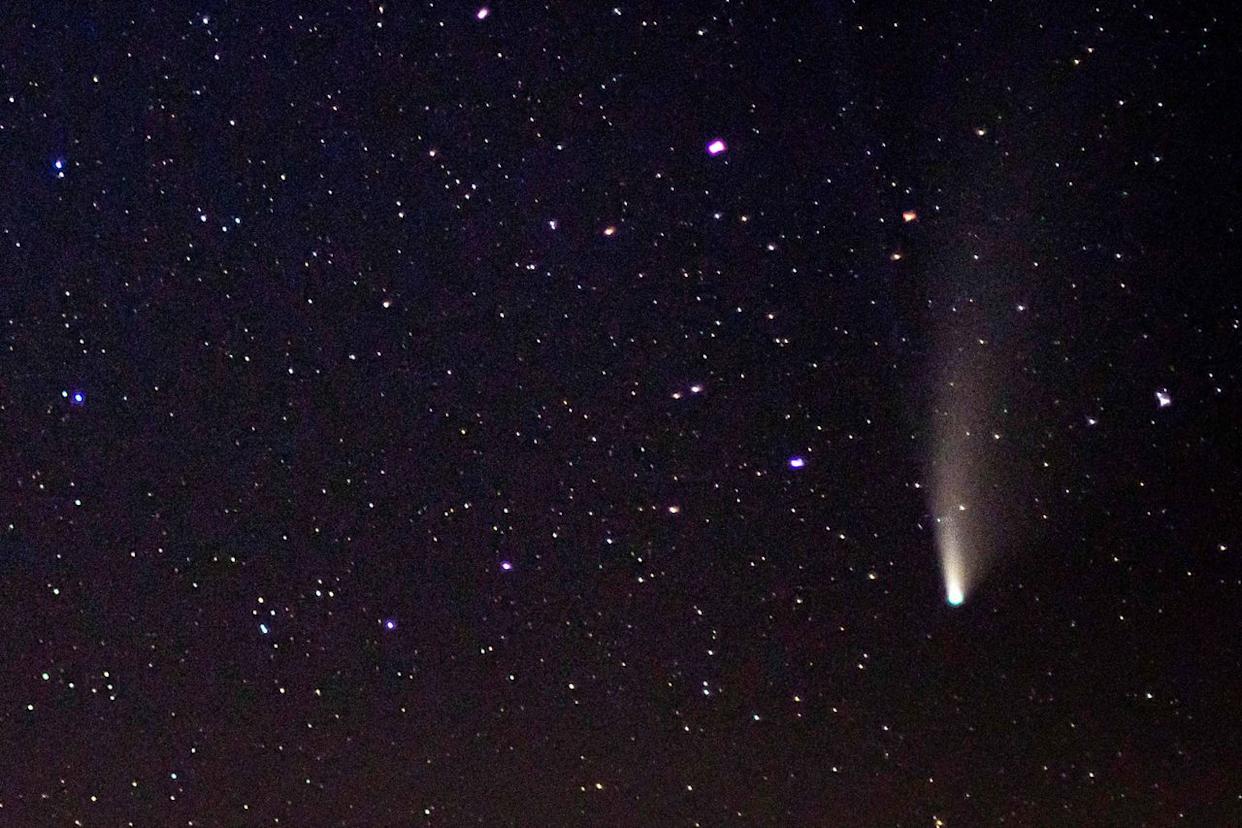
comet seen in the sky
Credit: NurPhoto/Getty
While the comet may technically reach naked-eye visibility in very dark skies, dawn twilight makes it harder to spot, so astronomers recommend using 10×50 binoculars or similar optics.
According to the Comet Observation Database, current brightness estimates suggest the comet could reach magnitude +2 to +3, potentially making it one of the brightest comets visible in recent years, though comet brightness is notoriously difficult to predict.
Read the original article on People