
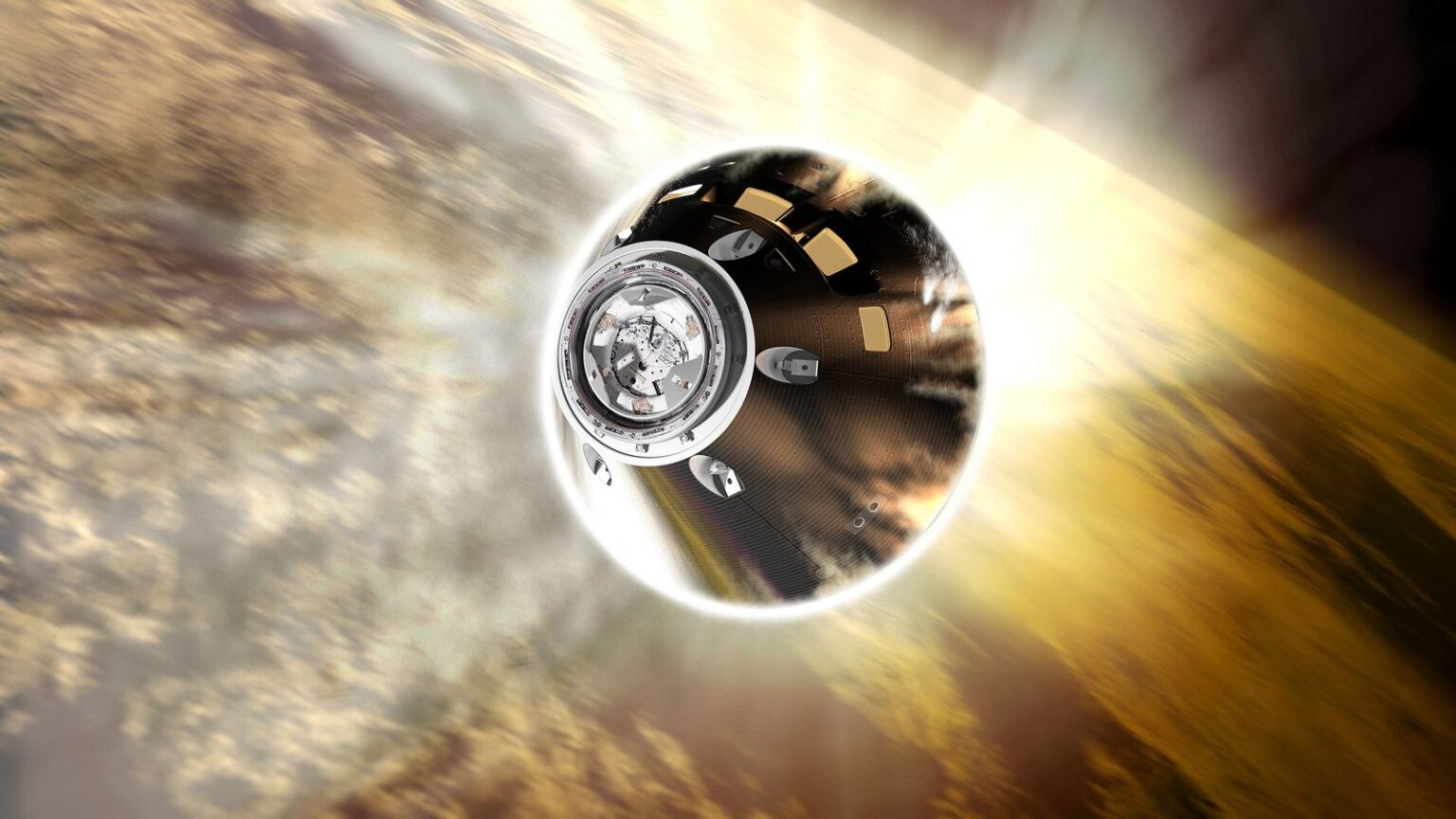
After an epic trip to the moon and back, it’s landing day for the four astronauts of NASA’s Artemis 2 mission. For the first time in over 53 years, astronauts are returning to Earth from the moon.
“Every system we’ve demonstrated over the past nine days — life support, navigation, propulsion, communications — all of it depends on the final minutes of flight,” NASA Associate Administrator Amit Kshatriya told reporters Thursday (April 9). “We have high confidence in the system, in the heat shield, and the parachutes and the recovery system that we’ve put together.”
You may like
The Artemis 2 Orion capsule will return to Earth tonight, April 10, at 8:07 p.m. EDT (0007 April 11 GMT) with a splashdown in the Pacific Ocean off the coast of San Diego, California. Returning home on the ship to end a 10-day trip to the moon are NASA astronauts Reid Wiseman (commander), Victor Glover (pilot), Christina Koch (mission specialist) and Canadian Space Agency astronaut Jeremy Hansen (mission specialist). You can watch the landing live on Space.com, beginning at 6:30 p.m. EDT (2230 GMT). You can also follow the mission live online on our Artemis 2 mission updates page.
Here’s a look at every stage of the Artemis 2 crew’s return to Earth, to explain how the reentry, descent, splashdown and recovery will work.
1. Crew wakes up for landing day
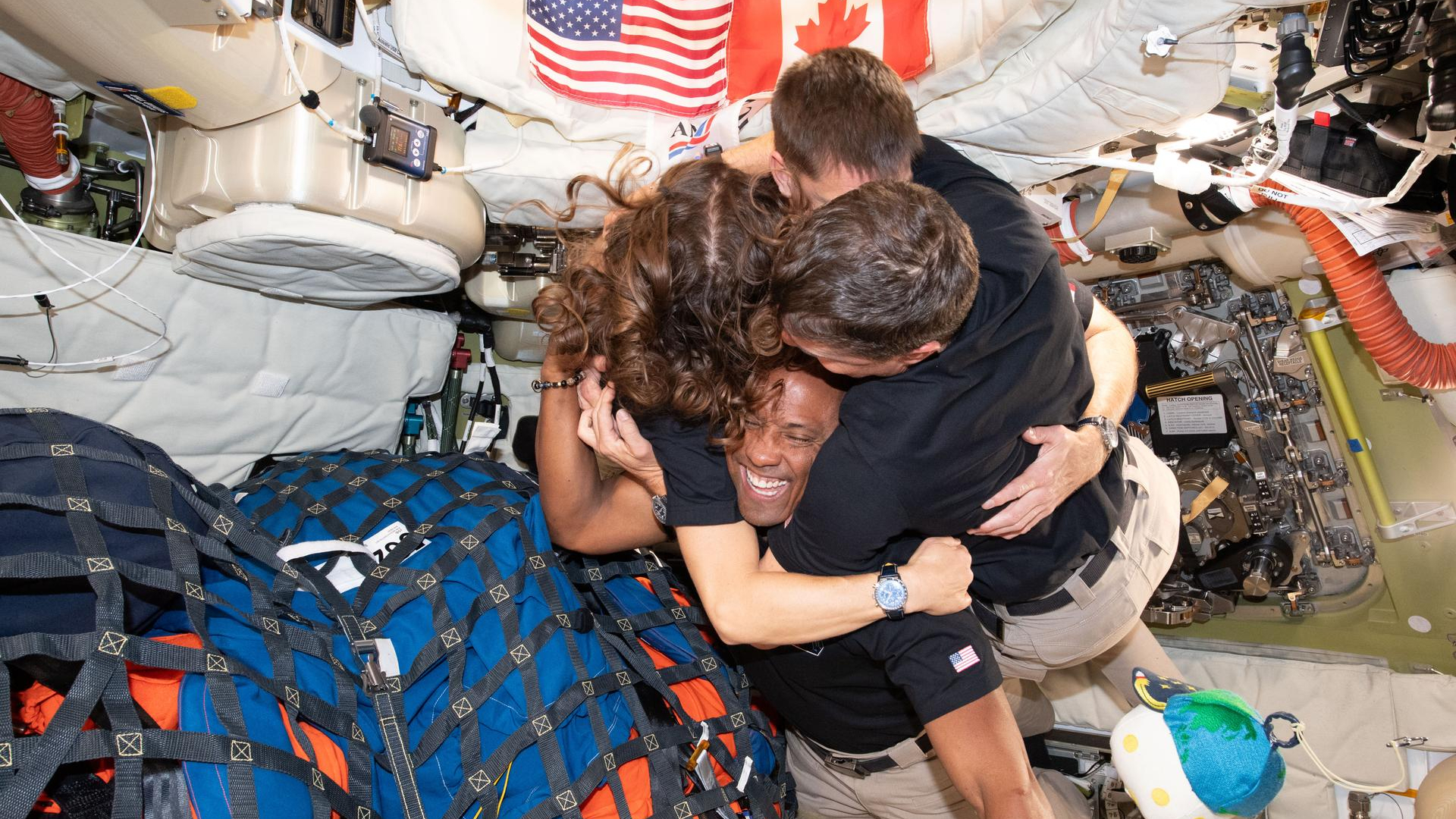
The Artemis 2 astronauts share an embrace during their historic moon mission. (Image credit: NASA)
The first big event of landing day for the Artemis 2 astronauts is something that all of us are familiar with: waking up.
NASA will wake the astronauts at 11:35 a.m. EDT (1535 GMT) to mark the start of the crew’s day, the last one they’ll spend in space during their 10-day flight.
Mission Control will rouse the astronauts with a wakeup song, kind of like an alarm. Flight controllers have played wakeup songs every day of the mission. You can see our Artemis 2 Spotify playlist of wakeup music here, and Flight Day 10 will be the last one.
After the wakeup call, the crew has some time to get ready (think brushing their teeth and combing their hair). Then they’ll start their last to-do list in space.
2. Astronauts configure Orion for entry
At 1:50 p.m. EDT (1750 GMT), just over three hours into their work day, the Artemis 2 astronauts will begin configuring Orion for reentry.
What to read next
That means stowing away gear that’s no longer needed, setting up their seats (which have been folded away for most of the flight) and other tasks required to prepare their spacecraft for its plunge through the atmosphere to come home.
3. Return Trajectory Correction 3 Burn
(Image credit: NASA)
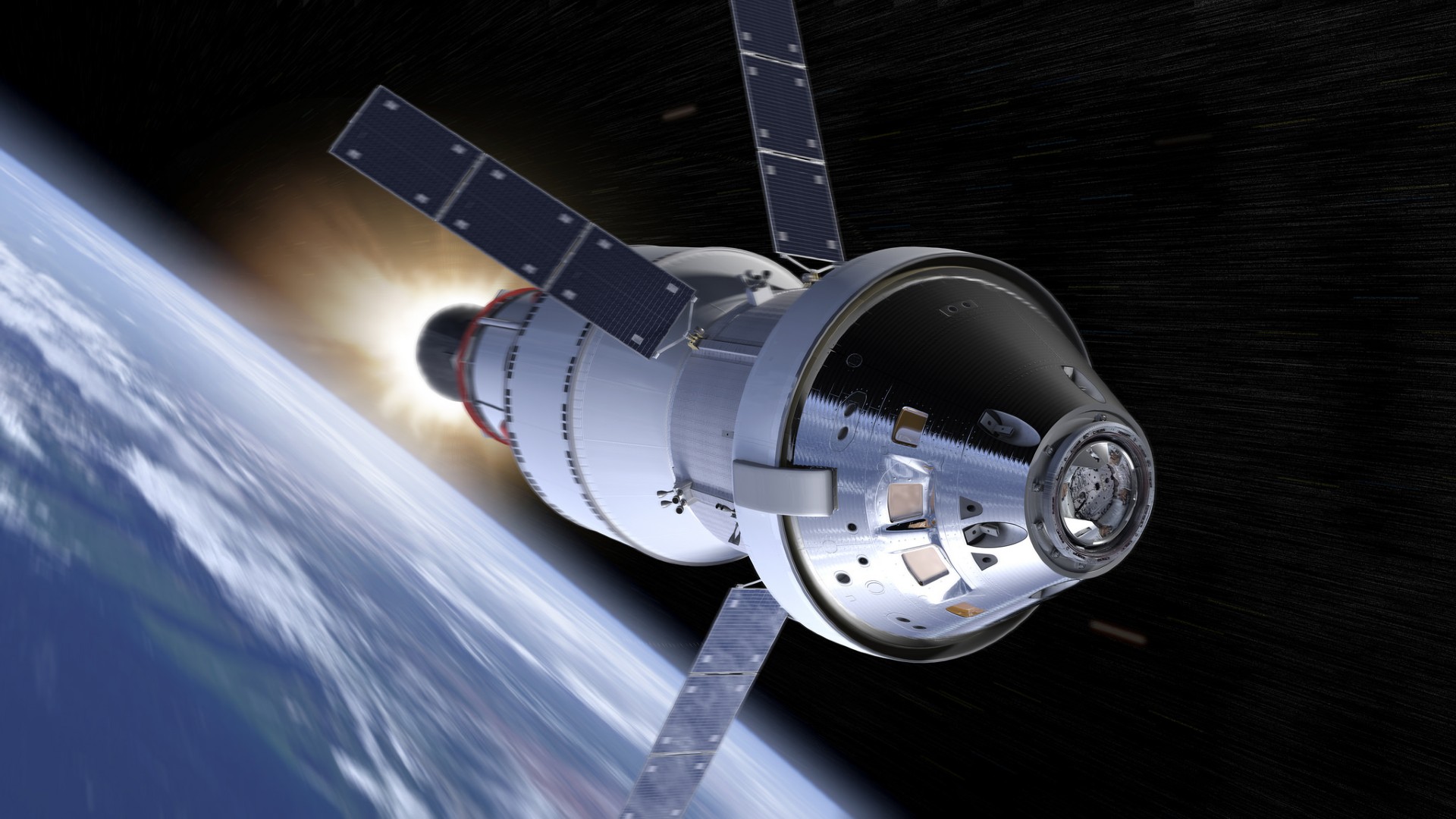
About an hour after starting their landing prep work, at 2:53 p.m. EDT (1853 GMT), the Artemis 2 crew’s Orion moonship, named “Integrity,” is scheduled to fire its thrusters in a final significant burn, called the Return Trajectory Correction 3 Burn.
This is a maneuver to adjust Orion’s path back toward Earth, to put it on course for a landing zone off the California coast near San Diego.
4. Final Orion landing prep
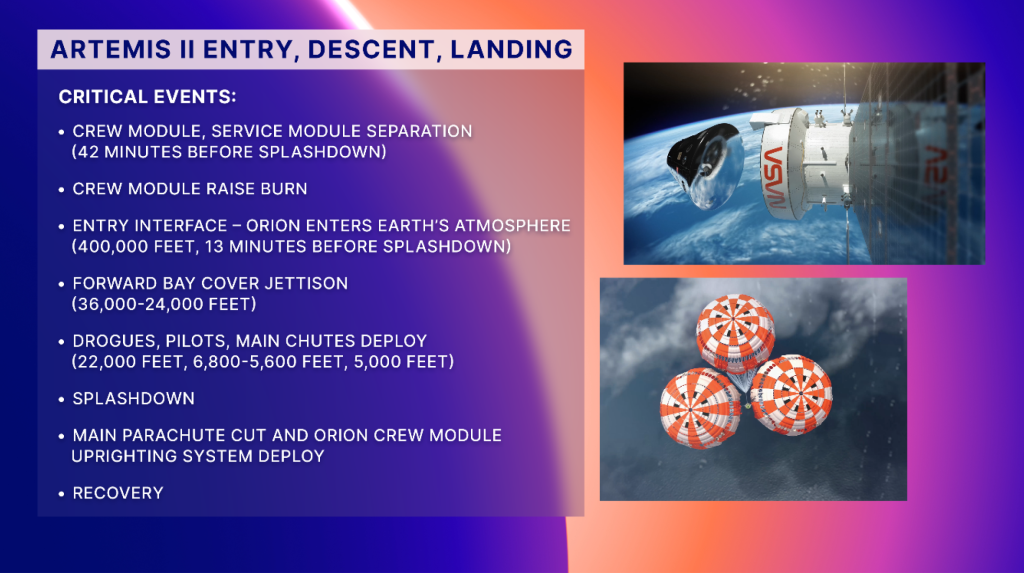
Checklist of critical events for NASA’s Artemis 2 landing. (Image credit: NASA)
The next three hours includes a lot of final activities for the Artemis 2 crew.
At 3:20 p.m. EDT (1920 GMT), they will resume configuring Integrity’s cabin for reentry and likely find time for lunch (what NASA calls a “midday meal”). It’s a lot of work, packing up a spaceship for landing, so it takes a while.
At 5:05 p.m. EDT (2105 GMT), the astronauts will begin working their “Entry Checklist,” beginning the final work to return to Earth. That includes things like climbing into their bright orange and blue launch and entry suits, known as the Orion Crew Survival System (OCSS, or “ox,” for short). They can survive in those suits for up to six days if needed.
5. NASA+ Artemis 2 landing coverage begins
Watch live! Artemis 2 astronauts return to Earth after historic moon mission – YouTube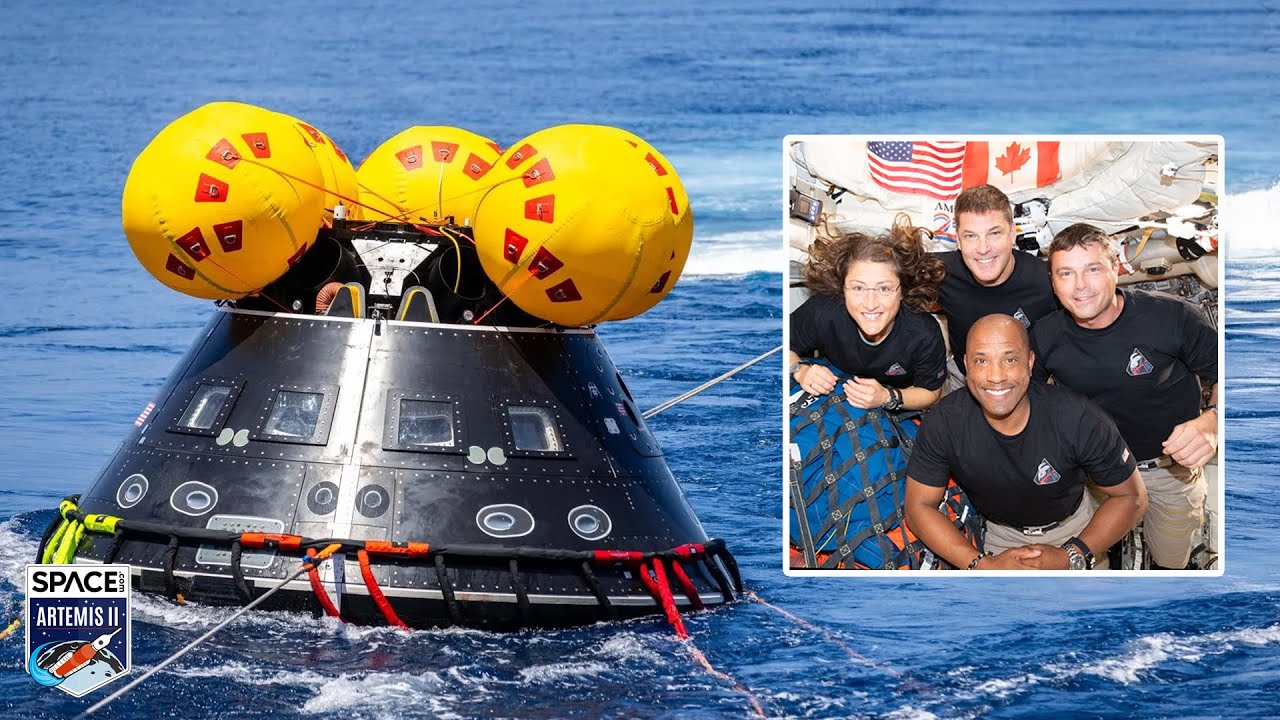
At 6:30 p.m. EDT (2230 GMT), NASA’s landing coverage will officially begin with a special live program on NASA+, the space agency’s free streaming service. The feed with live commentary will also play on NASA’s YouTube channel, as well as on streaming services like Netflix and Amazon Prime.
Here at Space.com, we’ll have the livestream available in a few places — on this page, for one, but also on our homepage and our VideoFromSpace YouTube channel.
6. Orion communications switch back to TDRSS
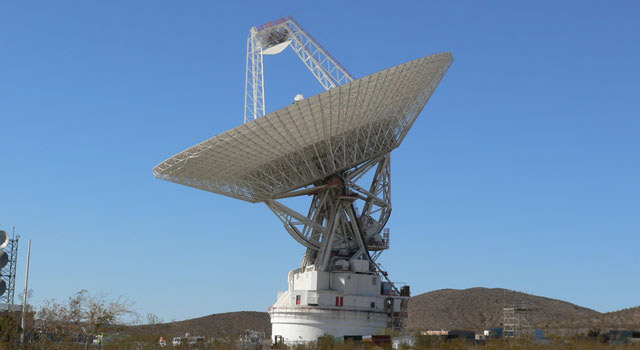
The 70-meter antenna at the Goldstone Deep Space Communications Complex in the Mohave Desert in California. This complex is one of three comprising NASA’s Deep Space Network. (Image credit: NASA/JPL)
At 7:15 p.m. EDT (1115 GMT), NASA’s Mission Control team will switch over communications with the Orion Integrity capsule from the Deep Space Network of radio dishes based around the globe.
NASA has been using the Deep Space Network, or DSN for short, to communicate with Orion throughout Artemis 2’s transit to the moon and back. For landing, NASA will switch to the Telemetry and Data Relay Satellite System, or TDRSS, in Earth orbit for constant communication with systems on Earth.
7. Orion crew module separates from service module
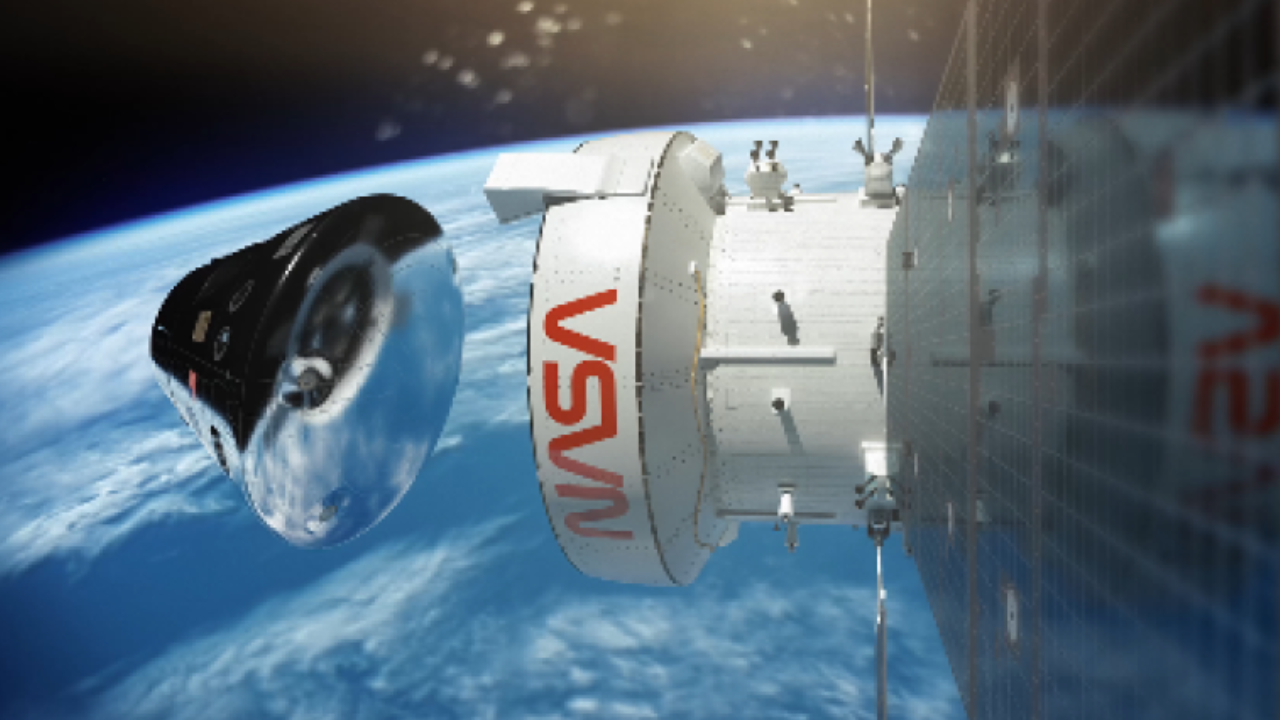
An illustration of the Orion crew module separating from the European Service Module. (Image credit: NASA)
Next up is one of the most important stages of reentry: crew module separation.
At 7:33 p.m. EDT (2333 GMT), the Orion crew module (the gumdrop-shaped part that the crew lives in) will separate from the cylindrical European Service Module built by the European Space Agency. The service module carries all the propellant, water, air and solar arrays used to power Orion during its trip to the moon.
Once separated, the service module will be discarded, reenter Earth’s atmosphere and burn up over the Pacific Ocean. The crew module will return the astronauts to Earth.
8. Crew module raise burn

The Orion crew module maneuvering away from the service module. (Image credit: NASA)
At 7:37 p.m. EDT (2337 GMT), just after separating from the service module, the Orion crew module will perform what NASA calls a “Crew Module Raise Burn.”
“We do a crew module raise burn to take the crew module slightly away from the service module as it comes down,” Artemis 2 flight director Jeff Radigan told reporters on Thursday.
9. Orion begins reentry for landing
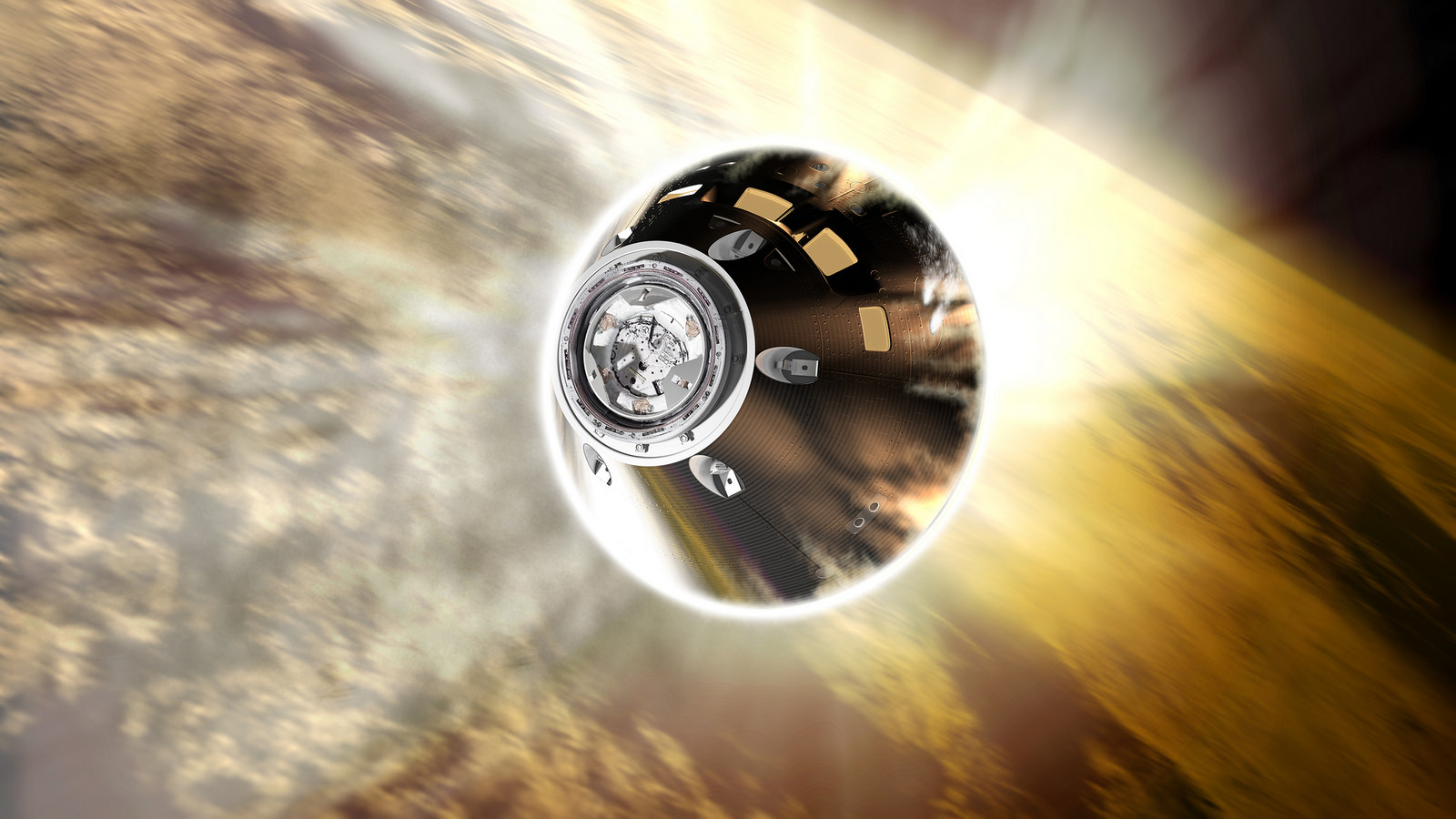
Orion hits Earth’s atmosphere during a critical phase of reentry. (Image credit: NASA)
At 7:53 p.m. EDT (2353 GMT), Orion will officially hit Earth’s atmosphere, slamming into the entry interface while traveling at a mind-boggling 24,000 mph. The heat shield protecting the base of Orion will experience temperatures of up to 5,000 degrees Fahrenheit. Orion will be about 400,000 feet (120,00 meters) above Earth at the time.
At maximum speed, the Artemis 2 astronauts will feel about 3.9 Gs during reentry.
“That heat shield thermal protection system, which is built by American hands and American factories from materials designed to withstand temperatures that approach the surface of the sun, will bear the full force of that reentry,” Kshatriya said.
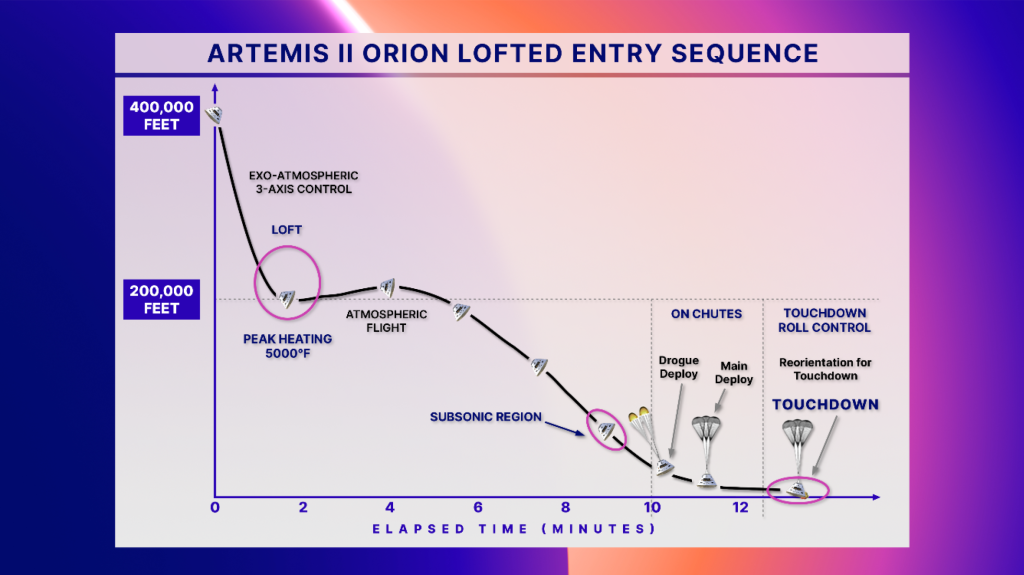
Infographic featuring the Artemis 2 Orion skip, or “lofted” entry sequence. (Image credit: NASA)
The heat shield for Orion is facing a critical test on Artemis 2, its first reentry with an astronaut crew. During the uncrewed Artemis 1 test flight to lunar orbit in 2022, the heat shield saw more wear than NASA anticipated, leading flight controllers to call for a modified “skip” trajectory for Artemis 2.
“We are still doing a skip entry where we’ve shortened the duration of the skip because of the limited duration of this heat shield,” Kshatriya said.
It will take 13 minutes from entry interface for Orion to splash down.
“It’s 13 minutes of things that have to go right,” Radigan said. “I have a whole checklist in my head we’re going through of all the things that have to happen.”
10. Radio blackout
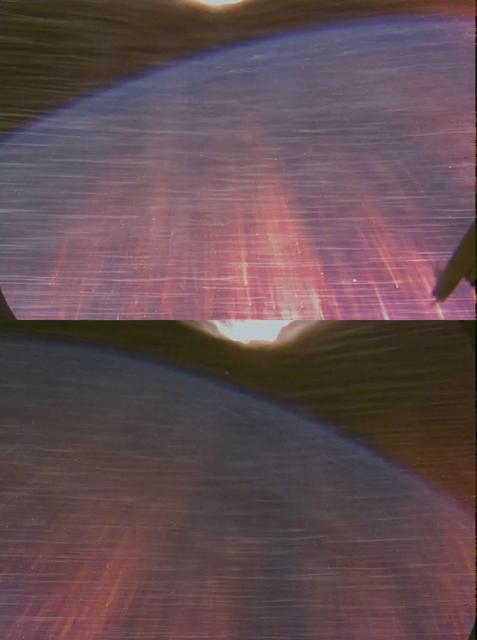
A view of the plasma around the Orion spacecraft during reentry, as seen through the windows of Artemis 1 in 2022. (Image credit: NASA)
As Orion reenters Earth’s atmosphere, it enters a radio blackout period when the superhot plasma building up arond it as it plunges through Earth’s atmosphere interferes with communications.
The radio blackout is expected and planned.
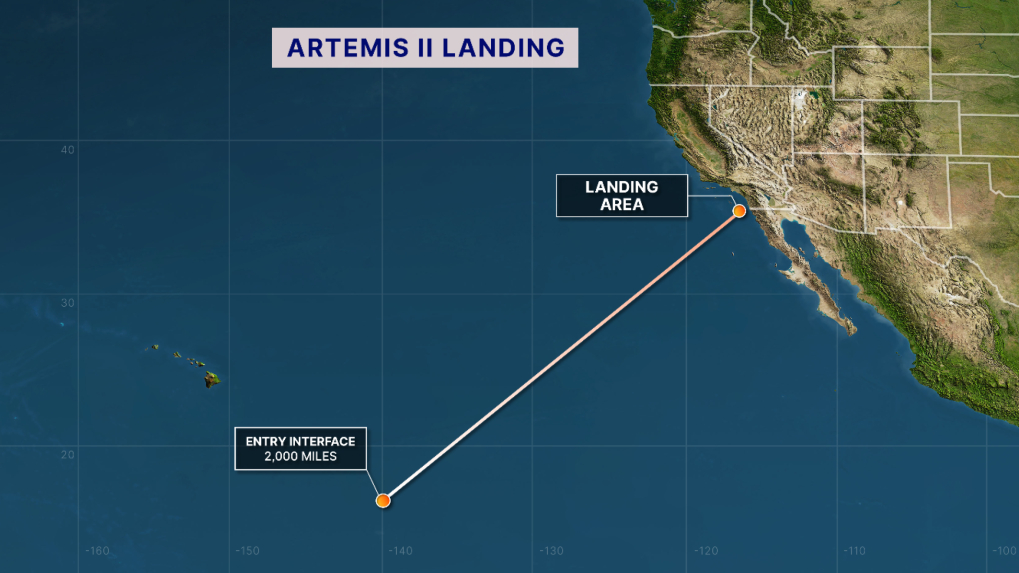
The path of reentry for NASA’s Artemis 2 astronauts on the Orion ship Integrity. (Image credit: NASA)
“We’re going to be thinking of all the things that we know are happening on board, but that we can’t see,” Radigan said, adding that he and the team can only wait until hearing from Orion again. “We’ll just be thinking through things to keep ourselves calm as we wait for reacquisiton of signal.”
Orion will reenter Earth’s atmosphere southeast of Hawaii and fly about 2,000 miles (3,200 kilometers) to its splashdown site.
11. Orion deploys parachutes
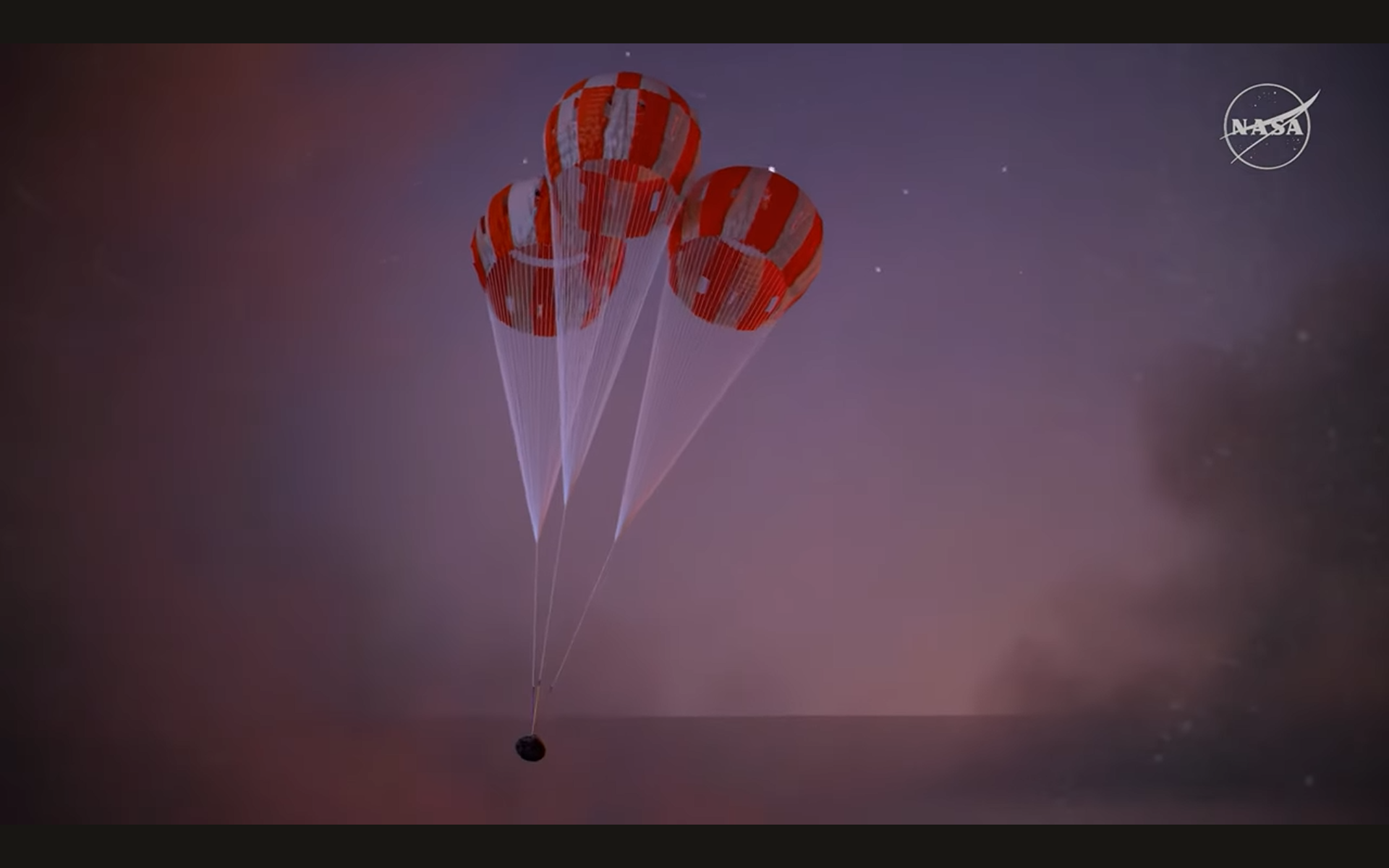
(Image credit: NASA)
Starting at 8:03 p.m. EDT (0003 GMT), there will be a series of parachute deployments to slow Integrity enough to make a safe splashdown.
Before those begin, Orion will jettison a cover containing the parachutes.
At 8:03 p.m. EDT, two drogue parachutes will deploy, followed closely by three main parachutes a minute later, which will be pulled free by a set of pilot chutes. The drogue parachutes deploy at an altitude of about 22,000 feet (6,705 m), while the mains deploy at about 6,000 feet (1,828 m).
12. SPLASHDOWN: Artemis 2 astronauts back on Earth

The splashdown of the Artemis 1 mission in December 2022. (Image credit: NASA)
Home at last! At 8:07 p.m EDT (0007 April 11 GMT), the Artemis 2 astronauts will finally return to Earth by splashing down at about 20 mph (32 kph) in the Pacific Ocean.
The splashdown will mark the first time astronauts have made a direct ocean splashdown while returning from the moon since 1972, when NASA’s Apollo 17 crew returned to Earth.
13. Orion systems powered down
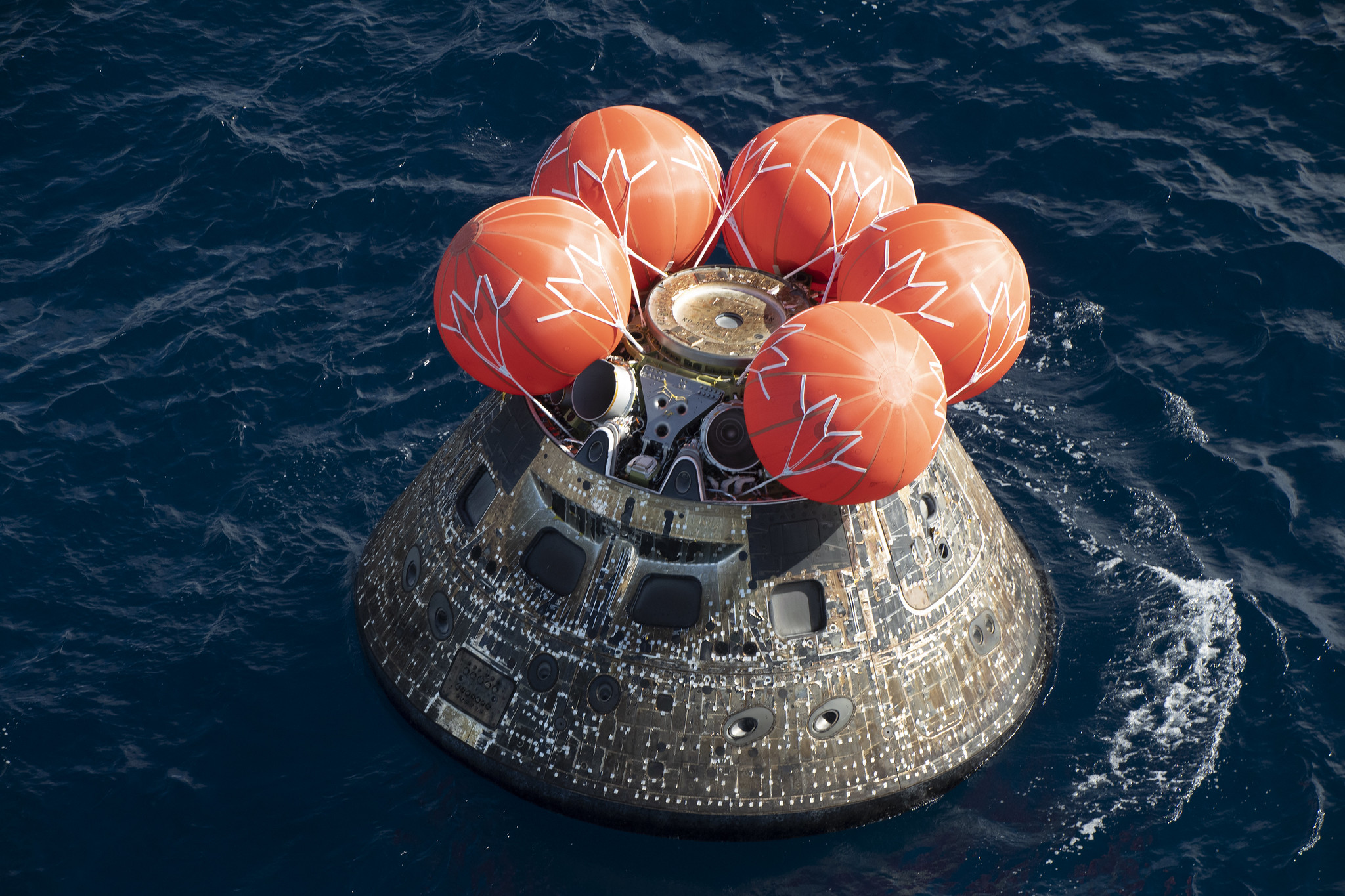
The Artemis 1 Orion spacecraft after splashdown. (Image credit: NASA)
At 8:22 p.m. EDT (0022 GMT), the Artemis 2 astronauts will work with Mission Control to start powering down Orion.
The Orion capsule Integrity has been the crew’s home for the last 10 days. Wiseman and Glover will work to shut down the systems, ultimately signing off from Mission Control as they are extracted from the ship.
14. Artemis 2 crew recovered from Orion, medical checks
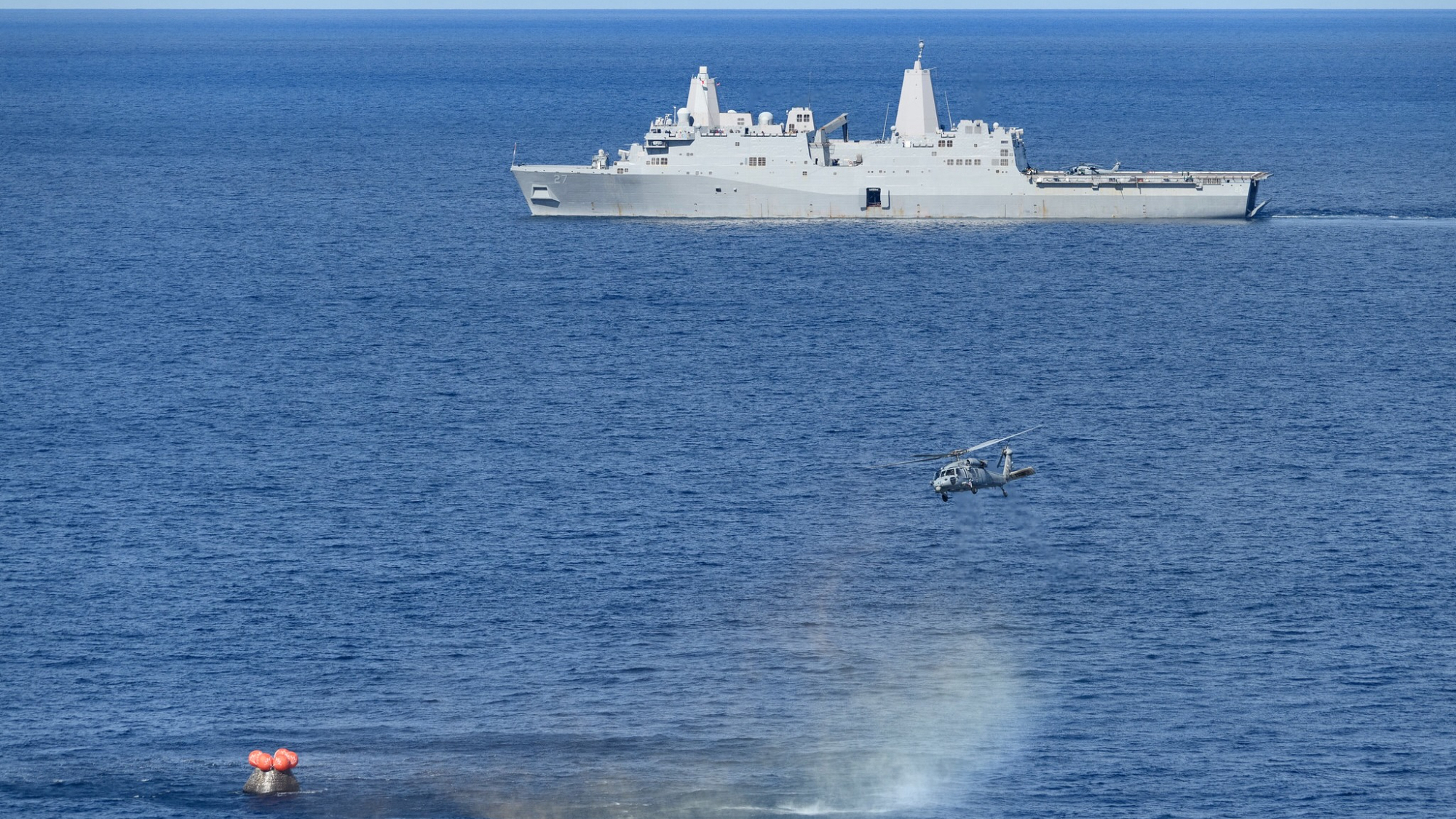
A recovery team will retrieve the crew of Artemis 2, as seen here during rehearsals on the uncrewed Artemis 1 mission. (Image credit: NASA)
At 9:07 p.m. EDT (0107 April 11 GMT), recovery divers and crews from the Navy ship USS John P. Murtha will retrieve the Artemis 2 crew.
The recovery team will send boats out to the Orion capsule, connect an inflatable “porch” by its hatch and extract the four Artemis 2 astronauts. Once that’s complete, two helicopters will work in tandem to transfer the crewmembers, one at a time, to the Navy ship.
Once there, the Artemis 2 astronauts will undergo medical checks and be transported to San Diego for a flight home to Houston and NASA’s Johnson Space Center.
And thus, the Artemis 2 mission to the moon will have ended.
15. NASA Artemis 2 post-landing press conference
To celebrate the Artemis 2 Orion splashdown, NASA will hold a press conference at 10:30 p.m. EDT (0230 April 11 GMT) that will most likely be led by NASA Administrator Jared Isaacman, who has said he will be staying with the mission until it ends.
The briefing will last about one hour and could include updates on the health of the crew and the status of the Orion spacecraft.
Complete Artemis 2 reentry & splashdown timelineSwipe to scroll horizontallyArtemis 2 Orion reentry & splashdown timeline
Time (EDT/GMT)
Event
What to know
11:35 a.m. EDT / 1535 GMT
Artemis 2 crew wakes up
This begins the crew’s last day in space. NASA will play them one last song.
1:50 p.m. EDT / 1730 GMT
Orion cabin configured for entry
The Artemis 2 crew will finsh packing up Orion for reentry.
2:53 p.m. EDT / 1853 GMT
RTC-3 Burn
This is the Reentry Trajectory Correction burn, a thruster manuver to tweak the approach path.
3:20 p.m. EDT / 1930 GMT
Orion cabin ready for entry
Some last-minute packing for the Orion crew.
5:05 p.m. EDT / 2105 GMT
Crew begins entry checklist
The Artemis 2 crew begins their reentry checklist, donning spacesuits, etc for landing.
6:30 p.m. EDT / 2230 GMT)
NASA+ coverage of Artemis 2 landing begins
NASA’s special coverage of Artemis 2 reentry begins. 24/7 coverage will still continue ahead of it.
7:15 pm EDT / 2315
Orion comms switch to TDRSS
NASA’s Deep Space Network hands off radio comms to the TDRSS satellite network.
7:33 p.m. EDT / 2333 GMT
Orion crew module separation
The Orion crew capsule separates from the European Service Module.
7:37 p.m. EDT / 2337 GMT
Crew module raise burn
Orion’s thrusters perform one last burn to fine-tune approach.
7:53 p.m. EDT / 2357 GMT
Entry interface
Orion begins entering Earth’s atmosphere.
7:53-7:59 p.m. EDT /2353-2359 GMT
Radio blackout
Orion will lose contact with Mission Control for 6 minutes due to plasma interference. The crew experiences 3.9 Gs during entry.
8:03 p.m. EDT / 0003 April 11 GMT
Drogue chutes deploy
2 large drogue parachutes deploy to slow Orion capsule to 200 mph.
8:04 p.m. EDT / 0004 GMT
Main parachutes deploy
3 main chutes deploy at 6000 feet up to slow to 20 mph.
8:07 p.m. EDT / 0007 GMT
SPLASHDOWN
Splashdown! Orion has landed.
Just after splashdown
Upright device and parachutes cut
Orion cuts its main chute lines and deploys upright device.
8:22 p.m. EDT / 0022 GMT
Orion capsule power down
Integrity Orion capsule is powered down.
9:06 p.m. EDT / 0106 GMT
Orion crew extraction
The Artemis 2 crew is extracted from Orion by recovery team.
9:35 p.m. EDT / 0135 GMT
Orion crew arrives at recovery ship
Artemis 2 crew arrives at USS John P. Murtha for medical checks before heading to San Diego for flight home to Houston.
10: 30 p.m. EDT / 0230 GMT
NASA post-landing briefing
NASA officials will hold a post-landing press conference to discuss the landing.

Lego
Lego Technic Nasa Artemis Space Launch System 42221
So that’s a look at every stage of the Artemis 2 reentry, descent, splashdown and recovery.
It will be a tense final hours and minutes for the Orion crew, Mission Control and the familes of the astronauts, many of whom will be observing the reentry from inside the gallery of Mission Control awaiting the safe return of their loved ones.
Artemis 2 is NASA’s most ambitious crewed test flight of the century: The first astronaut flight to the moon in over 53 years, the first crewed flight ever on an Orion spacecraft and the first crewed launch of their Space Launch System rocket on April 1.
A successful landing for Artemis 2 is critical to NASA’s plans for Artemis 3, which will launch into Earth orbit to dock with moon landers built by SpaceX and Blue Origin, as well as the Artemis program’s goal of landing astronauts on the moon by 2028.
NASA even plans to build a permanent moon base by 2032. But none of that can happen until the agency shows that its Orion spacecraft, one of the pillars of its Artemis program, can safely fly astronatus to the moon (which it has done) and bring them back safely to Earth (which it has yet to do).
You’ll be able to watch the Artemis 2 astronauts return to Earth live on Space.com. We’ll have live coverage throughout the day, but final landing activities begin at about 6:30 p.m .EDT (2230 GMT).