

“Activism works. So what I’m telling you
to do now, is to act. Because no one
is too small to make a difference.”
– Greta Thunberg,
Swedish climate change activist,
and Amnesty International
Ambassador of Conscience
Welcome to Morning Open Thread, a daily post
with a MOTley crew of hosts who choose the topic
for the day’s posting. We support our community,
invite and share ideas, and encourage thoughtful,
respectful dialogue in an open forum. That’s a
feature, not a bug. Other than that, site rulz rule.
Morning Open Thread is looking for contributors —
either occasional, or weekly. If interested, please
contact officebss or Ozarkblue for more information
___________________________________________________________
April is National Poetry Month
April 10th is:
ASPCA Day: April 10, 1866 – The American Society for the Prevention of Cruelty to Animals founded in NYC by diplomat and philanthropist Henry Bergh; horrified by seeing horses beaten by their drivers while serving as acting vice-consul at the American legation at St. Petersburg, upon returning home, he began to lobby on behalf of “these mute servants of mankind “and convinces the New York State Legislature to charter incorporation of the ASPCA, and 9 days later, to pass the first effective anti-cruelty law in the U.S., allowing the ASPCA to investigate complaints of animal cruelty and make arrests
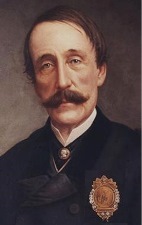
Henry Bergh
Encourage a Young Writer Day: April 10, 2012 ( ? – year uncertain) – part of National Library Week, sponsored by the American Library Association (ALA)
International Siblings Day: April 10, 1997 – originally National Sibling Day – founded by Claudia Evart in honor of her brother and sister, who both died young, and to celebrate the special bond between siblings; her Siblings Foundation became a non-profit organization in 1999

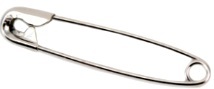
National Safety Pin Day: April 10, 1849 – Walter Hunt patents the safety pin (he wasn’t the first to have the idea, but he was first to patent it)
Azerbaijan – Day of the Builder
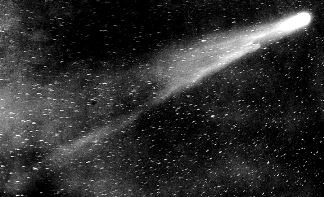
837 – Halley’s Comet makes its closest approach to Earth: 3.2 million miles, or 5.1 million kilometres
1407 – Deshin Shekpa, Fifth Karmapa Lama and head of the Kagyu School of Tibetan Buddhism, visits the Ming dynasty capital at Nanjing. He is awarded the title “Great treasure Prince of Dharma”
1515 – Venice, Italy, adds restrictions to Jewish rights and residency, prior to creating the first Jewish ghetto in 1516
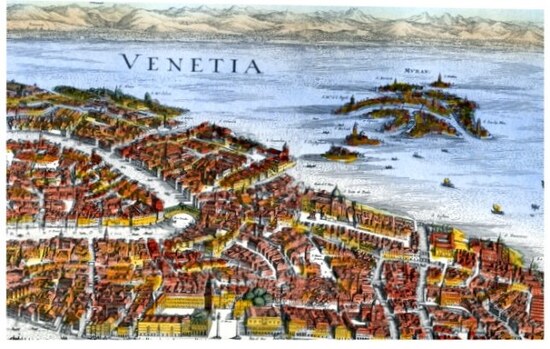
Venice, Italy in the 1500s
1525 – Albrecht von Preussen, Grand Master of the Teutonic Knights, assumes the title Duke of Prussia, marking its beginnings as a Protestant state
1710 – The Statute of Anne, also called the Copyright Act 1710, the first law regulating copyright by the government and courts rather than by private parties, comes into force in Great Britain. The previous Licensing of the Press Act 1662 gave the power to enforce restrictions on copying to the Stationers’ Company, a guild of printers given the exclusive power to print, and the responsibility to censor literary works. Public protest of censorship caused Parliament not to renew the Licensing Act, and the Stationers decided to seek an alliance with the authors rather than the publishers in getting a new bill passed. The Copyright Act was granted Royal Assent by Queen Anne, and prescribed a copyright term of 14 years, with a provision for renewal for a similar term, during which only the author and the printers to whom they chose to license their works could publish the author’s creations. Following this, the work’s copyright would expire, with the material falling into the public domain. Despite a period of instability known as the ‘Battle of the Booksellers’ when the initial copyright terms under the Statute began to expire, the Statute of Anne remained in force until the Copyright Act 1842 replaced it. It was the first law to protect an author’s rights rather than the publishers
1766 – Sir John Leslie born, Scottish physicist and mathematician, the first to artificially create ice, using an air pump apparatus
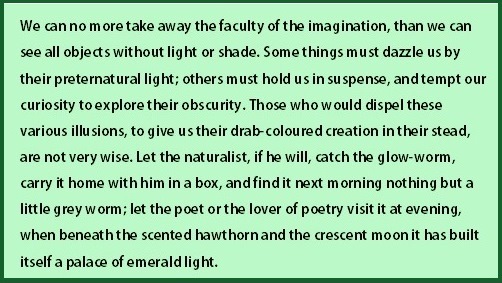
1788 – William Hazlett born, English author, essayist, social commentator and philosopher; considered one of the greatest essayists in the English language
1815 – Mount Tambora, avolcano on Sumbawa, one of the Indonesian Islands, begins a 3-month-longeruption, lasting until July 15. The eruption ultimately kills 71,000 people, and affects the global climate of Earth for the next two years

Mount Tambora
1821 – Patriarch Gregory V of Constantinople is blamed by Ottoman Sultan Mahmud II for his inability to suppress the uprising that became the Greek War of Independence. Gregory V had officially condemned the Greek revolutionary activities, attempting to protect the Greeks of Constantinople from Ottoman Turkish reprisals. Then the Greeks scored several military successes in the Peloponnese against Ottoman forces. On Easter Sunday, by order of the Sultan, Gregory was taken out of the Patriarchal Cathedral, still in full Patriarchal vestments, and hanged from the main gate of the Patriarchate, his body left for two days on the gate, and then it was thrown into the Bosphorus. This was immediately followed by a massacre of the Greek population in Constantinople
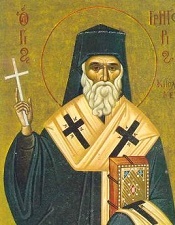
Patriarch Gregory V
1827 – Lew Wallace born, Civil War Union Major General, American author; known for Ben Hur: A Tale of the Christ
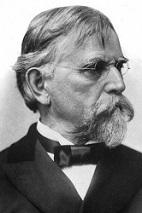
1829 – William Booth born, English evangelist preacher, social reformer and founder of the Salvation Army
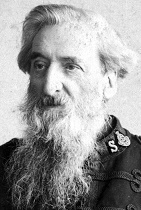
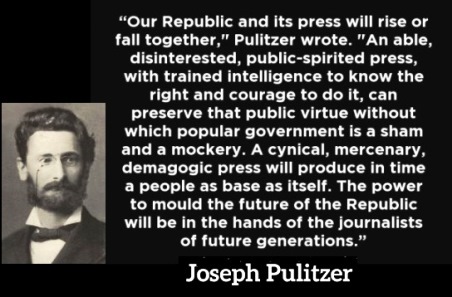
1847 – Joseph Pulitzer born, American newspaper publisher, endows the Pulitzer Prize fund for awarding annual writing prizes
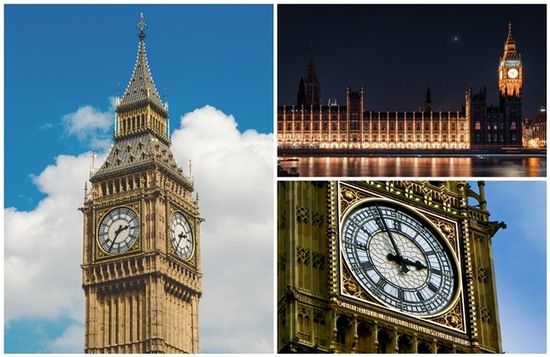
1858 – In London, the original ‘Great Bell’ aka ‘Big Ben’ of the Westminster Clock Tower, first cast in 1856, is melted down and recast after badly cracking; the new bell also cracks, but it was a small crack, so eventually it is put back up an eighth of a turn away from its original position so the hammer would fall on an uncracked section, and it has been in service ever since
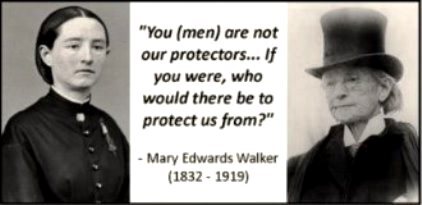
1864 – Dr. Mary Edwards Walker, the first woman surgeon of the Union Army, who started as an unpaid volunteer, is captured by Confederate troops after crossing enemy lines to treat the wounded, and is arrested as a spy. She was working with a Confederate doctor performing an amputation on a Confederate soldier at the time. Sent to the notorious Castle Thunder Prison for political prisoners and spies, Walker, a feminist and ardent adherent to rational dress for women, refused to wear the clothes provided as “more becoming of her sex” instead of her work clothes, made over from a man’s shirt and trousers (She often replied to criticism, “I don’t wear men’s clothes, I wear my own clothes.”) Walker was released in a prisoner exchange for a Confederate doctor in August, 1864. After the war, Walker was awarded a disability pension for partial muscular atrophy suffered while she was imprisoned by the enemy, and Generals William Tecumseh Sherman and George Henry Thomas recommended her for the Medal of Honor, which originally was not strictly a military honor. On November 11, 1865, President Andrew Johnson signed the bill awarding her the medal, the only woman ever to receive the Medal of Honor. It was stricken from the rolls in 1917, and she was ordered to surrender it, but she defiantly wore it every day until her death in 1919, and President Jimmy Carter restored her medal posthumously in 1977
1864 – Archduke Maximilian of Habsburg is proclaimed Emperor of Mexico during the French intervention in Mexico
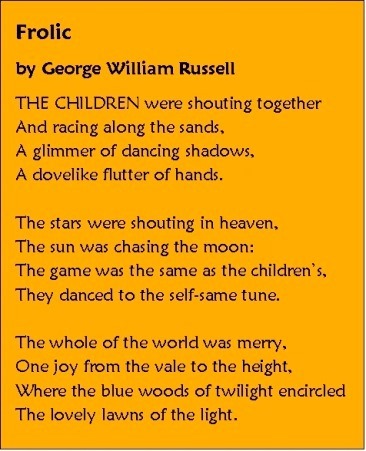
1867 – George William Russell born, Irish author, poet and painter; pen name Æ; he was also an Irish nationalist and yet he was a pacifist, and a believer in theosophy
“Frolic” is more cheerful than many of Russell’s other poems:
1868 – At Arogee in Abyssinia, British and Indian forces defeat an army of Emperor Tewodros II (reign: 1855-1868). This immediately segued into the Battle of Magdala, a crushing defeat for Tewodros, who committed suicide rather than be captured
1870 – Vladimir Lenin born, Russian Communist, leader of the Bolshevik Revolution; head of state under various titles (1917-1924) as Russia evolved into the Soviet Union, a one-party socialist state under the Communist Party
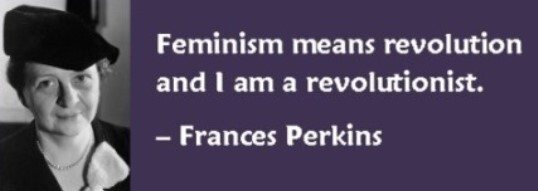
1880 – Frances Perkins born, American sociologist, worker-rights and industrial safety advocate. When President Franklin Roosevelt appointed her as Secretary of Labor (1933-1945), she became the first woman appointed to a U.S. cabinet position. Perkins and Interior Secretary Harold Ickes were the only two Roosevelt cabinet members to remain in office for his entire presidency. She was the point person in 1935 for developing the policies for social security and unemployment insurance, and also helped form government policy for working with labor unions. The U.S. Conciliation Service was developed during her tenure to help mediate between labor and management during strikes. Perkins dealt with many labor questions during WWII, when skilled labor was vital to the economy and women were moving into jobs formerly held by men. Her extraordinary career in public service began in New York state government, where she was one of the first women appointed to the Industrial Commission of the State of New York (1919-1929) by Governor Al Smith, and then newly-elected Governor Franklin Roosevelt appointed Perkins as the inaugural New York state industrial commissioner. She expanded factory investigations, reduced the workweek for women to 48 hours, and championed minimum wage and unemployment insurance laws. She also worked vigorously to end to child labor and for laws to insure safer working conditions, a special issue for her as she had been an eye witness to the Triangle Shirtwaist Factory fire, one of the deadliest industrial fires in American history. In 1945, Perkins was appointed by President Truman to serve on the U.S. Civil Service Commission. She spoke against government officials requiring secretaries and stenographers to be physically attractive, blaming the practice for the shortage of secretaries and stenographers in the government. Perkins left the Civil Service Commission in 1952 when her husband died. During all her years of public service, she kept her personal life very private, insisting on using her maiden name, and hiding the fact that her husband was increasingly subject to mental illness, making her the sole bread-winner, raising their daughter much of the time as sole parent, and shouldering a heavy financial burden for her husband’s care in private institutions. After his death, she became an educator and lecturer at Cornell University’s New York State School of Industrial and Labor Relations. She died at age 85 in 1965.
1894 – G.W. Murray AKA George Washington Murray, African-American farmer, Republican Congressman from South Carolina (1896–1897 ), and inventor, patents a Furrow Opener/Stalk Knocker, and a Cultivator/Marker
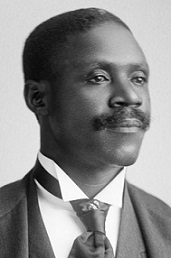
G.W. Murray
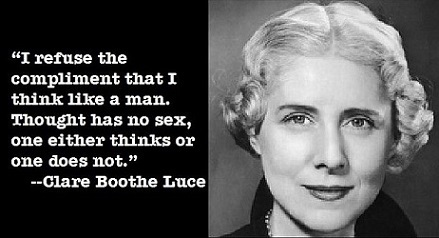
1903 – Clare Boothe Luce born, American politician and playwright, U.S. Ambassador to Italy and Brazil; U.S. Congresswoman (Republican-Connecticut, 1943-1947); noted for her play, The Women, which had an all-female cast. Recipient of the Presidential Medal of Freedom in 1983. In her will, she left a bequest to start the Clare Boothe Luce Foundation, which provides scholarships for women in STEM (specifically excluding those studying for the health professions) at Catholic universities
1903 – Clare Turlay Newberry born, American children’s book author and illustrator; four of her books were named Caldecott Honor Books; Barkis, Marshmallow, April’s Kittens and T-Bone the Babysitter
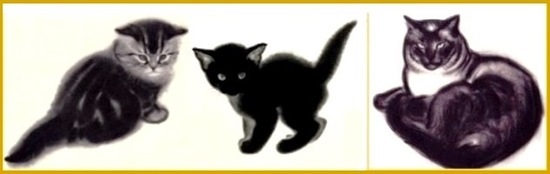
April’s kittens and ‘Malo’ — by Clare Turlay Newberry
1910 – Margaret Clapp born, American author and scholar, president of Wellesley College; won the 1948 Pulitzer Prize for Biography for Forgotten First Citizen: John Bigelow
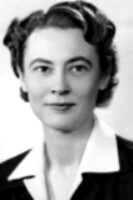
1917 – Robert Burns Woodward born, American organic chemist; noted for synthesis of vitamin B12; won the 1965 Nobel Prize for Chemistry
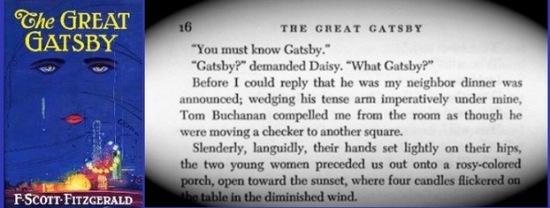
1925 – The Great Gatsby by F. Scott Fitzgerald is published
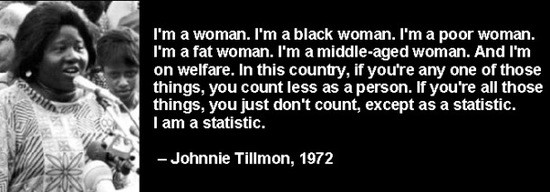
1926 – Johnnie Tillmon born, director of the National Welfare Rights Organization (1963-1972), worked with Gloria Steinem and Aileen Hernandez on “Women, Welfare and Poverty” at the National Women’s Conference in Houston (1977)
1927 – George Antheil presents a scaled-down version of his Ballet Mécanique at NYC’s Carnegie Hall, the first symphonic work using an airplane propeller and other mechanical devices not normally associated with ballet
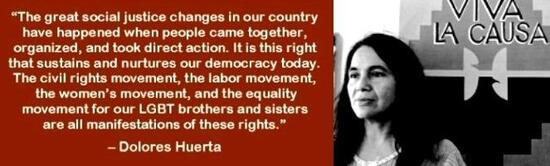
1930 – Dolores Huerta born, American labor, civil rights, and women’s rights activist, co-founder of the United Farm Workers with César Chávez. She was honored with the Eleanor Roosevelt Award for Human Rights and the Presidential Medal of Freedom. In the 1990s, Huerta worked tirelessly for the Feminist Majority’s ‘Feminization of Power’ campaign, encouraging Latinas to run for office, resulting in a significant increase in the number of women running for and winning office at the local, state, and federal levels. Huerta was the first Latina to be inducted into the National Women’s Hall of Fame in 1993. In 2002, she founded the Dolores Huerta Foundation, to create opportunities for community leadership and grassroots campaigns. She travels across the country engaging in campaigns and influencing legislation that supports equality and defends civil rights, and often speaks to students and organizations about issues of social justice and public policy
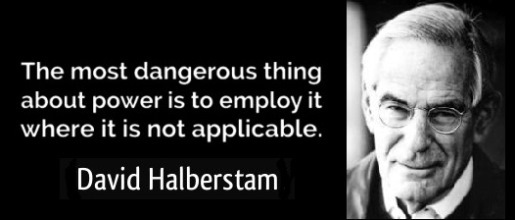
1934 – David Halberstam born, American journalist and historian; 1964 Pulitzer for International Reporting; The Best and the Brightest
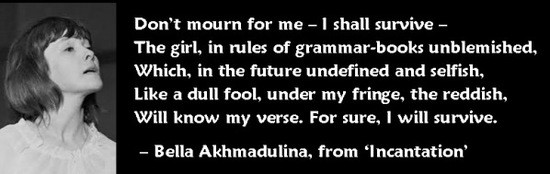
1937 – Bella Akhmadulina born in Moscow, USSR; Russian New Wave poet, author, short story writer, and translator. The Russian Academy of Sciences honored her with the 1994 Pushkin Prize. Known for Casket and Key, Izbrannoye (Selected Verse). She was called the “voice of the epoch.” In 1977, she became an honorary member of the American Academy of Arts and Letters. Known for Samya Moi Stikhi (My Own Verses), Izbrannoye (Selected Verse), and Larets i Kliutch (Casket and Key). She died at age 73 in November 2010 in Peredelkino near Moscow
1941 – Paul Theroux born, American travel writer and novelist; The Mosquito Coast
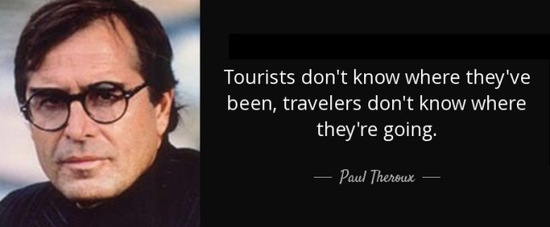
1944 – Synthetic quinine was made for the first time at Harvard University
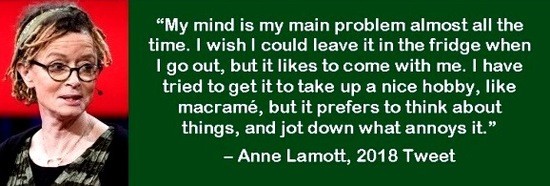
1954 – Anne Lamott born, American novelist, non-fiction writer and progressive political activist/public speaker; Hard Laughter, her first novel was written for her father, writer Kenneth Lamott, after his diagnosis of brain cancer; her non-fiction book, Bird by Bird: Some Instructions on Writing and Life, inspired the title of Freida Lee Mock’s documentary Bird by Bird with Annie: A Film Portrait of Writer Anne Lamott
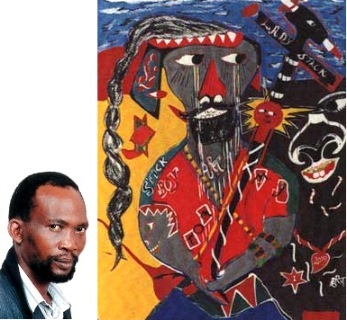
1954 – Thomas Kgope born, South African artist; he was working as an electrician when artist Norman Catherine saw Kgope’s interest in what he was working on, and gave Kgope some materials and showed him basic art techniques
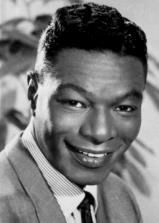
1956 – Nat King Cole is attacked by a four white Klansmen who jump on the stage during his performance for an all-white audience in Birmingham Alabama; his back is injured, so he is unable to finish the show, or to sing at the second performance scheduled for an all-black audience in the segregated city, although he appeared briefly to apologize to the audience. The white audience at the first show called out against the attackers while the British Ted Heath Band gamely played “God Save the Queen” to try to settle things down. The attackers are arrested at the scene and convicted of assault and battery. Nat King Cole was born in Alabama
1956 – Dame Carol V. Robinson born, British chemist, noted for research in chemical biology; since 2009, Royal Society Research Professor at the Physical and Theoretical Chemistry Laboratory at Oxford; from 2001 to 2009, Professor of Mass Spectrometry at the Department of Chemistry of Cambridge; has worked on protein folding, the three-dimensional structure of proteins, ribosomes, molecular chaperones and membrane proteins; in 2004, honored with both a Royal Society Fellowship and the Rosalind Franklin Award; in 2010, received the Davy Medal “for her ground-breaking and novel use of mass spectrometry for the characterization of large protein complexes”
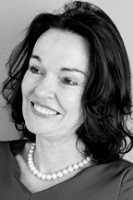
1957 – Rosemary Hill born, British historian, author and biographer; best-known for God’s Architect, a biography of Augustus Pugin, which won multiple awards, including the Wolfson History Prize, and the James Tait Black Memorial Prize; Stonehenge, and co-author with Angela Carter of Unicorn: The Poetry of Angela Carter
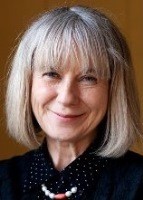
1958 – Bobby Darin records “Splish Splash”
1961 – Carole Goble born, British computer scientist and information systems expert; Professor of Computer Science at the University of Manchester since 1985, and appointed to a chair in 2000. Known for myGrid, BioCatalogue, my Experiment, and Semantic Grid. Co-leads the Information Management Group with Norman Paton. She is a Fellow of the Royal Academy of Engineering and of the British Computer Society, and an appointee to the Biotechnology and Biological Sciences Research Council
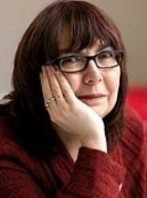
1963 – Doris Leuthard born, Swiss Christian Democratic People’s Party politician; third woman to be elected President of the Swiss Confederation by the Federal Assembly, a position with a one-year term (for 2010 and 2017); Vice President of Switzerland (2016-2017 and 2009); Minister of Environment, Transport, Energy and Communications (2010-2018); Minister of Economic Affairs (2006-2010); fifth woman to be a Member of the Swiss Federal Council (2006-2018)
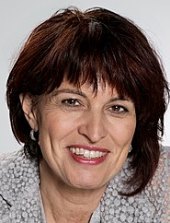
1967 – Frank and Nancy Sinatra become the first father-daughter duo to hit #1 on Billboard’s pop chart with “Somethin’ Stupid
1971 – John Denver makes his first appearance on the charts with “Take Me Home Country Roads”
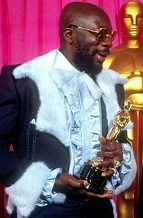
1972 – Isaac Hayes wins an Oscar for Best Original Song for “Shaft”
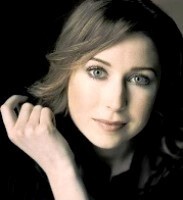
1974 – Helen Jane Long born, British composer, musician, and pianist, best known for her work on advertising contracts and film projects in a variety of genres, including the thriller The Only Hotel, and contemporary-classic piano albums, Embers and Porcelain. She also worked as Howard Shore’s music assistant on the massive film score for The Lord of the Rings trilogy

1977 – Stephanie Sheh born, who also uses the alias Jennifer Sekiguchi, American ADR writer, producer, director and voice actress in Anime, cartoons, video games and films. In 2011, she formed the fundraising organization We Heart Japan in response to the 2011 Tōhoku earthquake and tsunami

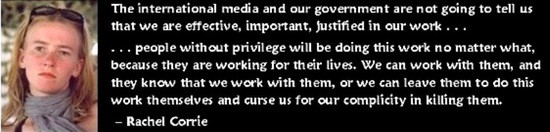
1979 – Rachel Corrie born, American peace activist and diarist; member of the International Solidarity Movement. In 2003, she was killed in Rafah, in the Gaza Strip, by an Israel Defense Forces armored bulldozer while trying to block the demolition of a Palestinian house. An Israeli investigation of her death concluded the driver of the bulldozer could not see her, so her death was an accident; other members of the International Solidarity Movement who were there say he ran over her deliberately. In 2005, her parents filed a civil lawsuit against the state of Israel, charging Israel with not conducting a full and credible investigation into the case and with responsibility for her death, asking a symbolic one U.S. dollar in damages. An Israeli court rejected their suit in 2012, upholding the findings of the 2003 military investigation. Amnesty International and Human Rights Watch were critical of the court’s ruling. Her writings and emails to her parents were published in 2008 as a book, Let Me Stand Alone
1982 – Saturday Night Live asks viewers to vote: Boil ‘Larry the Lobster’ or set him free; the audience votes to free him
1987 – Hayley Dee Westenra born, New Zealand classical crossover soprano and songwriter. Her first internationally released album, Pure, reached number one on the UK classical charts in 2003 and has sold more than two million copies worldwide, making it one of the fastest selling albums in her country’s history. Westenra has sung in English, Māori, Irish, Welsh, Spanish, Italian, German, French, Portuguese, Latin, Japanese, Standard Mandarin Chinese, Catalan, and Taiwanese Hokkien. She a UNICEF Ambassador, and went to Ghana in 2005 to publicise her project, “Bikes for Ghana,” and is an active fundraiser for the project, which gives bicycles to Ghanian schoolgirls, allowing them to get to their schools from outlying rural areas
1995 – The New York ban on smoking in restaurants with more than 35 seats goes into effect
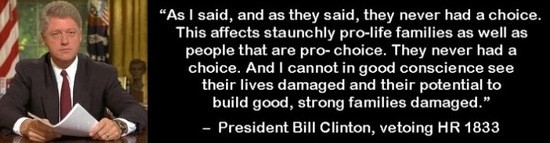
1996 – President Clinton vetoes HR 1833, the so-called “Partial-Birth” Abortion Ban Act of 1995, which would have outlawed a technique used to end pregnancies in their late stages when there are severe fetal defects, or the life of the mother is at risk
1998 – Negotiators in Northern Ireland reach a landmark settlement that calls for Protestants and Catholics to share power; referendum vote scheduled for May. Over 71 percent of those who voted supported the Agreement
2001 – The Netherlands legalize mercy killings and assisted suicide for patients with unbearable, terminal illness
2001 – Jane Swift sworn in as the first woman acting governor of the state of Massachusetts (2001-2003). She was Lieutenant Governor (1999-2003), when Governor Paul Cellucci was appointed U.S. Ambassador to Canada by President George W. Bush. Swift was pregnant with twins at the time, and became the first sitting governor in U.S. history to give birth when her twin daughters, Lauren and Sarah Hunt, were born one month into her term of office. She made national headlines when she continued to exercise executive authority during her maternity leave, including chairing a meeting of the Massachusetts Governor’s Council by teleconference while on bed rest for preterm labor
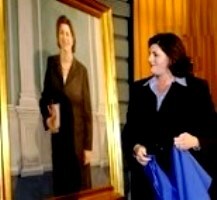
Jane Swift views her offiical portrait as governor
2017 – A Federal judge in Texas ruled that Republican lawmakers designed the state’s strict voter ID law to discriminate against Democratic-leaning minority voters. It was the second time U.S. District Judge Nelva Gonzales Ramos had ruled against the law. Two years ago, she said the voter ID law was similar to a “poll tax” intended to suppress the minority vote. An appeals court had asked Gonzalez Ramos to take another look at her original ruling, and she said nothing had changed. Under the law, voters have to show one of seven forms of identification while at the polls. Concealed handgun licenses are on the approved ID list, while college student IDs are not. The state was forced to weaken the law for the 2016 elections
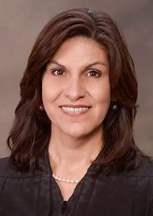
U.S. District Judge
Nelva Gonzales Ramos
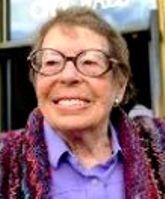
2020 – Phyllis Lyon died of natural causes at the age of 95. The feminist and LGBTQ rights pioneer co-founded Daughters of Bilitis, the first lesbian civil and political rights group in the U.S., with her wife, Del Martin, who died in 2008. They were the first LGBTQ+ couple to get married in San Francisco
2020 – Nahla Valji, the UN’s senior gender adviser to the executive office of the secretary general warned, “There is no single society where we’ve achieved equality between men and women, and so this pandemic is being layered on top of existing inequalities, and it’s exacerbating those inequalities.” The current public health emergency will probably mean a disproportionate economic impact for women, who often work in service industries hit hard by Covid-19. They also tend to take on the bulk of unpaid family care at home, a burden that has become even more all-consuming amid physical distancing and self-isolation. Women represent 70% of the global health workforce, but critical resources they need to stay well – reproductive health services, maternal care – may fall by the wayside as the world’s hospitals go into crisis mode. That, in turn, could lead to higher maternal mortality, young pregnancies and sexually transmitted diseases, according to a new UN policy brief. Valju added, “Our formal economy is only possible because it’s subsidized by women’s unpaid work.”

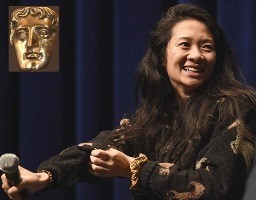
2021 – Film director Chloé Zhao won the top prize at the 73rd annual Directors Guild of America awards for her film Nomadland. Variety noted she is the second woman, and the first woman of color, to earn the DGA award. Kathryn Bigelow was the first woman to win the DGA award in 2009 for The Hurt Locker. Like Bigelow, Zhao went on to win the Academy Award for Best Director.
Everybody have a Free Speech Friday