
Space travel has long involved heavy lifting. To reach a destination, the spacecraft has to burn fuel, throw it out the back of a rocket, and hope there’s enough left to fly back to its home planet.
But a “startling” new experiment from the European Space Agency (ESA) hints that the future of deep-space travel might not involve a single drop of fuel.
Interestingly, it may resemble a cosmic game of billiards played with beams of light.
In a new experiment, international researchers from ESA, the Université Libre de Bruxelles (Belgium), and Khalifa University (UAE) have demonstrated that superlight graphene aerogels can be propelled by lasers in microgravity.
“We are opening the path to a propellant-free propulsion future. Ultralight graphene aerogels are the perfect example of an innovative material created in the lab that could save us large amounts of fuel and hardware in space,” said Ugo Lafont, ESA’s materials’ physics and chemistry engineer.
The 30-millisecond breakthrough
In May 2025, the researchers boarded a “gravity rollercoaster” — a parabolic flight designed to simulate the weightlessness of orbit.
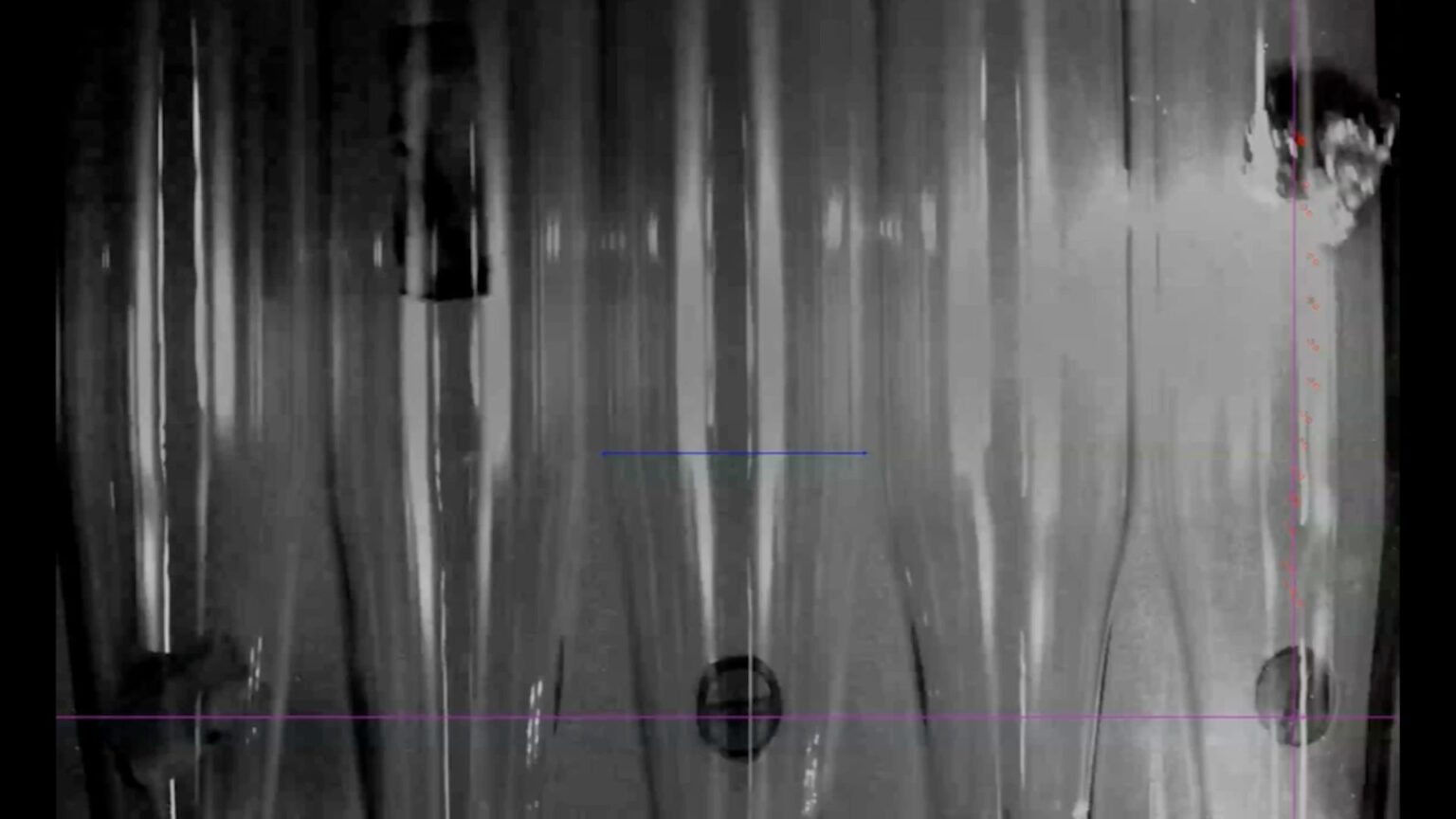
Inside a vacuum chamber, three tiny, pitch-black cubes of graphene aerogel were placed.
The moment the plane hit microgravity, the team fired a continuous laser at the cubes. The result was an instant, “fast and furious” acceleration.
To capture the split-second movement, high-speed sensors peered through glass viewports, documenting every millisecond of the aerogel’s flight.
“Before you could even begin to blink, the graphene aerogels experienced large accelerations. It was all over in 30 milliseconds,” stated Marco Braibanti, ESA’s project scientist for the experiment on light‑driven propulsion of graphene aerogels in microgravity.
Graphene aerogels weigh next to nothing but have a structural lattice as resilient as a steel frame. These materials blend the extreme electrical conductivity of graphene with a highly porous, ultralight structure.
Removing fuel tanks
On Earth, this effect is invisible. Our planet’s gravity is far too strong, pinning the ultralight aerogels down and masking the subtle pressure of light. But in the void of space, even the tiny kick of a photon becomes a powerful engine.
The researchers uncovered two vital breakthroughs: light serves as the primary power source, converting laser energy directly into physical movement, while the beam’s intensity acts as a precise “throttle” to control speed.
“The stronger the laser, the greater the acceleration. The laser pulse triggers a sharp acceleration peak, after which the aerogels slow down,” added Braibanti.
Together, these findings prove that light can both propel and steer these materials with remarkable accuracy.
Today, satellites are limited by attitude control systems, which mainly use small thrusters to keep them pointing the right way. Once those thrusters run out of fuel, the satellite becomes a multi-million-dollar piece of space junk.
Future satellites could integrate graphene into the skin or use it to steer massive solar sails.
While still in its early stages, the experiment demonstrates that light can generate the velocity and thrust needed to steer solar sails and adjust satellite positions.
It could lead to a propellant-free future. Spacecraft can save weight and extend mission duration by using light rather than chemical propellants. Moreover, the tech could offer more room for scientific instruments and technology by eliminating the need for fuel tanks.
The findings were published in the journal Advanced Science on March 31.