
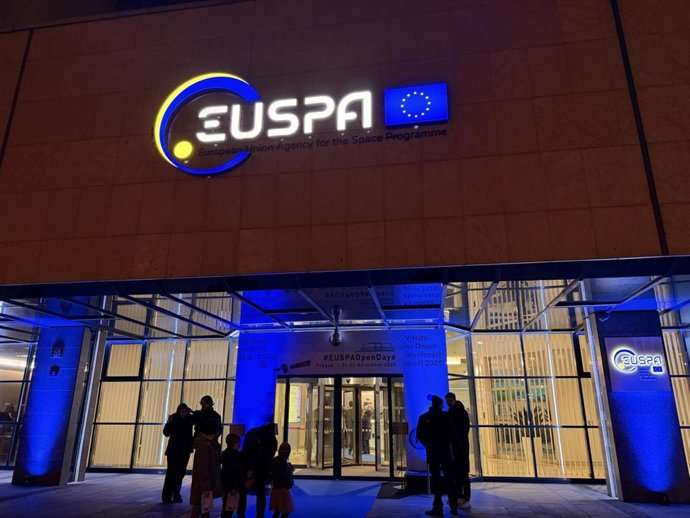
The European Commission has proposed a significant change in the structure and name of the current European Union Agency for the Space Programme (EUSPA). The aim is to rename it as the European Agency for Space Services and grant it greater independence. This entity is responsible for managing the Galileo and EGNOS satellite navigation systems, as well as ensuring the security of the European Union’s space infrastructure.
The European Commission suggests establishing an independent founding act for the EUSPA. This legislative measure seeks to amend the relevant parts of the current EU Space Programme Regulation, thus reflecting the expansion of its operational responsibilities. The existence of an independent founding act would also avoid the need for modifications in each seven-year EU budget cycle.
With the new name of European Agency for Space Services, its role as a service provider is emphasized, differentiating it from the European Space Agency (ESA), which is not part of the Union. The name change seeks to avoid confusion and highlight its function in the space sector. The EUSPA also plays a crucial role in transforming satellite data into applicable services for citizens and businesses.
This new framework strengthens the EUSPA’s capacity as a service provider in the global space sector. Additionally, it opens the door to assuming new responsibilities in space-related areas, provided it has the necessary resources. The proposal will need to be negotiated by the European Parliament and the Council, in the context of the community strategy to strengthen the strategic autonomy of the European Union.
Countries like the United States and China are increasing their efforts in the space race, making the European Commission’s proposal an important step for the EU. The community strategy aims not only to strengthen strategic autonomy but also to ensure that the European Union maintains its relevance in the global space arena.
The EUSPA has proven to be a key player in managing satellite navigation systems like Galileo and EGNOS. These systems are fundamental for the security of the European Union’s space infrastructure. With the proposed new structure, the agency is expected to assume an even more relevant role in the development of space services, benefiting both citizens and businesses.
The European Commission has proposed a significant change in the structure and name of the current European Union Agency for the Space Programme (EUSPA). The aim is to rename it as the European Agency for Space Services and grant it greater independence. This entity is responsible for managing the Galileo and EGNOS satellite navigation systems, as well as ensuring the security of the European Union’s space infrastructure.
The European Commission suggests establishing an independent founding act for the EUSPA. This legislative measure seeks to amend the relevant parts of the current EU Space Programme Regulation, thus reflecting the expansion of its operational responsibilities. The existence of an independent founding act would also avoid the need for modifications in each seven-year EU budget cycle.
With the new name of European Agency for Space Services, its role as a service provider is emphasized, differentiating it from the European Space Agency (ESA), which is not part of the Union. The name change seeks to avoid confusion and highlight its function in the space sector. The EUSPA also plays a crucial role in transforming satellite data into applicable services for citizens and businesses.
This new framework strengthens the EUSPA’s capacity as a service provider in the global space sector. Additionally, it opens the door to assuming new responsibilities in space-related areas, provided it has the necessary resources. The proposal will need to be negotiated by the European Parliament and the Council, in the context of the community strategy to strengthen the strategic autonomy of the European Union.
Countries like the United States and China are increasing their efforts in the space race, making the European Commission’s proposal an important step for the EU. The community strategy aims not only to strengthen strategic autonomy but also to ensure that the European Union maintains its relevance in the global space arena.
The EUSPA has proven to be a key player in managing satellite navigation systems like Galileo and EGNOS. These systems are fundamental for the security of the European Union’s space infrastructure. With the proposed new structure, the agency is expected to assume an even more relevant role in the development of space services, benefiting both citizens and businesses.
Become a premium member for free!