


The Artemis II crew now face one of the riskiest aspect’s of their historic mission -Credit:AP
(AP)
After making history by traveling further into space than any other human, the Artemis II astronauts are now set to face one of the most dangerous aspects of their mission, as NASA warns, “there’s no plan B.”
The three Americans and one Canadian aboard the agency’s Artemis II test flight around the Moon broke a new record at 1:56pm on Monday when they reached 248,655 miles from Earth—surpassing the farthest distance ever traveled by humans. The record was previously set by the Apollo 13 crew in 1970.
After a spectacular journey that marked NASA’s first astronaut moonshot since Apollo 17 in 1972, the Artemis II crew, comprising NASA’s Reid Wiseman, Victor Glover, Christina Koch and Canadian astronaut Jeremy Hansen, are now making their way back home.
• Trump threatens ‘bigger, better, and stronger’ retaliation if Iran deal isn’t fully met
• Terrifying video appears to show disgruntled employee start Ontario warehouse fire
The crew members are scheduled to splash down off the coast of San Diego at approximately 8:07pm on Friday. Their descent back to Earth comes with serious risks.
“In terms of what keeps me up at night, my blood pressure will be elevated until they’re under parachutes in the water off the West Coast,” NASA Administrator Jared Isaacman admitted during a press conference on Tuesday.

There will be ‘no plan B’ if the heat protection system fails -Credit:Getty Images
“There’s no plan B there. That is the thermal protection system. The heat shield has to work,” Isaacman warned. The astronauts’ safe return to Earth relies entirely on a single thermal protection system that needs to withstand the extreme heat of Earth’s atmosphere.
On Friday, the Orion spacecraft will reach about 76 miles above the planet before its service module separates from the crew capsule. The capsule will then hurtle into the atmosphere at speeds of nearly 25,000 miles per hour.
Temperatures outside the capsule will soar to nearly 5,000°F. The crew and flight control are currently securing equipment, installing seats, and reviewing entry procedures in preparation for the re-entry to Earth.
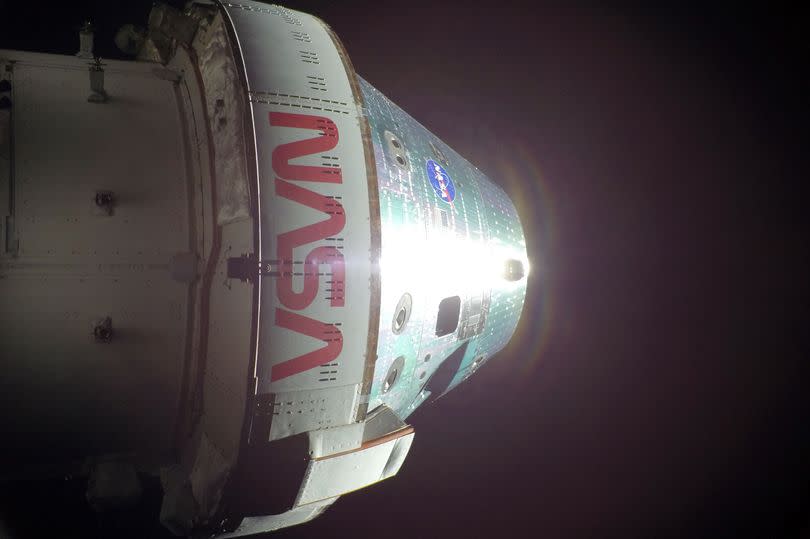
The crew are busy preparing for their return -Credit:NASA/AFP via Getty Images
“Looking ahead to Thursday, the crew and flight control teams will begin preparing the cabin and studying entry procedures ahead of splashdown. The crew will start stowing equipment and installing their seats to ensure all items are secured for re-entry. To prepare the cabin for entry, the teams opted to forego the originally planned shielding deployment demonstration,” the space agency said.
So far, the Artemis II mission has been largely successful, with the exception of issues with the aircraft’s toilet. The so-called lunar loo malfunctioned following Wednesday’s liftoff and has been hit-and-miss ever since.
Isaacman told the crew following the lunar flyby Monday night: “We definitely have to fix some of the plumbing” ahead of the next Artemis mission. Aside from the toilet and other relatively minor matters, the mission has gone well, Isaacman noted on Tuesday.
“But I’ll breathe easier when we get through reentry and everybody’s under chutes and in the water,” he said.