
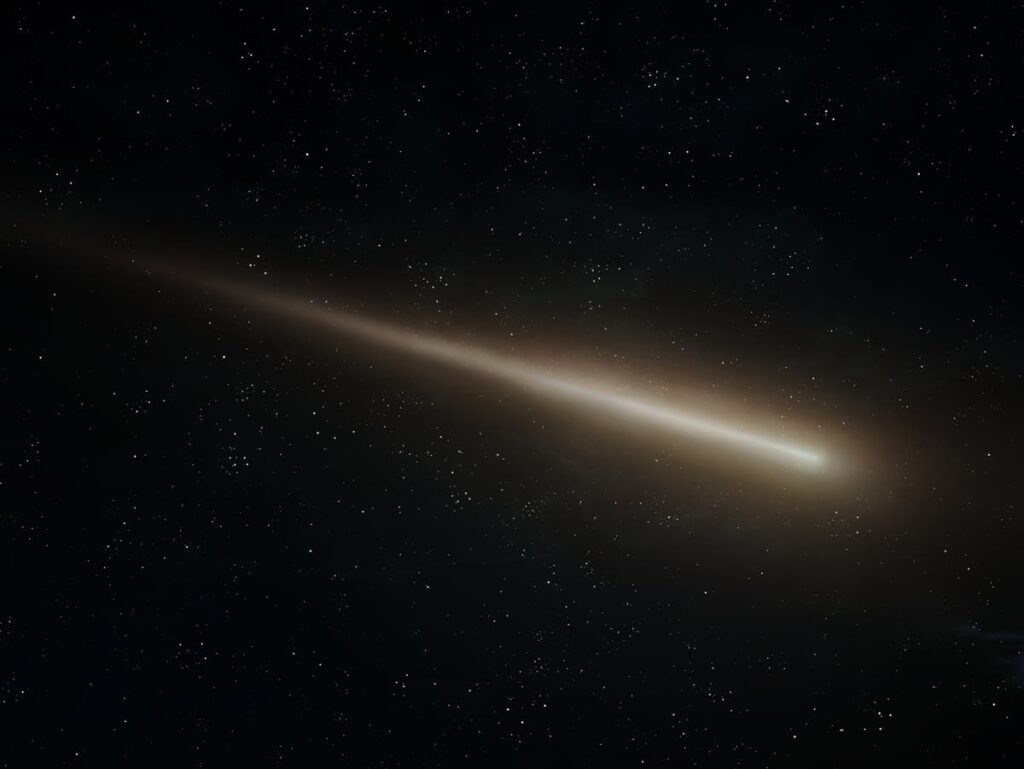
The unusual daytime meteor was reported around 2:30 p.m. April 7, with sightings across Connecticut, New York, New Jersey, Pennsylvania and Delaware.
NASA said the fireball first became visible about 48 miles above the Atlantic Ocean, just off Long Island, before moving southwest through the atmosphere.
It traveled roughly 117 miles at speeds exceeding 30,000 mph before disintegrating about 27 miles above Galloway, New Jersey.
Scientists said the object began breaking apart at an altitude of around 30 miles, creating shockwaves that may have caused loud booms reported in parts of New Jersey.
Hundreds of eyewitness reports were submitted to the American Meteor Society, including multiple sightings across Connecticut.
Observers described the fireball as extremely bright — in some cases glowing green or blue — and visible even in broad daylight.
Fireballs are a type of meteor that appear brighter than the planet Venus and are caused by larger pieces of space debris entering Earth’s atmosphere.
While most meteors burn up completely, experts say fragments can occasionally survive and reach the ground as meteorites, though it was not immediately clear if that happened in this case.