
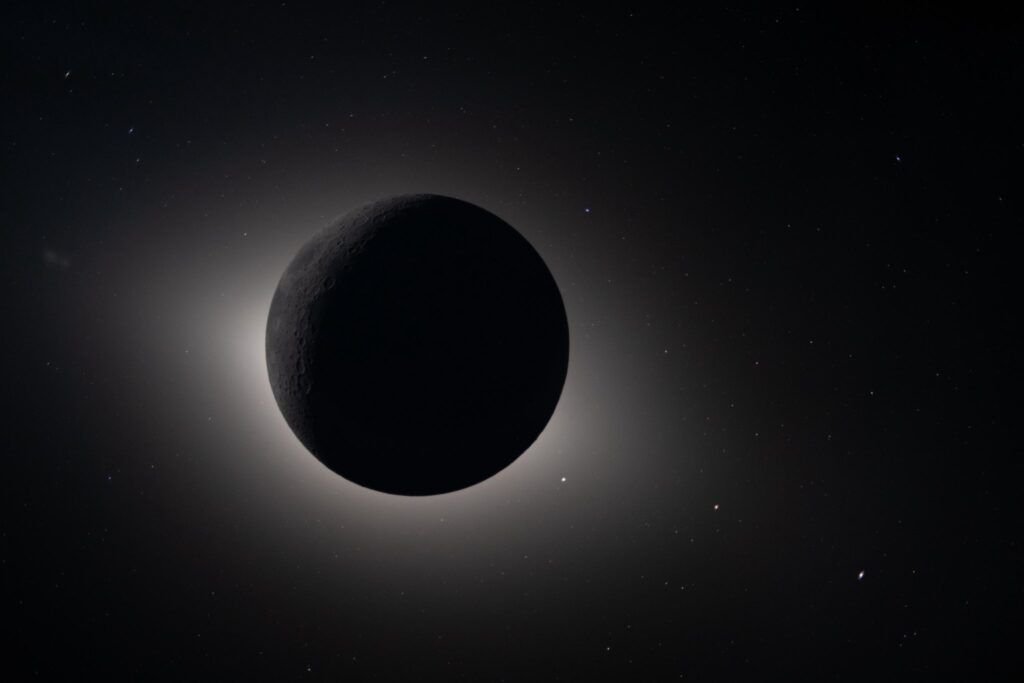
More than 50 years after the legendary Apollo missions, humanity has once again taken on the challenge of the vast emptiness of space. The Orion spacecraft, currently on the Artemis II mission, has successfully completed a flyby of the Moon, providing the crew and scientists with unique data on its far side. This mission was historic not only because of its technological triumph, but also because it set a new all-time record for the longest flight by a manned spacecraft.
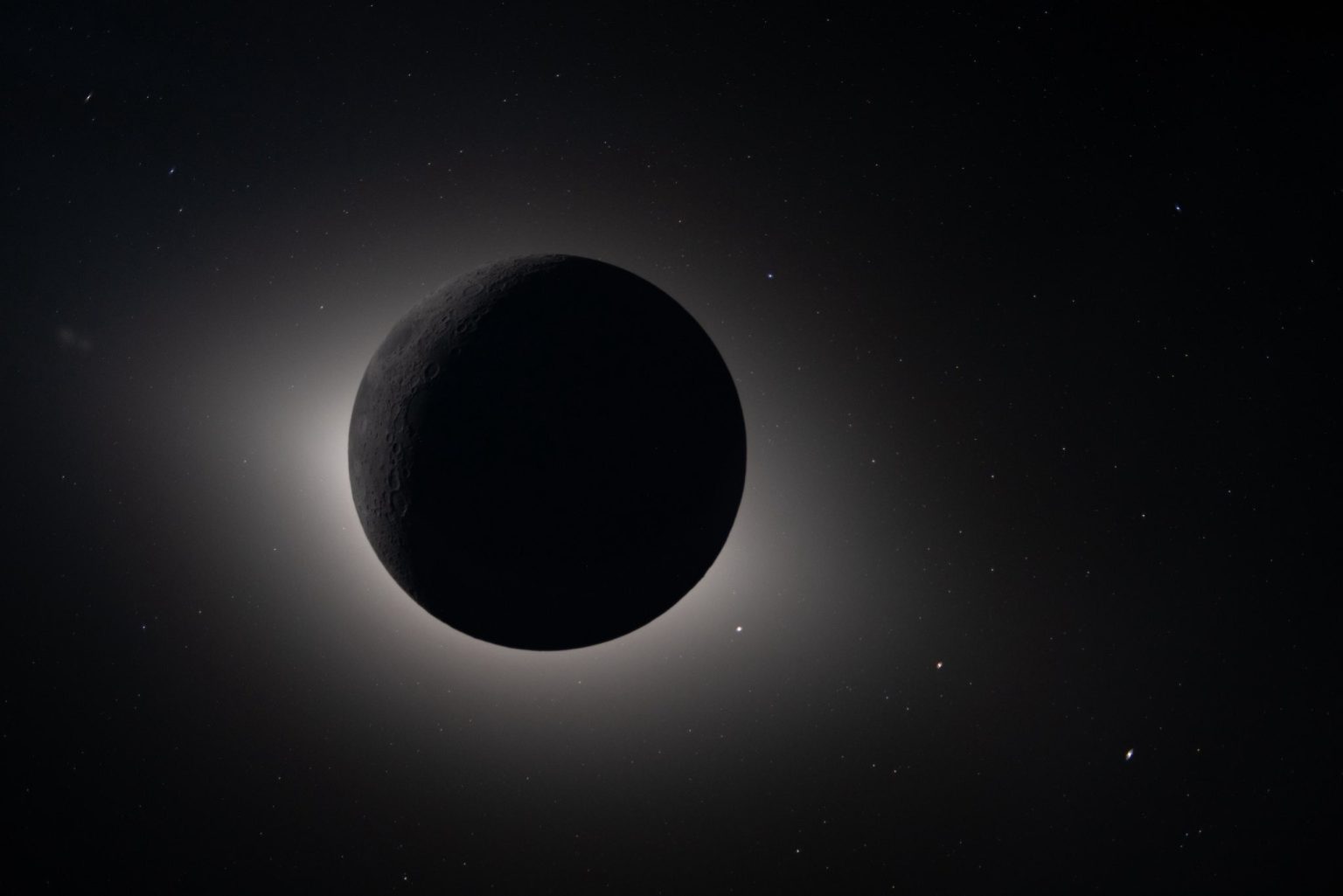 A solar eclipse caused by the Moon on April 6, 2026. Total phase beyond Earth. From its orbit, the Moon eclipses the Sun, offering a spectacle that only a few people in human history have ever witnessed. Photo: NASA
On Monday, April 6, 2026, the Artemis II crew officially surpassed the 1970 record. Previously, the record for the greatest distance from Earth was held by the Apollo 13 mission, at 400,000 km. The new pioneers—Americans Reid Wiseman, Victor Glover, and Christina Koch, along with Canadian Jeremy Hansen—have gone significantly further, reaching a distance of 406,000 km from Earth.
NASA Artemis passing close to the Moon pic.twitter.com/jLvGoW1IR9
— Elon Musk (@elonmusk) April 7, 2026
Commander Reid Wiseman noted that being able to see the Moon with the naked eye from such a distance was an incredible feeling. The crew urged future generations not to rest on their achievements and to ensure that this new record doesn’t stand for too long either.
Academic program and emotional tribute
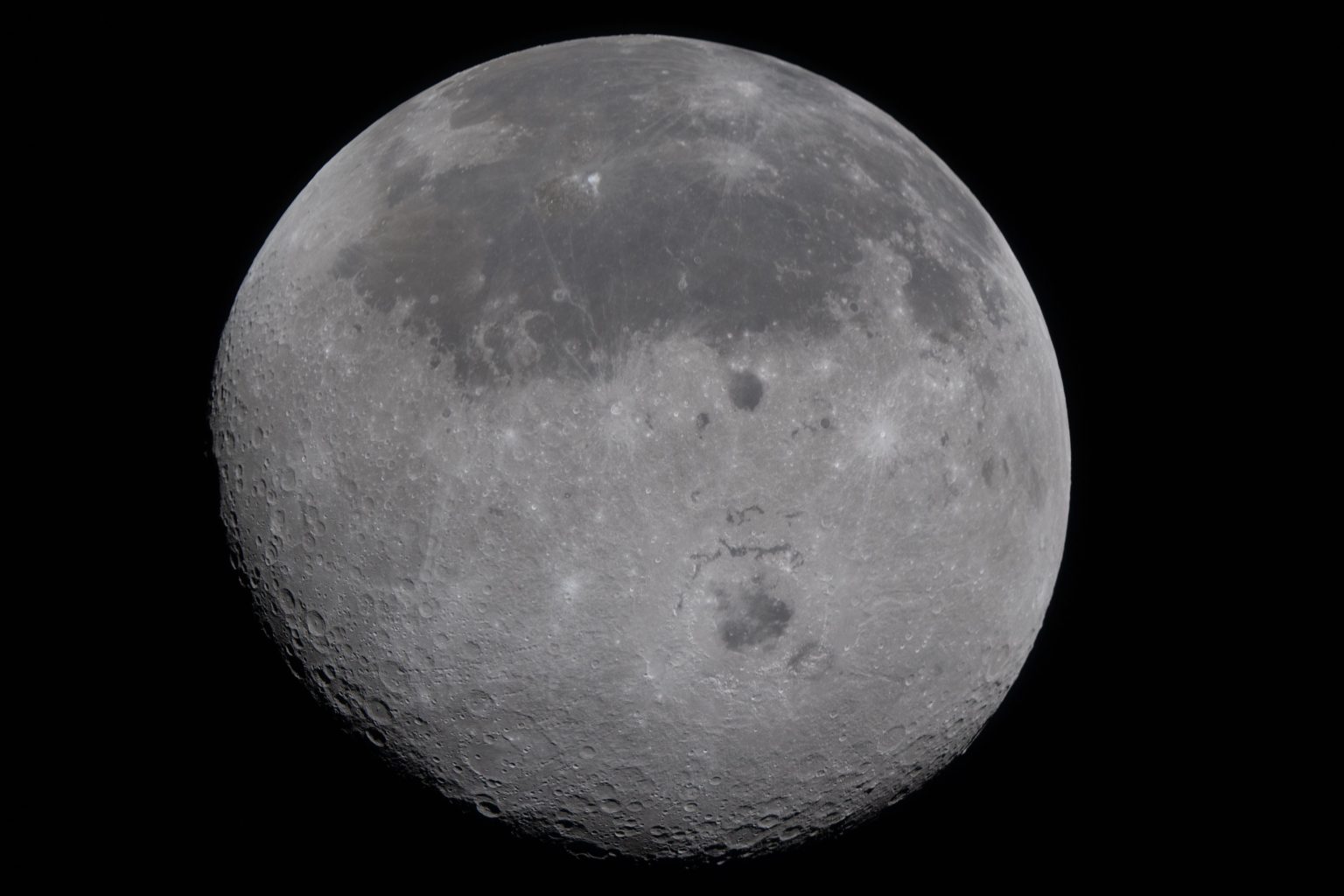 Approaching the Moon. A view of our moon from the windows of the Orion spacecraft. Photo: NASA
During the lunar approach—when the minimum distance to the dust-covered surface was 6,545 km—the astronauts carried out more than two dozen scientific experiments. Using Nikon DSLR cameras, they captured detailed images of impact craters and geological features of the terrain. In particular, the focus was on the Orientale Basin—a massive impact structure with a diameter of about 950 km.
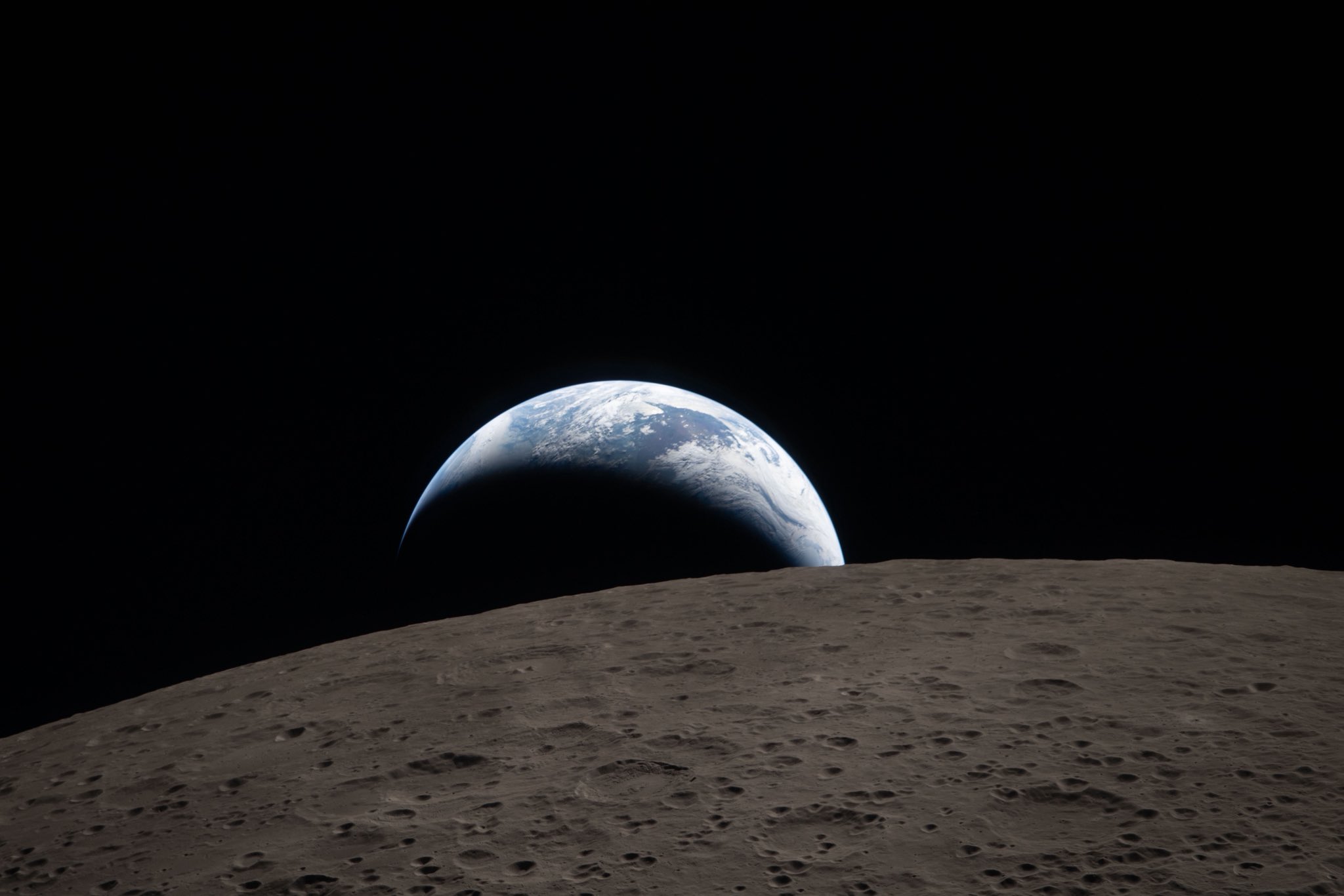 The first photo of the far side of the Moon, taken from aboard the Orion spacecraft as Earth disappeared behind the lunar horizon. Photo: NASA
In addition to the scientific work, the mission also had a deeply personal significance. After setting the record, the crew requested that two new craters they had observed be named. The first was named Integrity (in honor of the space capsule), and the second—Carroll—in memory of Captain Wiseman’s late wife. This moment was the most emotional part of the flight: the four astronauts couldn’t hold back their tears as they hugged each other in the cramped cabin.
Breathtaking views
Although NASA is still preparing to release official high-resolution images, the astronauts have already shared their first impressions. According to Victor Glover, some of the lunar peaks reflected the sun’s rays so brightly that they appeared to be covered in snow. In addition to using professional equipment, the crew took impromptu photos with their smartphones, capturing the Earth and the Moon in a single frame for social media.
The crew also witnessed a rare phenomenon: a total solar eclipse from space, when the Moon temporarily blocked out the Sun. At that moment, Mercury, Venus, Mars, and Saturn became clearly visible against the black expanse of space. Glover described Earth as a fragile oasis in the midst of a “vast, dark abyss,” emphasizing the unity of all humanity.
Links between generations: Greetings from a legend
The start of this decisive day was marked by a special symbolism. The astronauts woke up to a recording of the voice of Jim Lovell, commander of Apollo 13. Lovell recorded this message just two months before his death last August.
We’re going farther than ever before 🚀
Today, the Artemis II crew will break the record for how far humans have traveled from Earth as they fly around the far side of the Moon.
Coverage begins at 1 p.m. EDT (1700 UTC). Watch Artemis II make history:… pic.twitter.com/hCOVQPkxUF
— NASA (@NASA) April 6, 2026
“Welcome to my old neighborhood,” he said, greeting the new generation of researchers. Orion also carries the silk patch from the Apollo 8 mission, which Lovell took with him on the first historic flight to the Moon in 1968.
What’s next?
The 10-day Artemis II mission is the final test before landing humans on the moon. The capsule is expected to splash down in the Pacific Ocean on April 11.
This success paves the way for the next steps:
Artemis III (2027): testing docking with lunar landers in Earth orbit.
Artemis IV (2028): the historic return of humans to the Moon’s surface, with a landing near the South Pole.
Although the trajectory of Artemis II resembled the forced course of Apollo 13, in spirit it became the successor to Apollo 8—the mission that first showed us the “Earthrise” over the lunar horizon and forever changed our perception of humanity’s place in the Universe.
We previously reported on how the astronauts shared their impressions during the flight to the Moon.
According to NASA