
The first people to travel towards the Moon in over half a century are currently on their lunar journey. Supporting them around the clock, behind the scenes, are European teams in mission control centres around the world. In this edition of European eyes on Artemis, we meet the EveryWear Operations team based at ESA’s European Astronaut Centre (EAC) near Cologne, Germany.
The Artemis II crew – Canadian Space Agency (CSA) astronaut Jeremy Hansen and NASA astronauts Christina Koch, Victor Glover and Reid Wiseman – are the first humans to venture into deep space since Apollo 17 in 1972, the last mission to the Moon.
To support crew health during this historic mission, NASA invited the EveryWear team at EAC to contribute its software and operational expertise. Throughout the 10-day flight, European engineers and medical specialists in Cologne are monitoring their system from the ground, ensuring it performs reliably as the crew travels farther from Earth than any humans in over half a century.
On the Station
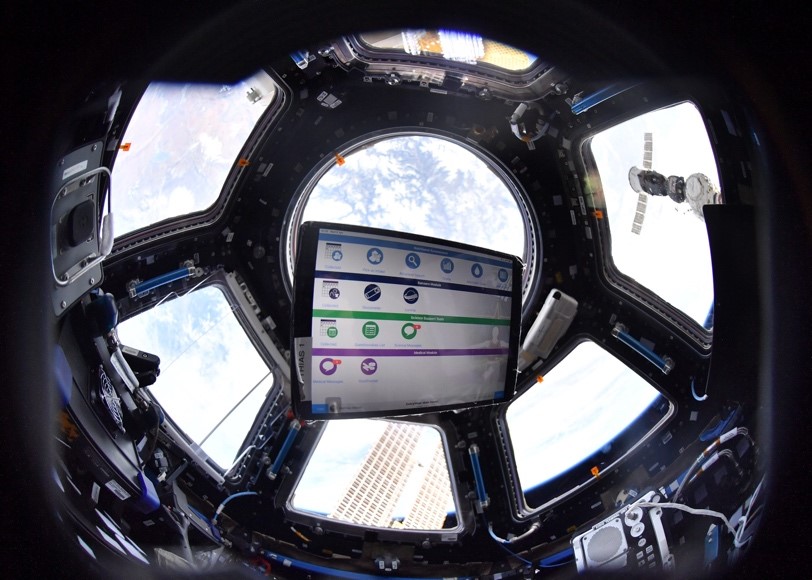
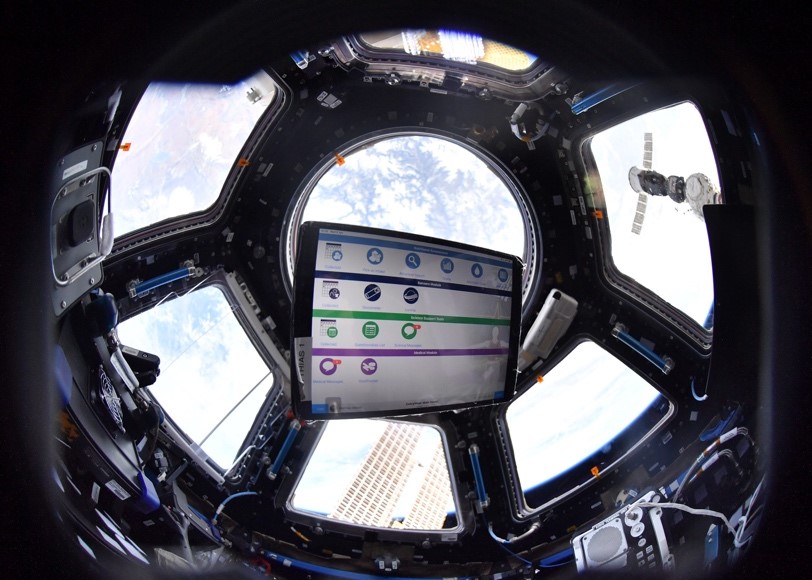
EveryWear on a tablet inside the International Space Station’s European-built Cupola module.
Credit: ESA/CNES/MEDES
EveryWear is a secure medical and human research support application that has been used for nearly a decade on the International Space Station (ISS). Astronauts use it to log their nutrition and medication intake, complete medical and research questionnaires, interface with a wide range of sensors, communicate privately with their flight surgeons on the ground, and in some cases record experiment-related data.
Developed by MEDES, the French Institute for Space Medicine and Physiology, for the French space agency CNES, the software first flew as a technology demonstrator with ESA astronaut Thomas Pesquet during his Proxima mission in 2016. It has since become standard with daily use for all astronauts on board, enhancing and extending its features mission after mission and supporting on-orbit activities for medical and research teams from all ISS partners.
“With Artemis II, we are in a way celebrating a ten-year anniversary of EveryWear in space,” shares Maurice Marnat, project lead at MEDES, supporting the EAC integrating team from Toulouse, France. “Our decade of experience on the Station has demonstrated remarkable operational reliability and gives us confidence as we support a mission beyond low Earth orbit.”
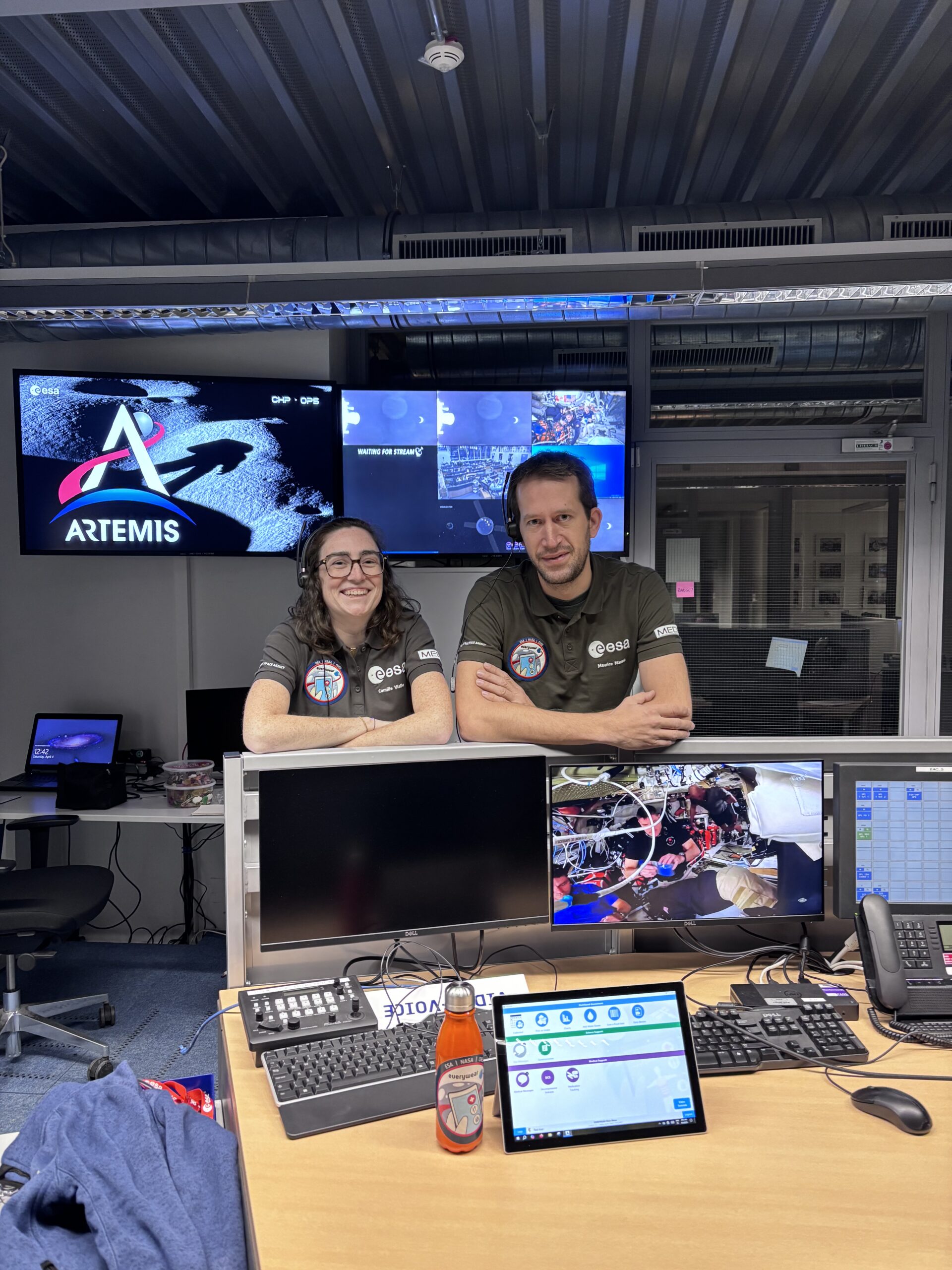
The MEDES part of the EveryWear team in the monitoring room at ESA’s European Astronaut Centre (EAC) near Cologne, Germany.
Credit: ESA
On Orion
For Artemis II, EveryWear has been adapted to NASA’s Orion spacecraft and its specific operational environment.
EveryWear runs on different devices on the International Space Station and Orion: “We worked closely with NASA and the development team at MEDES for about a year to redefine the requirements,” explains Alexandre Fréchette, engineering and operations lead in the space medicine team at ESA. “We had to adapt the operating system and ensure all features, such as camera scanning, worked seamlessly.”
Another key difference lies in nutrition tracking. “On the Station, astronauts select their meals each day from a large pantry database within the app,” describes Salvi Verma, EveryWear operations team lead. “For Artemis II, because it is a short mission, daily menus were defined in advance by the crew along with the medical and nutrition teams. They can swap days, but they are limited to the food available onboard Orion.”
Security is at the heart of the system. All medical data are encrypted at the source and can only be accessed by the intended recipient using a private key. As there are no ESA astronauts on Artemis II, the EAC team does not have access to crew medical data. Instead, this European-developed software equips NASA and CSA flight surgeons with the secure tools they need to monitor their astronauts’ health throughout the mission.
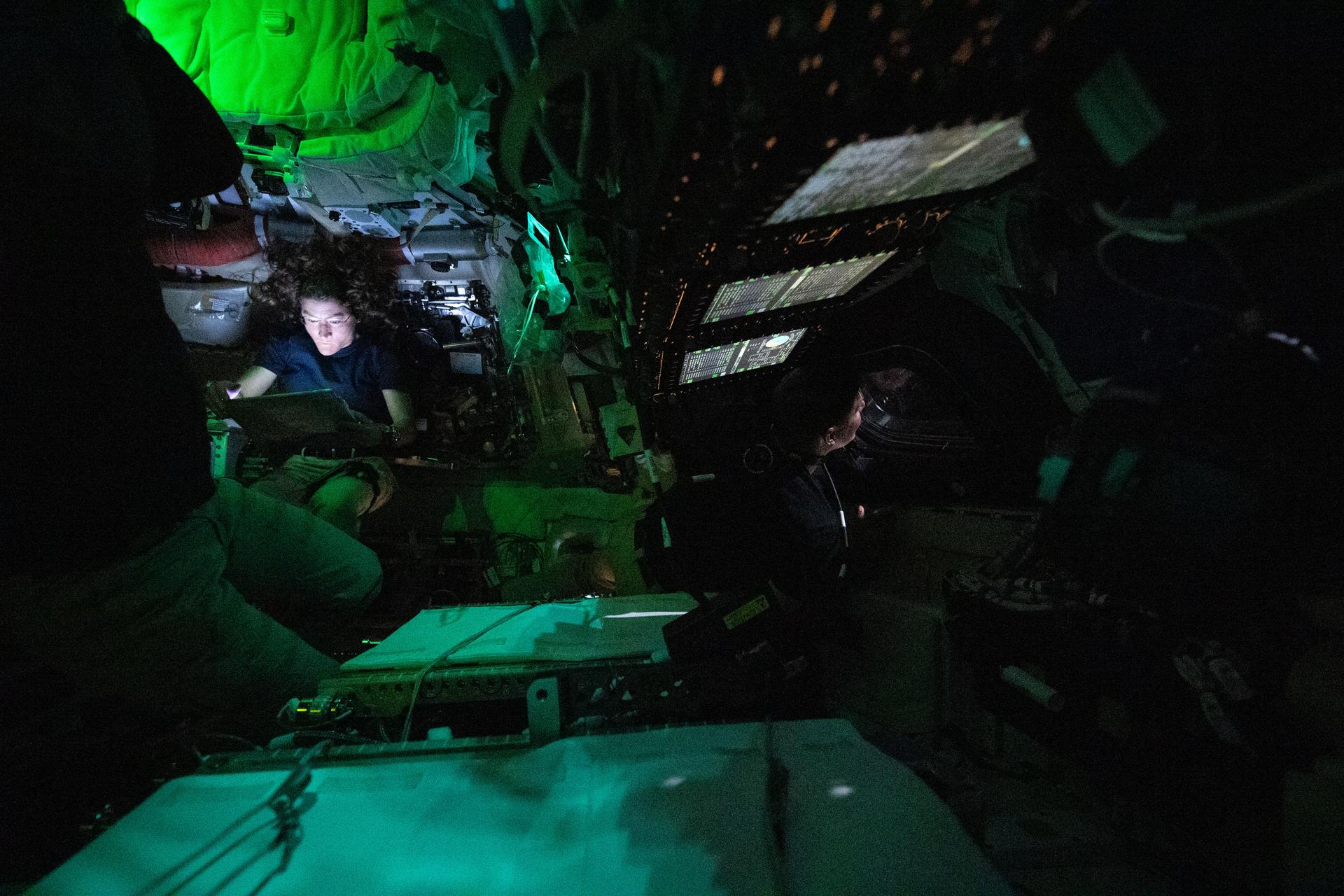
The Artemis II crew in their spacecraft on the third flight day of their mission.
On console
During the mission, the EveryWear team supports operations from a dedicated, security-controlled room at EAC.
“Our four team members are on console throughout the mission, ready to answer any questions from the crew or flight control team,” shares Salvi. “The ideal scenario is that the software performs perfectly and we are simply listening in – but we are prepared to resolve any issue quickly.”
On flight day four, the crew carried out a dedicated ‘developmental flight test objective’ to test all of EveryWear’s capabilities in the unique deep-space environment.
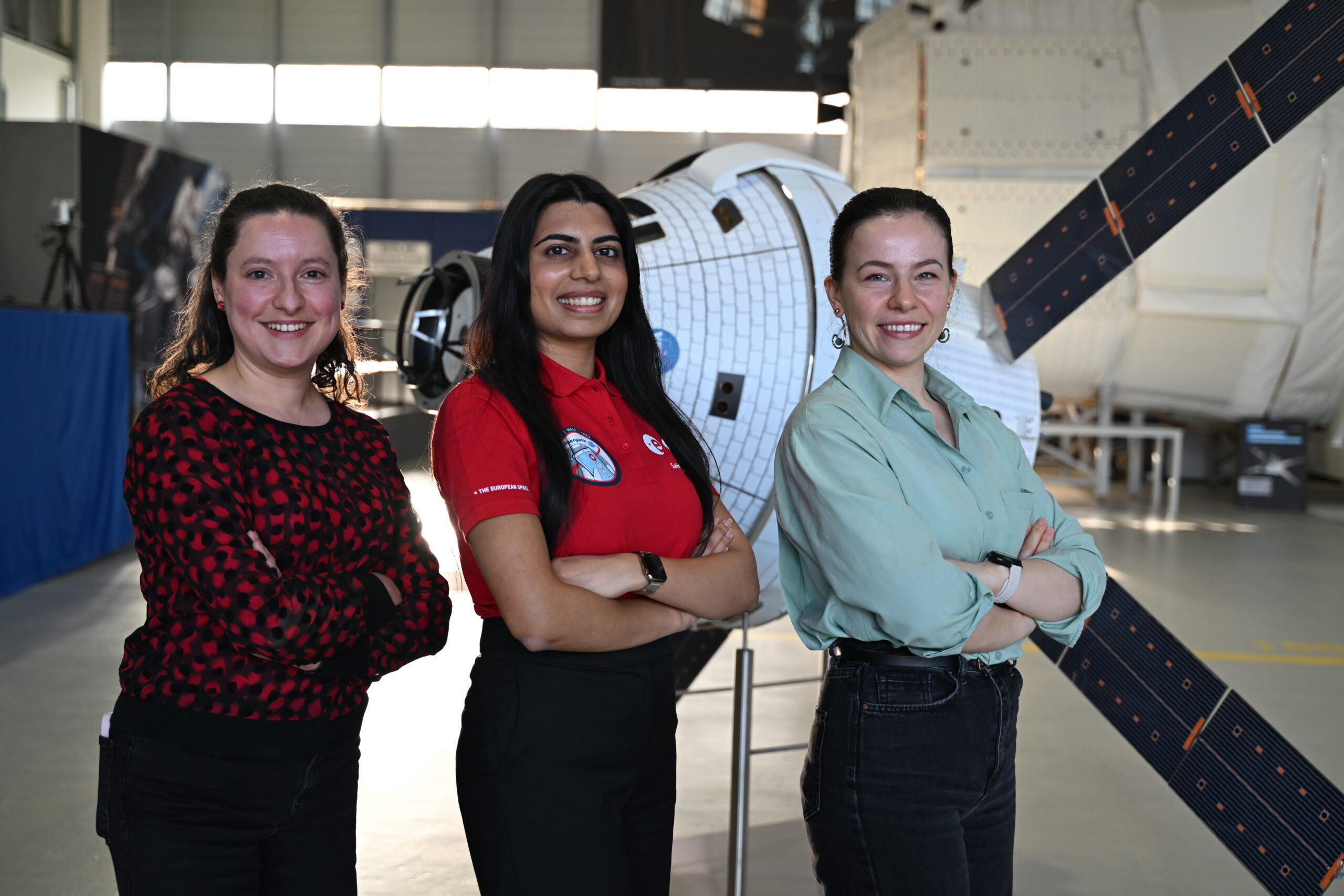
Part of the EveryWear team at ESA’s European Astronaut Centre near Cologne, Germany.
Credit: ESA-A. Conigli
Future missions
EveryWear continues to support crews on the International Space Station, including Sophie Adenot during her εpsilon mission, and is planned for future Artemis flights.
“The idea is to expand EveryWear beyond nutrition and medication tracking,” says Andreas Lundt, lead of the EveryWear team. “With our proven heritage on the International Space Station, we can also use the software to support science experiment tracking on future Moon missions.”
From missions in low Earth orbit to future expeditions around the Moon, these European engineers in Cologne help ensure that wherever astronauts go, their health travels with them.
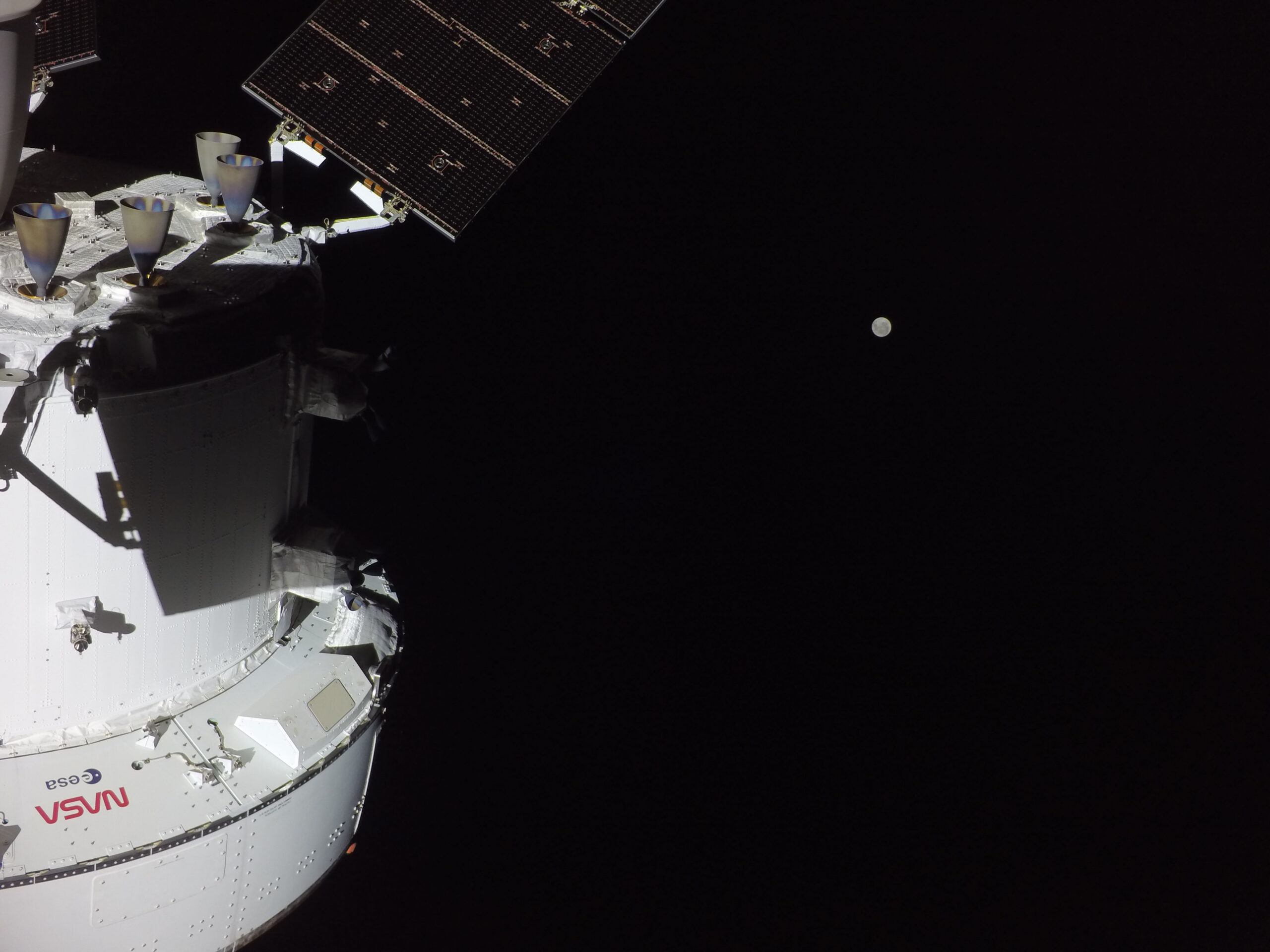
The Artemis II crew en route to the Moon on the second flight day of the mission. This photo shows the Orion spacecraft with the Moon in the distance, as captured by a camera on the tip of one of its solar array wings.