The photos recently released by the crew of the historic Artemis II mission caused a stir online, including claims of increased pollution. Here’s why.
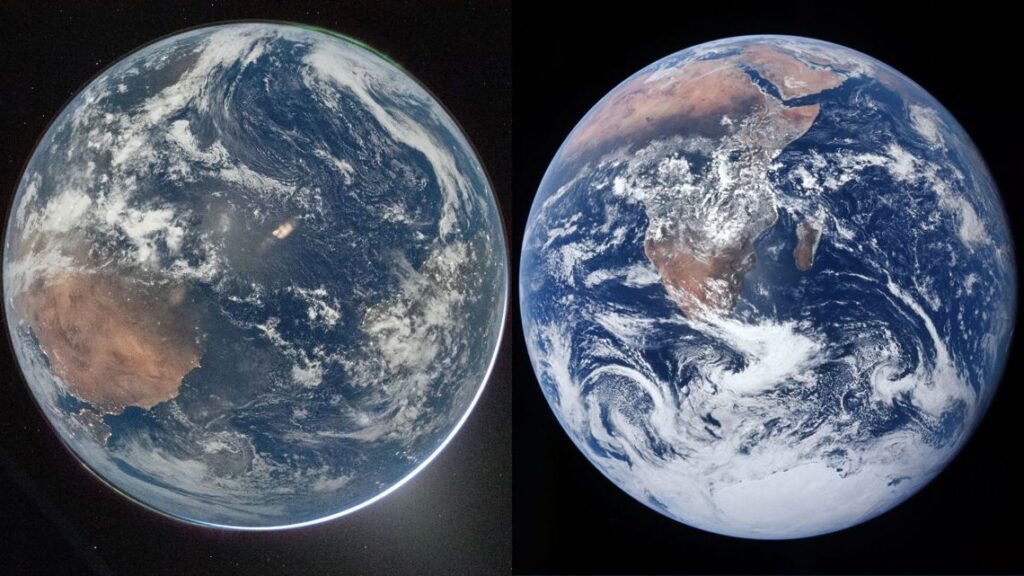
CAPE CANAVERAL, Fla. — The entirety of our planet was recently captured in a single image by the crew of NASA’s historic Artemis II lunar mission, but Earth’s colors caused some commotion online, especially compared to photos of Earth taken decades prior.
The “Hello World” photo was first posted by the lunar mission’s commander, Reid Wiseman, from the spacecraft’s window on April 2, according to NASA. Soon after taking the photo, Wiseman’s crew was 100,000 miles from Earth and was quickly gaining on the moon with another 160,000 miles to go.
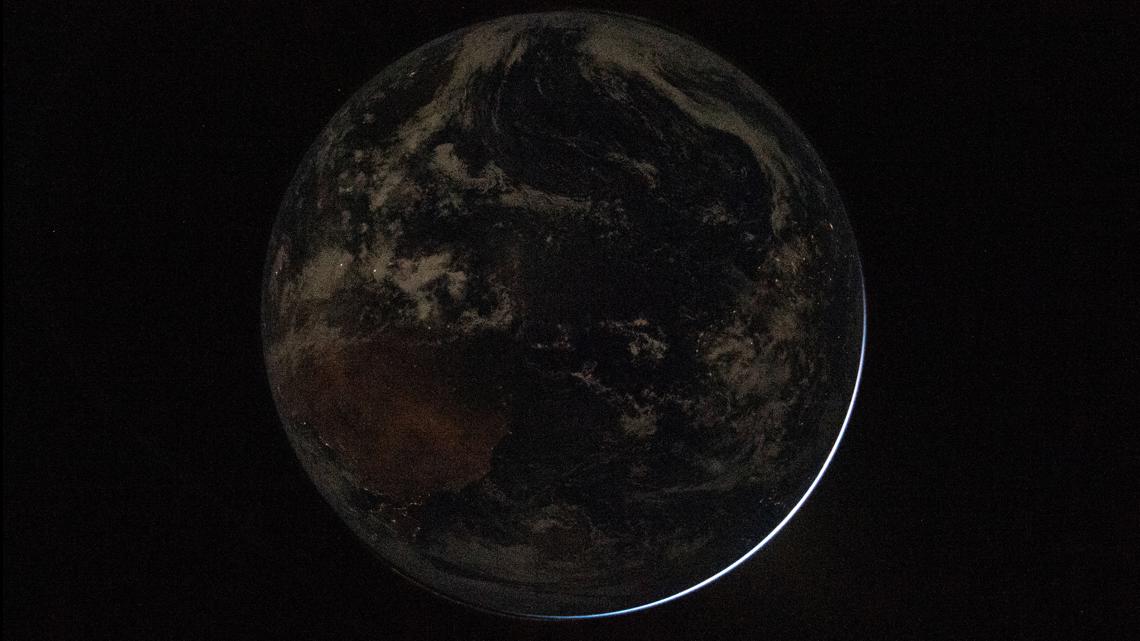
The photo shows stunning displays of two auroras, on the top right and bottom left of Earth, along with bright light in the bottom left as the Earth eclipses the Sun. Despite the magnificent quality of the photo, many took to social media to criticize one aspect of the image: the color.
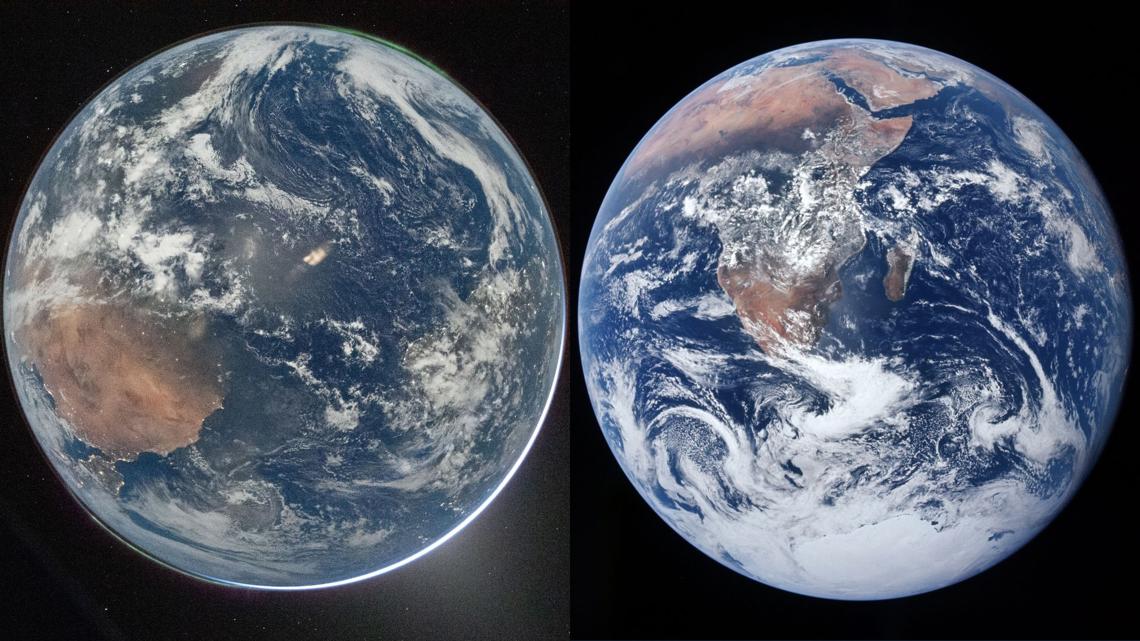
People compared the “Hello World” photo to the most iconic image of Earth ever captured, the “Blue Marble” photo taken in 1972 by Harrison Schmitt aboard the Apollo 17 spacecraft, which was also headed to the moon. Earth appeared much more vivid in the 1972 photo compared with the 2026 photo, leading some to claim the Earth has literally been made dirtier by pollution.
But, there’s a much simpler reason why the images differ in vividness.
Why does Earth look “dirtier” in the Artemis II photos?
The differences in color between the two photos stem from the settings used to take them, and where in space they were taken from.
NASA’s Flickr page, where the Artemis II crew’s photos live, shows the type of camera and the settings used to take the picture. Most of the settings are usual for taking photos, except for one. The ISO setting, which controls the camera’s sensitivity to light, is set to a staggering 51,200. For context, a common ISO setting for pictures taken on Earth is around 200.
The reason Wiseman had to use such a high ISO was that his spacecraft was on the opposite side of the Earth from the sun, meaning to the astronauts’ naked eyes, the Earth appeared much darker than it does in the photo. The sun is actually what’s causing the bright light on the bottom right of the Earth.
“The differences were clearly ‘night and day,” photography educator Jared Polin, who made a video going in-depth on the differences between the Artemis II and Apollo 17 photos, said in an emailed response. “One is shot with the sun lighting up the earth, and the other, the Earth is blocking the sun, meaning it’s in shade, aka dark. From a photographic standpoint, it all makes sense. The modern photo was taken at 51,200 ISO, the 1972 image was taken with what I believe was 64 ASA slide film. That’s roughly a 9-stop difference in ISO/ASA. Kind of insane when you think how far cameras have advanced.”
In fact, Wiseman also captured another image of Earth from a different position, with marginally different settings, to illustrate the “Dark Side of the Earth.”