
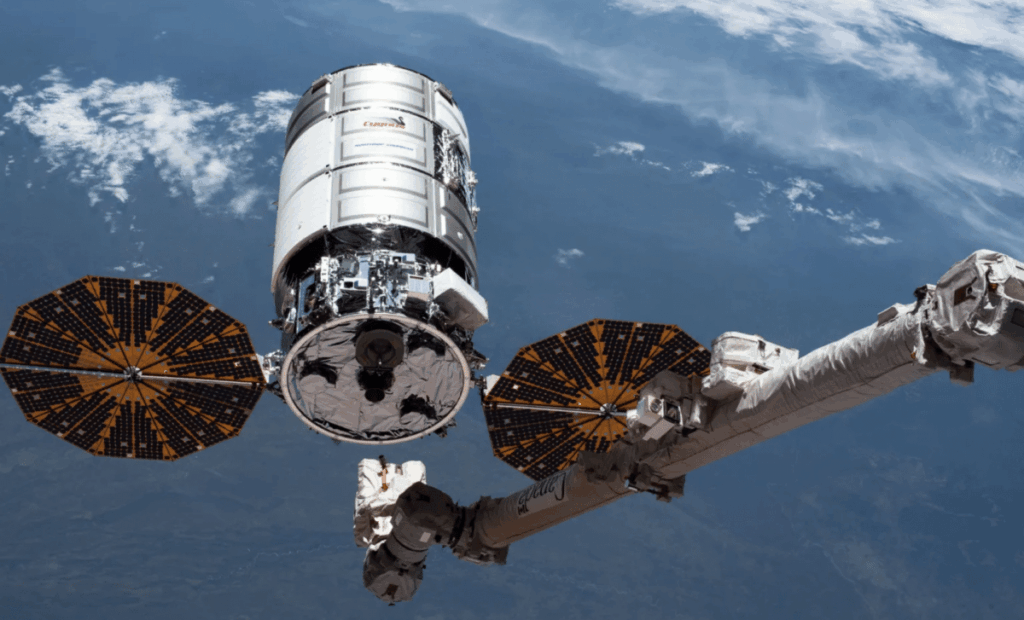
NASA’s Expedition 74 crew is gearing up for a critical mission that will bring groundbreaking research to the International Space Station (ISS) through the Cygnus cargo spacecraft. The mission, which marks a significant advancement in space exploration, is set to deliver advanced microgravity research tools that will revolutionize fields ranging from quantum computing to astronaut health. This mission is not just about delivering supplies, but about shaping the future of science in space. The crew has kicked off a week of intensive preparation to ensure the success of this vital mission.
Preparing for Cygnus Cargo Mission: A Crucial Week Ahead
NASA’s Expedition 74 crew has entered a critical phase in their mission preparations as they prepare for the arrival of the Cygnus XL cargo spacecraft. Over the course of this week, the astronauts will undertake a variety of tasks essential to the successful capture and installation of the spacecraft on the ISS. The Cygnus XL, set to carry essential research equipment, is expected to be captured using the Canadarm2 robotic arm and installed on the Unity module’s Earth-facing port.
This mission is pivotal for both advancing the U.S. space program and expanding the global understanding of space science. According to NASA, the equipment arriving on the Cygnus spacecraft includes state-of-the-art research gear designed to conduct experiments that have the potential to impact quantum computing, stem cell research, astronaut health, and more. These advancements hold the promise of reshaping numerous scientific fields, and the preparation for their safe arrival has already begun.
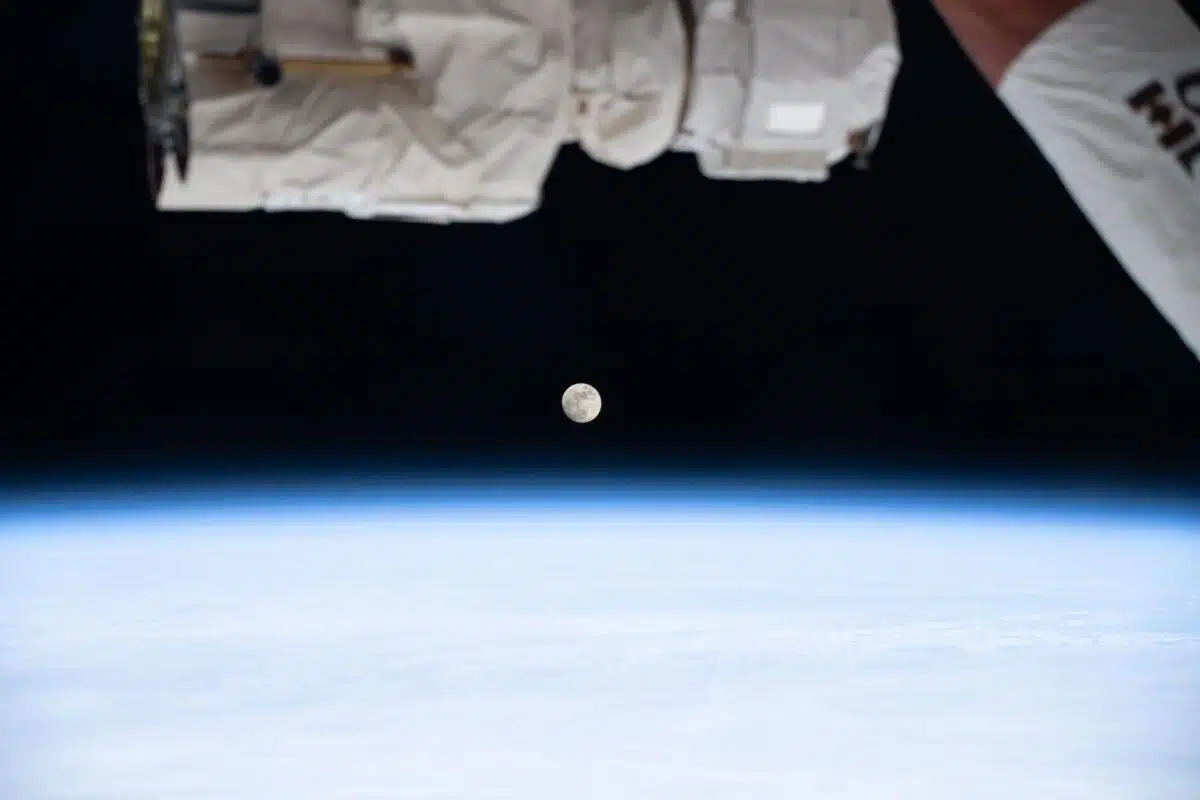 A waxing gibbous Moon is pictured above Earth’s atmosphere from the International Space Station as it soared 268 miles above far eastern Canada.
NASA/Chris Williams
The Crew’s Preparations: A Week of Intense Training
At the start of the week, NASA Flight Engineers Chris Williams and Jack Hathaway practiced maneuvering the Canadarm2, the robotic arm used to capture the Cygnus XL upon its arrival at the ISS. Their training session in the station’s cupola, a unique observation module with panoramic windows, involved simulating the precise movements needed to safely capture the spacecraft and install it on the Unity module. After Cygnus XL is captured, ground controllers will remotely command the Canadarm2 to install it, ensuring the cargo is securely placed for unloading.
The crew’s preparation extends beyond robotic training. NASA astronauts also performed vital maintenance tasks to ensure the longevity of their spacesuits and research equipment. Hathaway and fellow astronaut Jessica Meir worked on cleaning and flushing the cooling loops of spacesuits, an essential maintenance procedure to maintain the suits’ functionality. Meanwhile, Williams focused on swapping lithium-ion batteries that power the suits, ensuring that they remain ready for any emergency spacewalks.
Scientific Experiments on Board: The Future of Space Research
With the arrival of Cygnus, the astronauts aboard the ISS will be conducting a series of groundbreaking scientific experiments. One notable area of research involves studying how microgravity affects quantum computing technology. This research has the potential to unlock revolutionary computing advancements, pushing the boundaries of what we can achieve in terms of processing power and efficiency.
Additionally, the Cygnus cargo will carry tools for testing stem cell therapies, a field of study that could lead to breakthroughs in regenerative medicine and other health applications for astronauts and Earth-based patients alike. The understanding of how microgravity affects biological processes is crucial for ensuring the health of astronauts during long-term missions, such as the planned trips to Mars.
International Collaboration: NASA and Roscosmos Working Together
This mission also highlights the importance of international collaboration. While NASA engineers lead the preparations for Cygnus’ arrival, Russian cosmonauts aboard the ISS play a critical role in the overall station operations. Roscosmos cosmonauts Sergey Kud-Sverchkov and Sergei Mikaev, along with other crew members, have been performing vital health studies and testing the ISS’s communication systems.
Kud-Sverchkov and Mikaev have been using advanced monitoring systems to measure their blood pressure in weightlessness. This cardiovascular research is crucial for understanding the long-term effects of space travel on the human body, with implications not just for space exploration, but also for public health on Earth.
Technology Demonstrations and Training: Paving the Way for the Future
Another exciting aspect of the Cygnus cargo mission is the technology demonstration initiatives taking place aboard the ISS. Flight engineer Sophie Adenot of the European Space Agency (ESA) has been working with the TUSK technology demonstration — a small experimental robotic arm designed for precise sub-millimeter manipulation in microgravity. This new technology could play a vital role in future space exploration, making it possible to perform delicate tasks in space with unmatched precision.
The crew is also working to enhance emergency communication systems, ensuring that they remain connected to mission controllers around the world at all times. These system upgrades are necessary not just for the success of the current mission, but for any future deep-space exploration missions, such as those aimed at Mars.