
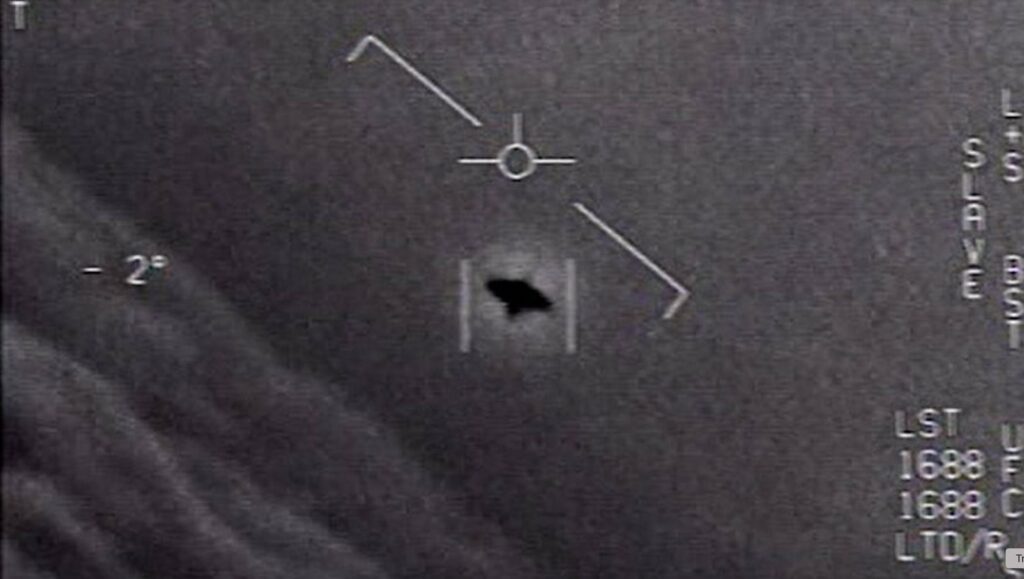
The truth is reportedly out there. But in the case of flying saucers and unidentified anomalous phenomena, what’s truly going on seems elusive.
Making it all the more intriguing is U.S. President Donald Trump’s recent directive “to begin the process of identifying and releasing government files related to alien and extraterrestrial life, unidentified aerial phenomena (UAP), and unidentified flying objects (UFOs) and any and all other information connected to these highly complex, but extremely interesting and important, matters.”
But “disclosure” — in whatever form it takes — could ignite a powder keg of implications. And discussions of disclosure are particularly timely these days, given that Steven Spielberg’s highly anticipated film “Disclosure Day” is set for release this June. Space.com reached out to a diversity of experts on the topic, obtaining a wide swath of swing and sway.
You may like
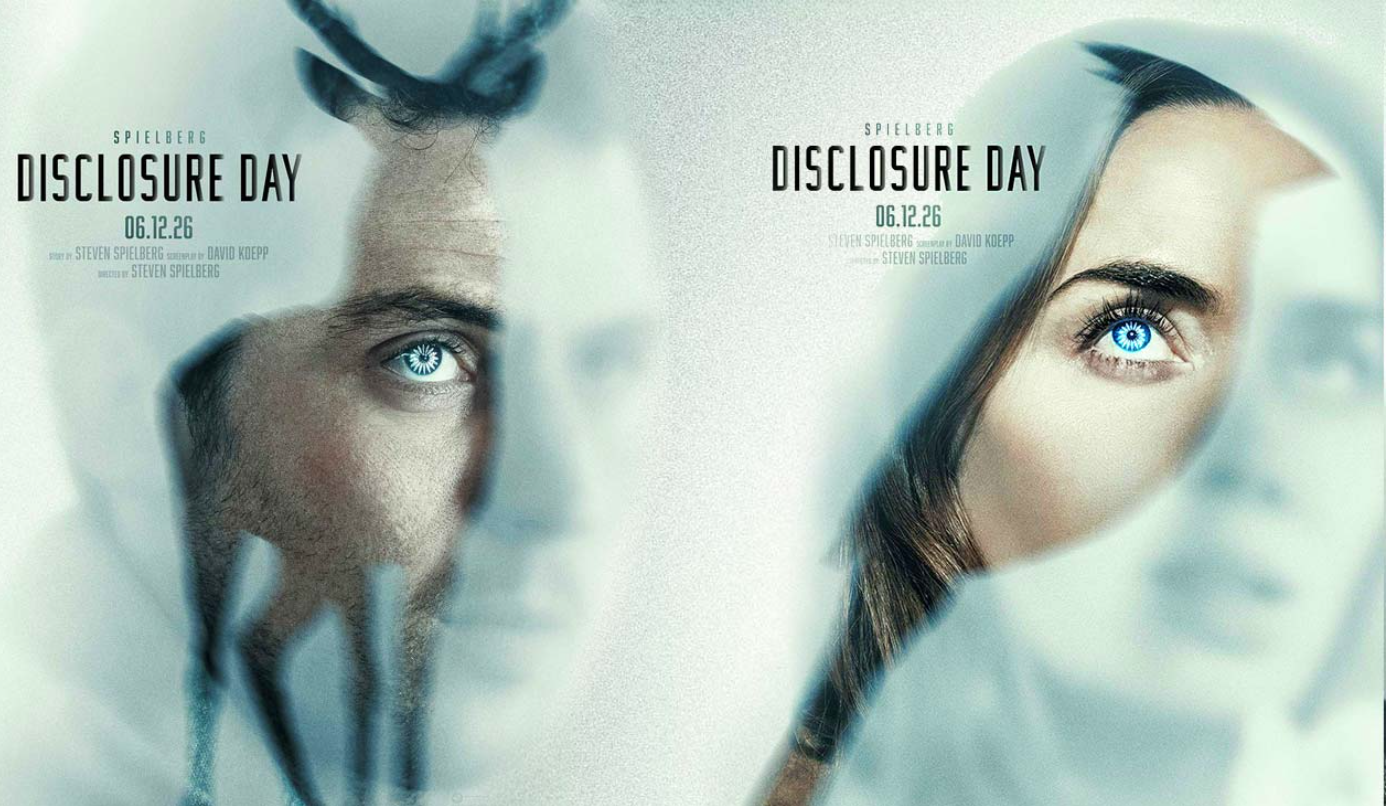
Steven Spielberg’s “Disclosure Day” will be released this June. (Image credit: Universal Pictures)Appetite for disclosure
Greg Eghigian is a professor of history and bioethics at Penn State University in University Park, Pennsylvania. He is author of “After the Flying Saucers Came: A Global History of the UFO Phenomenon” (Oxford University Press, June 2024).
Eghigian said that, if you look at the history of the UFO phenomenon, all government gestures aimed at disclosing and declassifying UFO-related information have generated two basic responses.
“There have been those who insist that the materials published definitively show there to be nothing out of the ordinary in sightings and reports,” said Eghigian. But these folks are invariably balanced out by others who point to what the documents redact, or don’t include, and insist that the government is still keeping vital secrets about UFOs, he added.
“The existence of secrecy means even apparent openness can be suspected of disguising more secrecy,” Eghigian said. “The appetite for disclosure is likely to never be satisfied.”
Keep an open mind
Steven Dick has written a book on the impact of discovering life beyond Earth: “Astrobiology, Discovery, and Societal Impact” (Cambridge University Press, 2018).
It doesn’t deal much with the UFO/UAP question, Dick said — what he calls “direct terrestrial contact” in his matrix of contacts, which is noted in the book’s section on “Humanistic Implications of Discovering Life Beyond Earth.”
However, Dick said that UAPs are logically and in principle “one of the scenarios that should be subject to a serious research program, which may or may not have anything to do with ETs.”
What to read next
In terms of “disclosure” of UFO/UAP information, Dick said he’s trying to keep an open mind.
As a member of Avi Loeb’s Galileo Project at Harvard University, Dick said he prefers “building equipment to acquire new data rather than going over old blurry images. I doubt much will be revealed in any ‘disclosure.’”
The goal of the Galileo Project, according to its website, “is to bring the search for extraterrestrial technological signatures of Extraterrestrial Technological Civilizations (ETCs) from accidental or anecdotal observations and legends to the mainstream of transparent, validated and systematic scientific research.”
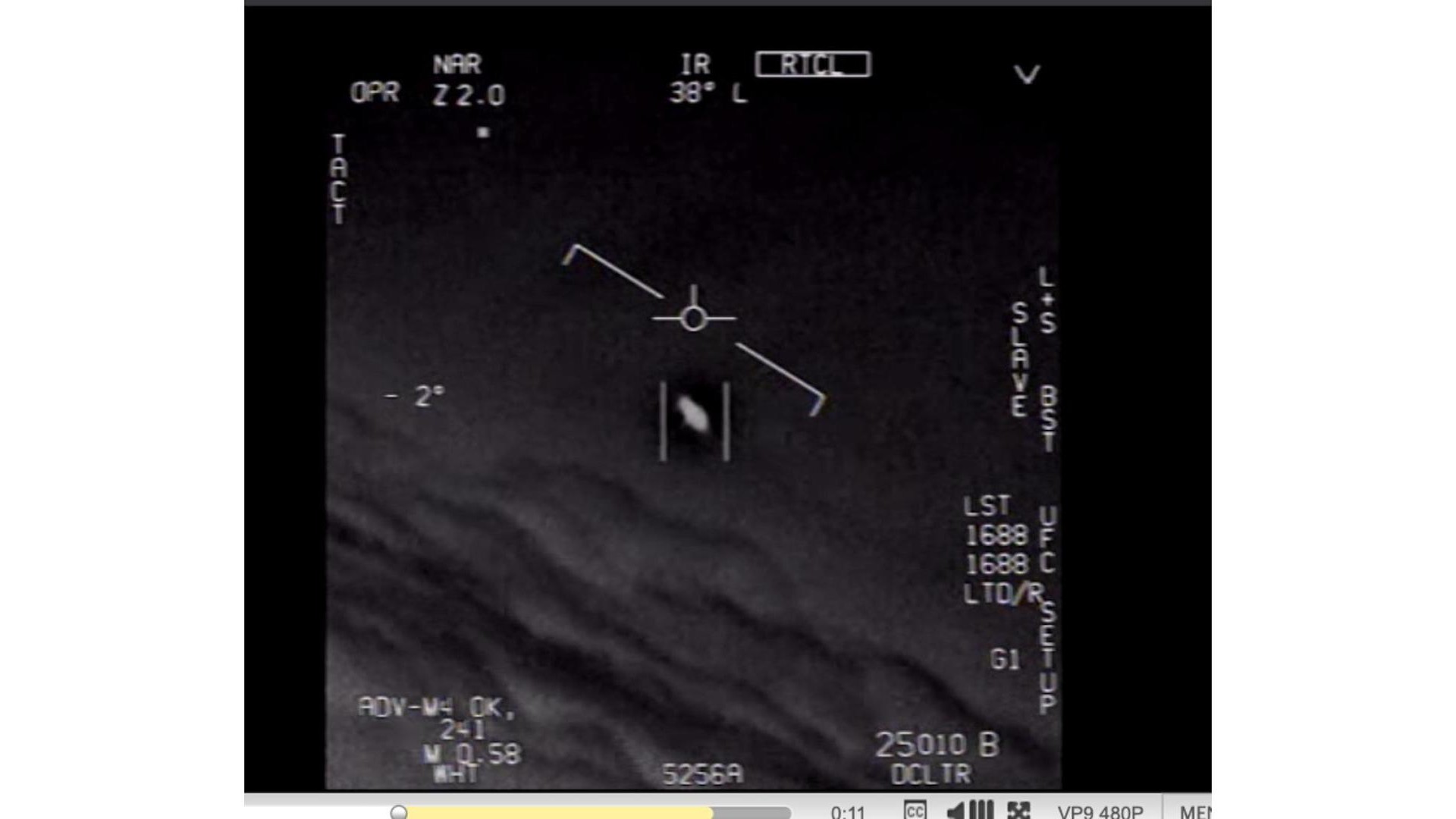
In 2020, the U.S. Navy released multiple videos of unidentified aerial phenomena, sparking interest in the public and government. (Image credit: U.S. Navy)Fantastic claims
In a spate of recent Congressional hearings, fantastic claims were made about alien technologies, bodies and other assertions, Dick noted.
“But in the end, when it comes to revealing where these technologies and bodies are located, the answer is always ‘classified.’ I’m all for disclosure, and there are undoubtedly massive records, but I would be very surprised if anything very sensational is revealed,” he said.
As a government employee for 30 years, six of them at NASA, Dick said he finds it hard to believe such an amazing secret could have been kept over all these years.
The impact of discovering alien intelligence will vary with the distances involved, with a Type 1 close encounter (UFO/UAP) having most impact due to proximity, Dick said. “Even if the alien bodies or technologies are discovered from past visits, it would change our scientific, theological, philosophical and cultural worldviews, in a number of ways,” he said.
Even contemplating the likely existence of ET at a distance, Dick advised, has already spawned the new field of “astrotheology.”
(Image credit: CIA)Bureaucratic dimension
Loeb has been monitoring the disclosure implications, and has summarized them in essays and videos. The Harvard astronomer said there is a bureaucratic dimension to President Trump’s comments on aliens and UAP.
“Administrators in intelligence agencies may not want to publicly acknowledge that there are objects they cannot identify, especially given the large budgets allocated for national security,” Loeb said.
“Classification limits the number of people who can review the data, including members of Congress,” so it makes sense that such information remains classified, he added.
“One step that can be taken immediately is to declassify events from 50 years ago,” Loeb said. “Technologies used half a century ago are no longer strategically sensitive. Releasing older data could significantly advance scientific research.”
Loeb said he would be delighted to help the government analyze declassified incidents.
Mixture of concern
“I do not anticipate that there will be any ‘disclosure,’” said Carol Cleland, a professor in the Department of Philosophy at the University of Colorado Boulder and an affiliate of the SETI (Search for Extraterrestrial Intelligence) Institute.
If there were one, however, it “would be rejected by some people as bogus and welcomed with religious fervor by others,” she told Space.com.
Cleland said that many people would shrug the disclosure news off and go on with their lives.
“A few people, including myself, would react with a mixture of concern about the intentions of the intelligences that have been hiding their presence and spying on us — for who knows how long — and excitement over the discovery that there are other intelligences in the universe,” Cleland said. “For scholars and scientists, it would be revolutionary.”
Can we handle the truth?
“I know that the public says we can handle the truth. I’m not entirely sure that’s true, because we don’t really know what the truth is,” said George Knapp, a veteran newsman and long-time investigator of UFOs who’s based in Las Vegas.
Speaking earlier this year to Ron Futrell, host of the popular “Mystery Wire” internet program, Knapp expressed his thoughts on disclosure.
“A lot of folks think it’s ETs from other planets, and we can probably handle that. We’ve seen enough movies and TV shows over the years,” Knapp said. “But I can foresee some strange possibilities that might be truly upsetting to people’s religious beliefs and their fundamental beliefs about how humans evolved,” he said.
“We think we can handle the truth,” Knapp added. “Yeah, we think that our government knows the truth. I’m not sure either of those are true.”