
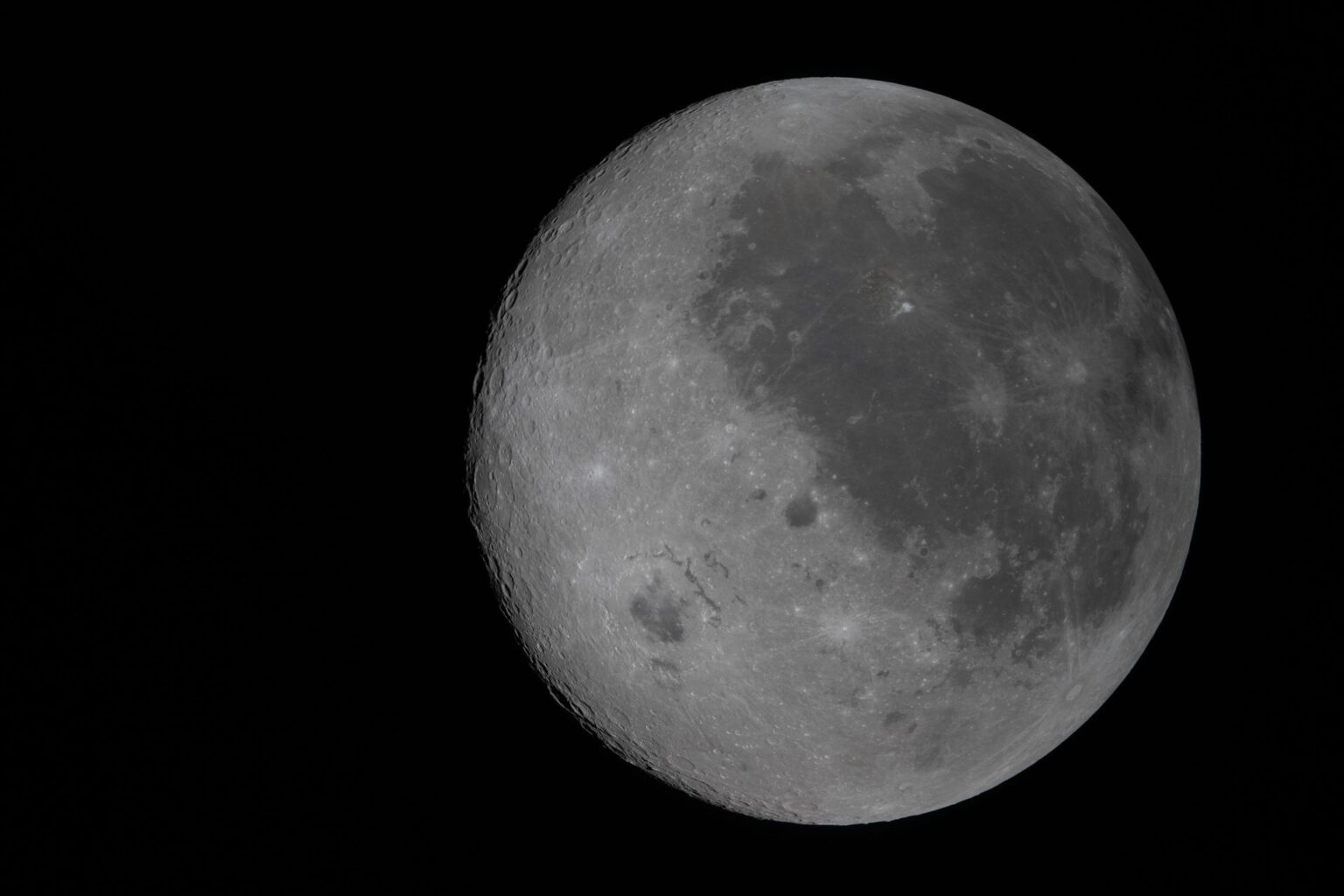
For as reassuring as it may be to know you have a world-spanning team of geniuses overseeing your well-being, the Artemis crew has to get a little annoyed by mission control sometimes, right? They’re constantly in your ear and up your butt. They’re nagging you to exercise when you’re trying to do science stuff. They’re making you use Outlook. They’re waking you from your too-rare and too-short sleep by playing music, and then cutting it off right before the chorus, which you were looking forward to hearing! What those astronauts wouldn’t do for just 40 blessed, dreadful minutes of silence. Good news, then.
The Orion spacecraft is nearly 250,000 miles from Earth, which you’d think would provide a little peace and quiet, but there’s a whole lot of work to be done, and a whole lot of people back on the ground making sure the astronauts stick to their strict schedule. And today is a particularly loaded day. Late Sunday night, Orion entered the lunar sphere of gravitational influence, which means it’s now being tugged on by the Moon more than it is by Earth. It’ll use that gravity to swing around the far side of the Moon, and for about seven hours, they’ll be close enough to undertake this mission’s grandest visual science: detailed observations of the lunar surface.
Already we’re getting some cool stuff. Because Orion is hurtling toward where the Moon will be, not where it is—like a quarterback leading his receiver—they’ve already got a slightly different angle on the Moon than we do here on Earth, where because we are tidally locked we see the same face of the Moon all the time. At the lower left of the photo atop this post, you can clearly see the Orientale Basin, a well-defined impact crater never before seen from this angle by human eyes. “It’s clear that we are not on Earth because that feature is not all visible from Earth,” pilot Victor Glover said.
The far side beckons. But at the height of the circumlunar orbit, starting at a predicted time of 6:44 p.m. ET, the Moon will be directly between Orion and Earth, preventing both radio and laser transmissions between them. That means there’ll be zero contact for roughly 40 minutes. Forty minutes of quiet! Forty minutes of sheer terror. Forty minutes of us not knowing if they are still there until they pop out on the other side. Forty minutes of them not knowing if Earth is still there.
 NASA
NASA
A dozen humans, all white men, have ever gone around the Moon without landing. The Apollo 8 and 10 astronauts, making test flights for the first landing, were the first. The Apollo 13 crew orbited, too though they weren’t supposed to, and weren’t happy about it. (The aborted Apollo 13 mission switched to a free-return trajectory like Orion’s to get back home. In doing so, they set a human record for distance from Earth, a record which will be broken within an hour of this blog’s posting.
Apollo 11 Command Module pilot Michael Collins, who stayed in lunar orbit while Neil Armstrong and Buzz Aldrin went down to stretch their legs, did it solo, as did subsequent command module pilots. “Not since Adam has any human known such solitude as Mike Collins is experiencing,” mission control observed, “during this 47 minutes of each lunar revolution when he’s behind the Moon with no one to talk to except his tape recorder aboard Columbia.”
In his memoir Carrying the Fire: An Astronaut’s Journeys, Collins wrote he felt “truly alone” out there, “isolated from any known life.” That did not bring on feelings of loneliness or fear, he said, but rather “awareness, anticipation, satisfaction, confidence, almost exultation.”
Jim Lovell is the only person to circle the Moon twice without ever landing—first as the command module pilot on Apollo 8, then as commander of Apollo 13. He died last July, but before he did, he recorded a message for the Artemis crew, which greeted them as they awoke this morning. “Welcome to my old neighborhood,” Lovell said.
Heavy stuff. The crew will spend the 40-minute communications blackout taking observations of the lunar surface, to be transmitted later. This will be the first mission to ever see the Moon’s far side in sunlight; if the recreated Apollo 13 views are accurate, it will be stunning. The astronauts will probably be too busy to get too philosophical about things, or, like, jostle each other to sit in the far corner of Orion at apogee so they can claim the individual distance record. They know how they’d like us to spend those 40 minutes. “When we’re behind the Moon, out of contact with everybody, let’s take that as an opportunity,” Glover said. “Pray, hope, send your good thoughts and feelings that we get back in contact with the crew.”
Fine, but if you were in their boots, how would you spend your time out of contact with the entirety of humanity? How would you take advantage of isolation like few have ever known? I’d probably use the toilet to set the toilet distance record, or maybe catch up on my reading. What about you?
Recommended