
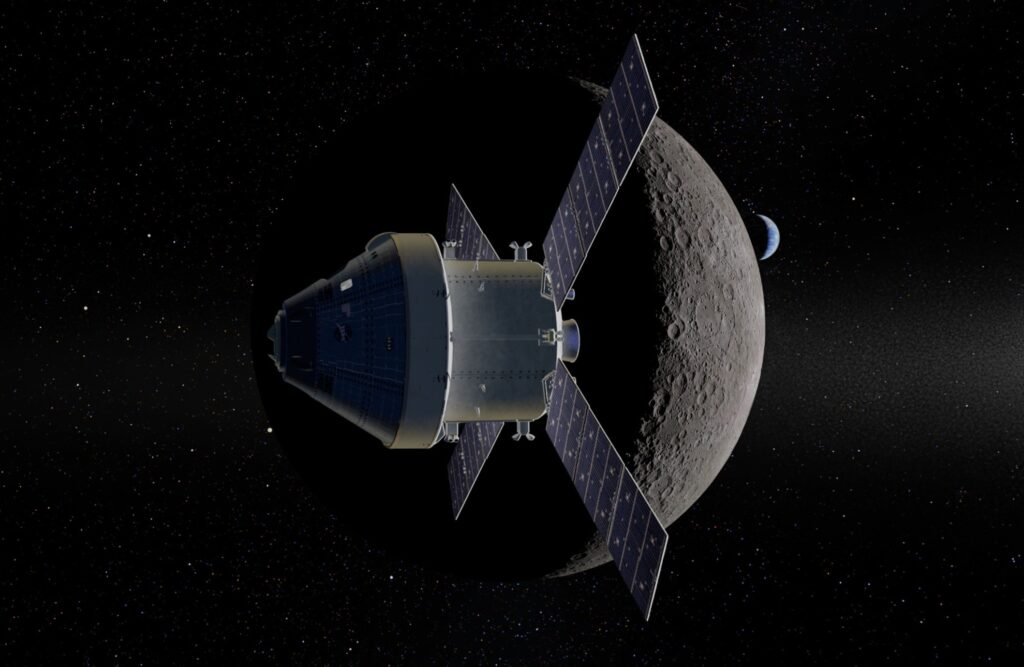
Right now, the entire world’s attention is focused on the black abyss of space, where the crew of the historic Artemis II mission is preparing for a moment that will forever change astronomy textbooks. On Monday, April 6, four astronauts—three Americans and one Canadian—are scheduled to reach the far side of the Moon. This event will mark humanity’s deepest entry into outer space in the history of civilization.
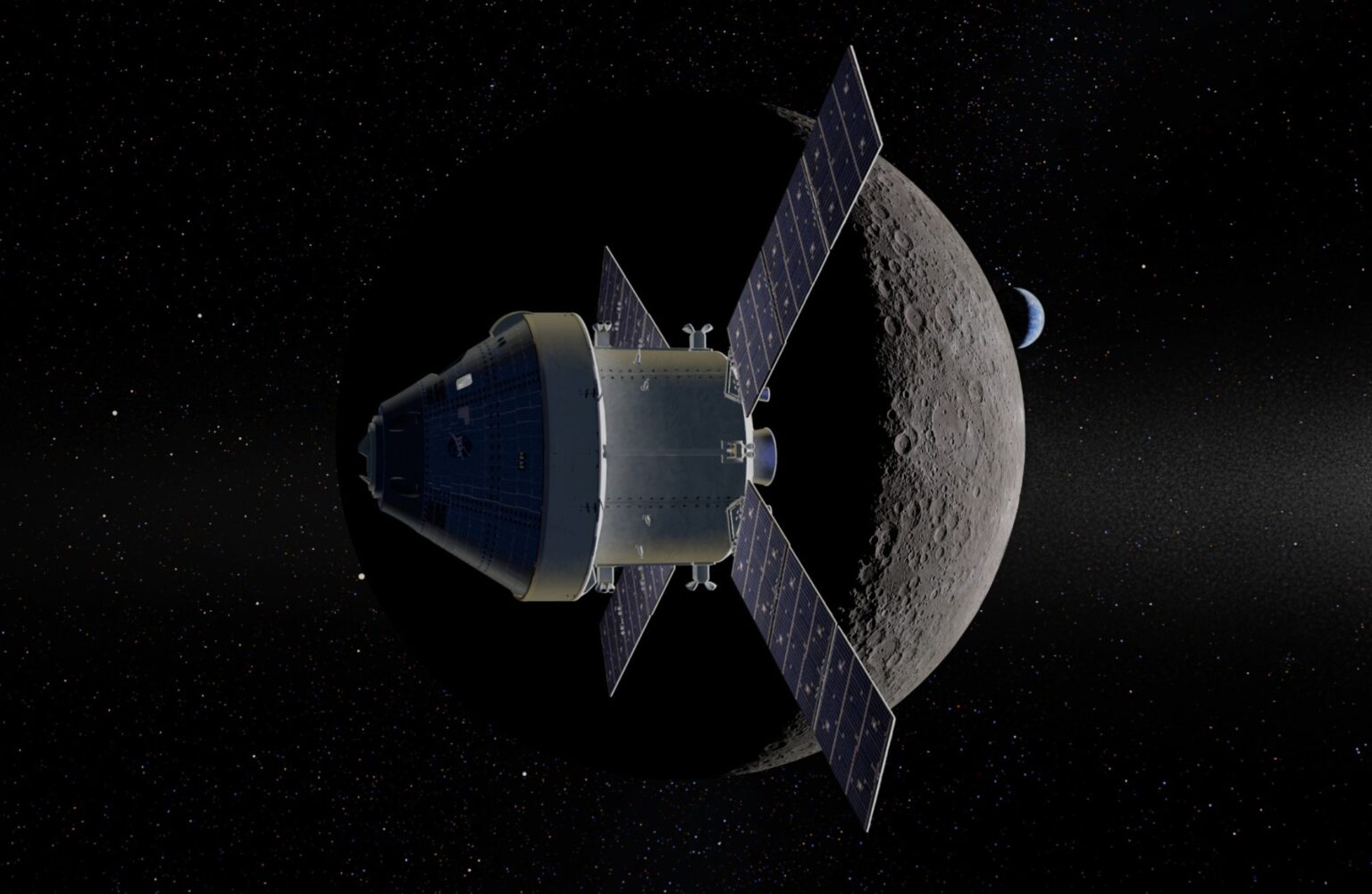 This artist’s concept depicts the Artemis II Orion Integrity module flying over the far side of the Moon. Author: Don Davis
Since the successful launch of the SLS rocket on April 2, the mission has been proceeding according to schedule. The Orion spacecraft is currently preparing to break the record for the greatest distance from Earth, set back in the 1970s. It is fitting that this triumph will occur just as the crew is about to witness a unique spectacle—a total solar eclipse, which, from their perspective, will look quite different compared to how it appears to people on Earth.
“The Earth looks pretty small, and the Moon is definitely getting bigger,” reported pilot Victor Glover after successfully firing the main engine, which set the spacecraft on a course toward our natural satellite.
“Big 15”
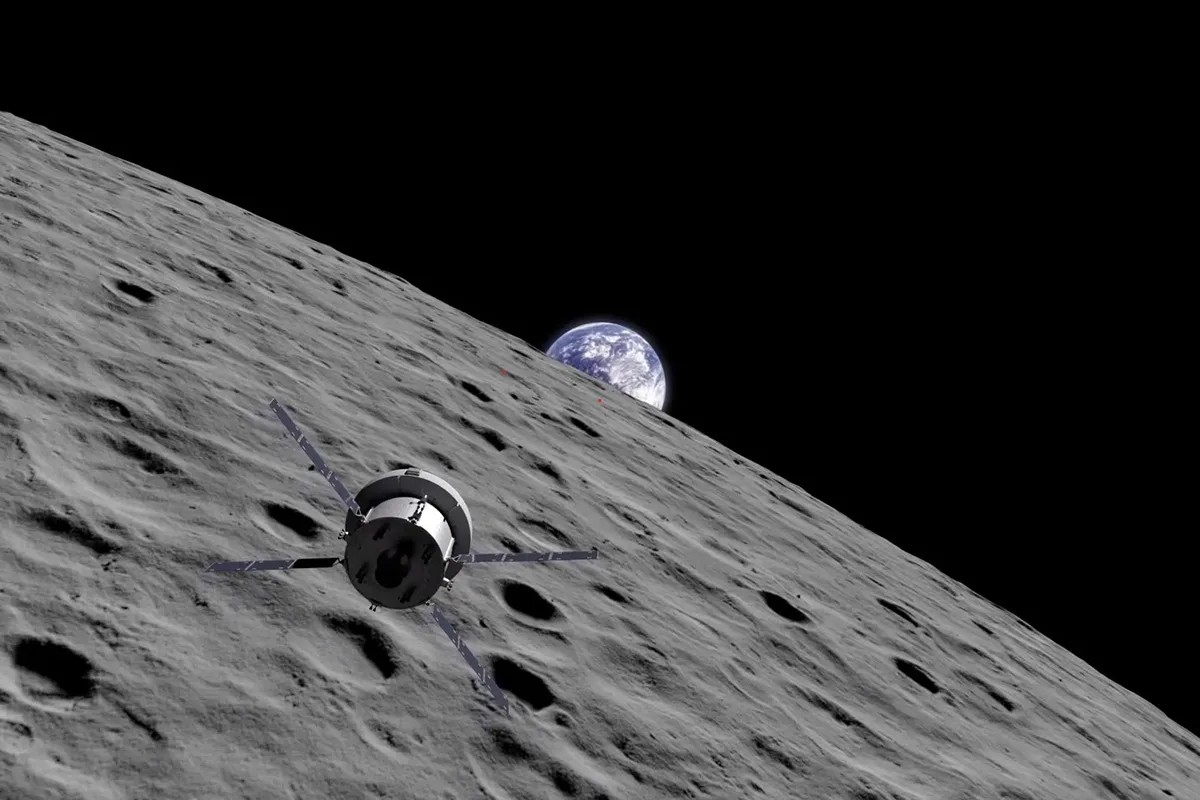 Illustration depicting NASA’s Artemis II spacecraft in orbit around the Moon. Credit: NASA
A trip to the Moon is not only a test of technology, but also a large-scale scientific expedition. The crew has already begun sending back images of remarkable clarity to Earth. One of the most iconic images is that of the Orientale Basin—a massive impact feature that astronomers often refer to as the Moon’s “Grand Canyon.” This place resembles a giant target and is one of the most interesting sites for geological analysis.
During a live broadcast with the Canadian Space Agency, astronaut Christina Koch shared her feelings: “It’s very distinctive and no human eyes previously had seen this crater until today, really, when we were privileged enough to see it.”
All four underwent intensive geological training before the flight. Their task is to identify and document the so-called “Big 15”—a list of the fifteen most important lunar features (craters, lava flows, and mountain ranges) that serve as landmarks for future missions.
Life in zero gravity: a malfunctioning toilet
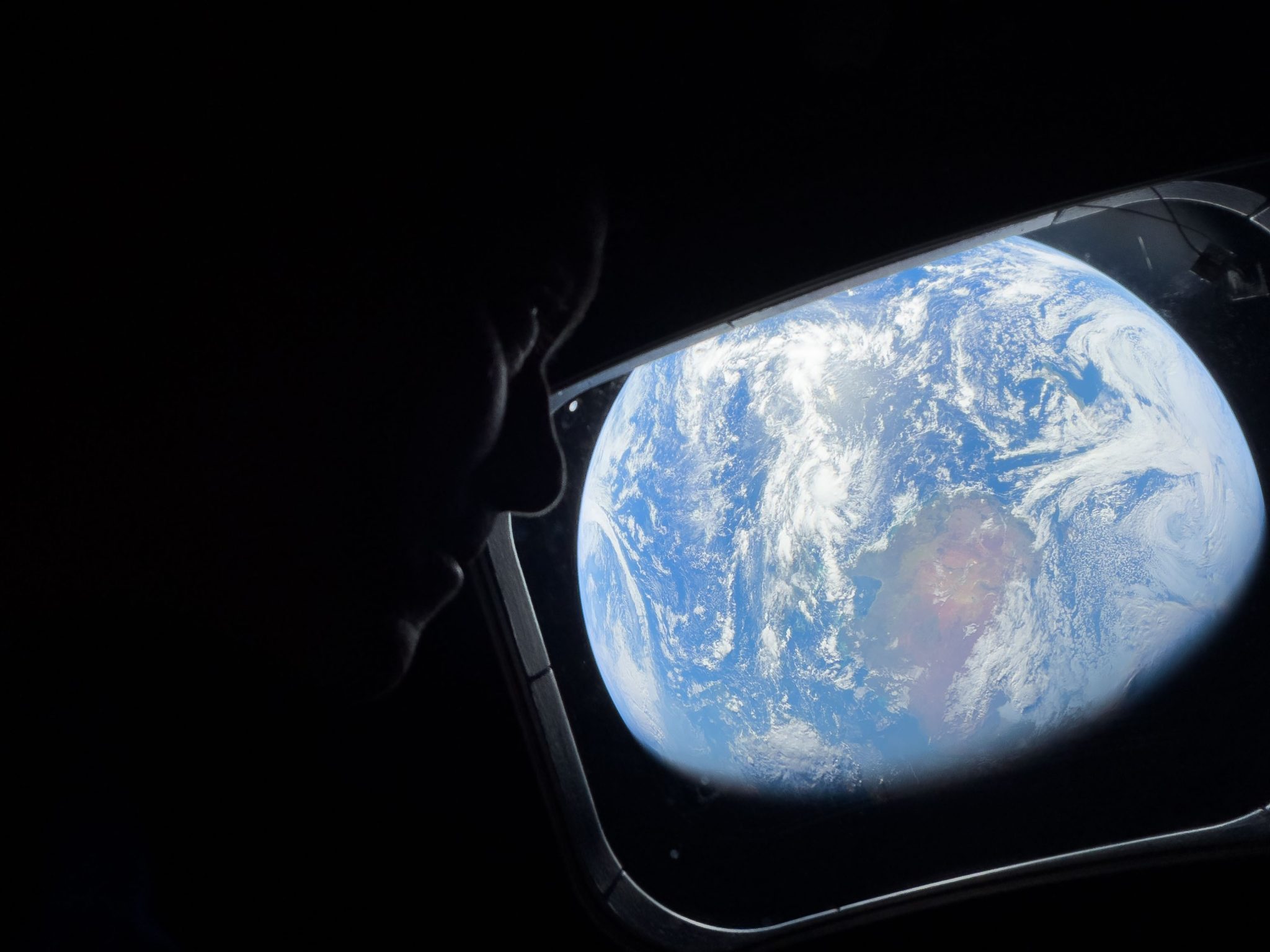 NASA astronaut Christina Koch, a member of the Artemis II mission, looks out through one of the main windows of the Orion spacecraft’s cabin on April 4, 2026, gazing back at Earth as the crew flies toward the Moon. Photo: NASA
Despite the grandeur of the mission, space remains a place where even the most trivial everyday problems take on global proportions. The Orion crew encountered a classic problem of long-duration spaceflight: a malfunction in the space toilet (Universal Waste Management System). The system, which was built into the floor of the capsule, began malfunctioning just 24 hours after launch.
NASA engineers believe the cause was the formation of an ice plug in the pipeline, which prevented the liquid waste from being fully discharged overboard. While repair efforts continue, the astronauts are forced to use spare urine collection bags.
“Space toilets are always a challenge that everyone can relate to,” commented Debbie Korth, deputy program manager for Orion. However, John Honeycutt, the head of the mission control team, assured everyone that the crew remains calm and professional, having learned to cope with the inconveniences.
Morale on board remains high. The astronauts began their Sunday morning to the upbeat tune of “Pink Pony Club” by Chappell Roan, which has become something of an anthem for the mission’s spirit of inclusivity. Commander Reid Wiseman, after speaking with his daughters via video call, admitted that feeling close to his family despite the distance had become “the best moment of his life.”
Gravity Game
The next critical phase of the mission will take place on Monday night. The Orion spacecraft is scheduled to enter what is known as the “lunar sphere of influence”—a zone where the Moon’s gravitational pull becomes stronger than Earth’s. This is the moment when the spacecraft will effectively stop “pulling away” from Earth and begin accelerating toward the Moon.
Unlike the Apollo missions, which took place at an altitude of about 112 km above the surface, Artemis II will fly at a distance of just over 6,400 km. This trajectory was chosen specifically to allow the crew to observe the entire surface of the moon, including the hard-to-reach polar regions and the mysterious far side. This flyby will last about six hours, during which the astronauts will use advanced cameras to map areas previously too dark for crews in past decades to observe.
Bridging the future: from Apollo to Mars
This mission is not merely a show of strength. It is the basis for an ambitious program to return humanity to the Moon. If Artemis II successfully completes its flight and returns to Earth, the next step will be the Artemis III mission, scheduled for 2028. Its goal is to land two astronauts near the Moon’s south pole, where scientists believe deposits of water ice are hidden in shadowed craters.
NASA plans to establish a permanent base on the Moon, which will serve as a platform for testing the technologies needed for a future mission to Mars. After flying past the Moon, the Moon’s gravity will “pull” Orion toward it and guide it back home. On the tenth day of the mission, the capsule is scheduled to re-enter Earth’s atmosphere and splash down in the Pacific Ocean, bringing this extraordinary chapter in space exploration to a close. But for now, the crew is enjoying the view of “Little Earth” and preparing to venture into a realm of eternal night and the mysteries of the early Universe.
We previously reported on how the crew accidentally discovered the password to Orion’s onboard computer.
According to The Guardian