
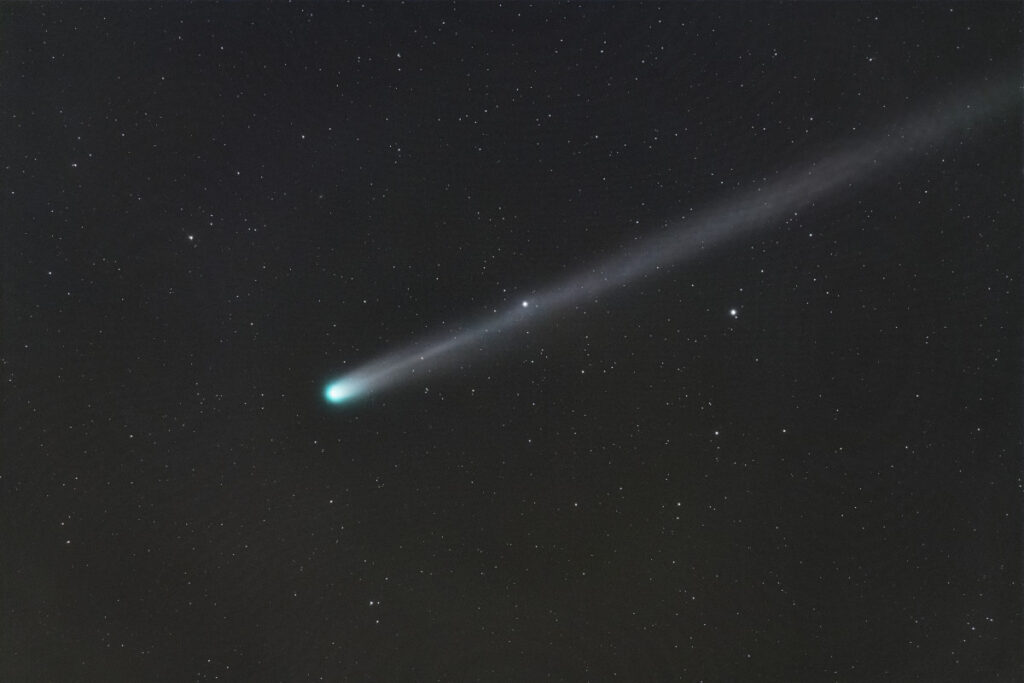
This April, astronomers are watching a potential “great comet” that could briefly become visible to the naked eye. It is not guaranteed. In fact, it is fragile, unpredictable, and easy to miss. But for travelers willing to chase a narrow window of wonder, it offers a reason to build a journey around the night sky itself.
Your next trip starts here—get curated travel stories when you sign up for our newsletter.
When to See the April 2026 Comet and Why Timing Matters So Much
The main object drawing attention is Comet C/2026 A1 (MAPS), a so-called sun-grazing comet that will pass extremely close to the sun around April 4, 2026. That close approach is both the reason for excitement and the biggest risk. If it survives the intense heat and gravitational stress, it could brighten quickly and become visible shortly after.
The most realistic viewing window for travelers in the Northern Hemisphere falls between April 6 and April 15. During this period, the comet is expected to appear low in the western sky just after sunset. The sweet spot is roughly 30 to 45 minutes after the sun dips below the horizon, before the comet follows it out of view.
Astronomy outlets, including Sky & Telescope, note that this low altitude will make sightings tricky.Even a thin layer of haze or a distant tree line can block your view. The comet will not climb high into the sky. You have to catch it early and know exactly where to look.
There is a second object worth noting, Comet C/2025 R3 (PanSTARRS), which may become visible later in April and into early May. While it is not expected to be as dramatic, it could be easier to spot thanks to darker skies around the April 17 new moon.
Where the Comet Will Be Most Visible (and Where to Travel for Better Odds)
In the Northern Hemisphere, including the United States, the comet will hug the western horizon. That means you need a completely unobstructed view in that direction. Coastal locations, open plains, deserts, and elevated overlooks all offer an advantage.
If you are willing to travel farther, the Southern Hemisphere has the edge. Observers there are expected to see the comet higher in the sky and for a longer duration after sunset. That translates to easier viewing and better photography conditions.
For U.S.-based travelers, dark sky destinations dramatically improve your chances. Parks recognized by DarkSky International are specifically protected from light pollution, making faint objects easier to detect. Think wide horizons, minimal artificial light, and crisp atmospheric conditions.
How to Actually Spot It Without Missing Your Window
Start by choosing your viewing time carefully. Arrive at your location before sunset so you can get oriented. As soon as the sun drops, begin scanning the western horizon. Do not wait too long. The comet will set quickly after the sun.
Bring binoculars if you can. Even if the comet becomes visible to the naked eye, optical aid will help you locate it faster and pick out details in the tail. Astronomy guides recommend them as one of the simplest ways to improve your chances.
Use a stargazing app to pinpoint the comet’s position relative to brighter objects like planets or constellations. This removes guesswork in that narrow window when light is fading and time matters. Never attempt to search for the comet while the sun is still above the horizon. Looking too close to the sun can cause serious eye damage.
Fuel your wanderlust with our top travel stories—join our newsletter today.
What to Know Before You Go
Before you commit to chasing this event, keep a few practical realities in mind:
Visibility is not guaranteed. The comet could fade, fragment, or never brighten enough to see.
Weather matters. Even thin cloud cover can obscure a low-horizon object.
Light pollution is your biggest obstacle. Prioritize darkness over convenience.
Flexibility is key. Give yourself multiple nights and locations if possible.
This story was originally published by TravelHost on Apr 3, 2026, where it first appeared in the News section. Add TravelHost as a Preferred Source by clicking here.