Robert E. Howard, Graham Hancock and the Lost Civilization of the Ice Age
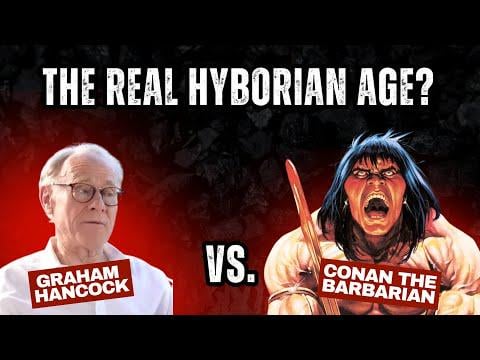
What do Robert E. Howard and Graham Hancock have in common? Quite a bit actually. Hancock's proposed Ice Age civilization and the Hyborian Age of Conan the Cimmerian both have their roots in speculative history and esoteric works from the late 19th and early 20th centuries.
As someone who has been a fan of ancient mysteries and lost civilizations for many years both in fiction and non-fiction, I’ve always been struck by the similarities in the world building of Robert E. Howard when creating the Conan stories in the 1930s. He makes use of similar geological cataclysms, lost civilizations like Atlantis and Lemuria and other similar themes.
As I began doing academic work on Howard’s World building about 15 years ago. I also realized that he was setting the fictional Hyborian Age of Conan in a lost epoch before the Younger Dryas. I first published this idea in a book chapter in 2013.
I’ve also followed Graham Hancock’s work for 30 years now, since Fingerprints came out, and I’ve always enjoyed his speculation even if I have never fully bought into it. So finally I decided to do the deep dive on how both Hancock and Howard were drawing on some of the same sources for inspiration, one using it for speculative fiction and one for speculative nonfiction.

1 Comment
As someone who has been a fan of ancient mysteries and lost civilizations for many years both in fiction and non-fiction, I’ve always been struck by the similarities in the world building of Robert E. Howard when creating the Conan stories in the 1930s. He makes use of similar geological cataclysms, lost civilizations like Atlantis and Lemuria and other similar themes.
As I began doing academic work on Howard’s World building about 15 years ago. I also realized that he was setting the fictional Hyborian Age of Conan in a lost epoch before the Younger Dryas. I first published this idea in a book chapter in 2013.
I’ve also followed Graham Hancock’s work for 30 years now, since Fingerprints came out, and I’ve always enjoyed his speculation even if I have never fully bought into it. So finally I decided to do the deep dive on how both Hancock and Howard were drawing on some of the same sources for inspiration, one using it for speculative fiction and one for speculative nonfiction.