
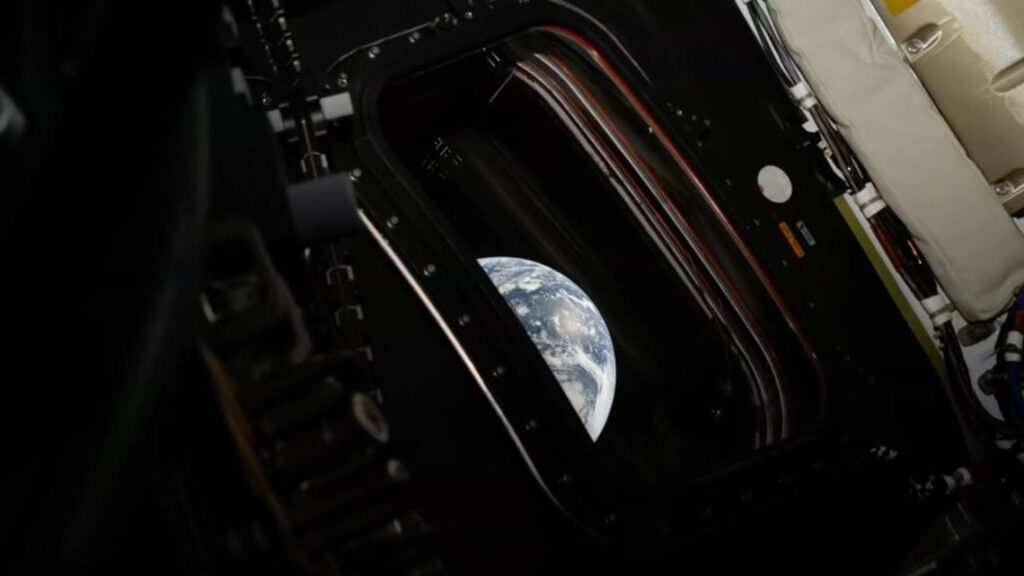
As of midmorning Friday, the crew was 100,000 miles from Earth and quickly gaining on the moon with another 160,000 miles to go.
WASHINGTON — Three days into their historic journey, the four astronauts aboard NASA’s Orion spacecraft were in “great spirits” and settling into the rhythms of space travel Friday, preparing for a brief engine firing to fine-tune their path to the moon while mission scientists on the ground began plotting which geologic features the crew will photograph during their lunar flyby.
NASA’s SLS rocket and Orion spacecraft lifted off from Kennedy Space Center in Florida at 6:35 p.m. EDT on April 1, sending the four astronauts on a planned 10-day test flight around the moon and back.
The crew is made up of Commander Reid Wiseman, Pilot Victor Glover, Mission Specialist Christina Koch and Canadian Space Agency astronaut Jeremy Hansen.
Orion’s main engine fired for five minutes and 50 seconds on Thursday to complete the translunar injection burn, sending the crew out of Earth’s orbit onto a trajectory toward the moon. The crew are the first to leave Earth’s orbit since the Apollo program in 1972.
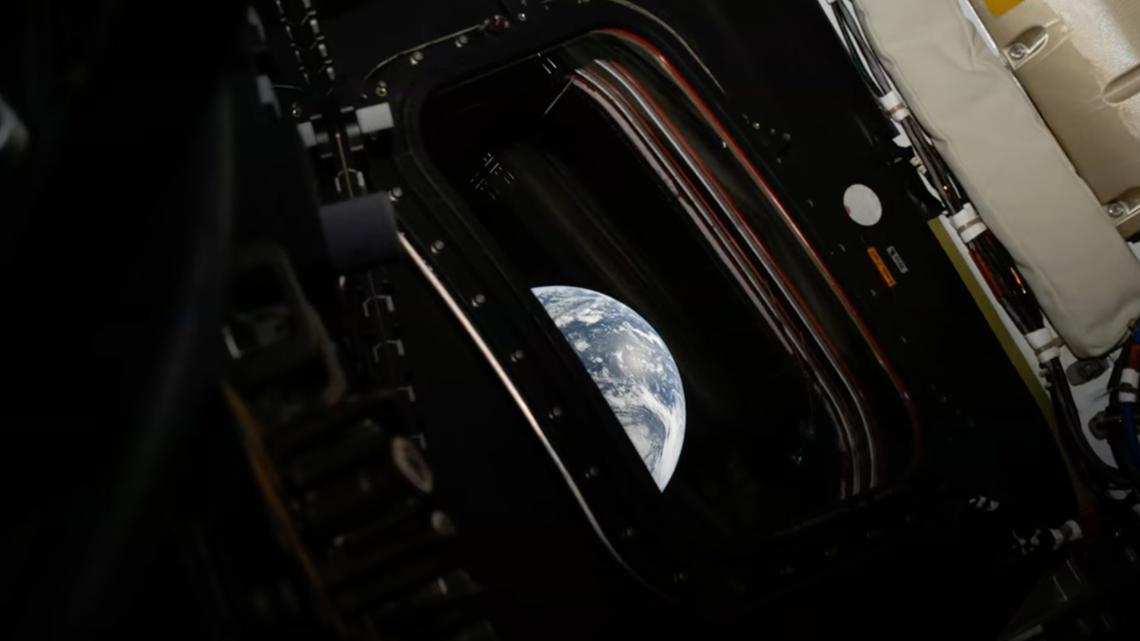
As of midmorning Friday, Wiseman and his crew were 100,000 miles from Earth and were quickly gaining on the moon with another 160,000 miles to go. They should reach their destination on Monday.
Later Friday, the crew was scheduled to fire Orion’s thrusters in the first outbound trajectory correction burn, set for 6:49 p.m. EDT. But NASA decided to cancel the correction burn because Orion’s trajectory is on the right flight path.
The mission has not been without its tense moments. A cabin leak alert earlier in the flight alarmed the crew, though flight director Judd Frieling said it turned out to be a false indication. “We quickly knew that there was no leak,” Frieling said at a briefing at Johnson Space Center. Hansen said the alarm definitely got the crew’s attention, as they briefly wondered whether they might have to cut the mission short.
Meanwhile, the lunar science team on the ground was assembling a targeting plan for Monday’s flyby, selecting geologic features on the moon’s surface that will be visible as Orion loops around it. The plan will focus on features that can help scientists understand how the moon and solar system formed, including craters, ancient lava flows, and ridges and cracks created as the moon’s outer layer shifted over billions of years.
During the roughly six-hour lunar science observation window, the sun, moon and spacecraft will be aligned so the crew can view about 20% of the moon’s far side — the hemisphere never visible from Earth — lit by the sun. Features expected to come into view include the full Orientale basin, Pierazzo crater and Ohm crater, none of which have ever been seen by the unaided human eye.
The mission is also expected to break Apollo 13’s human spaceflight record for distance from Earth. NASA’s updated estimate has the Artemis II crew reaching approximately 252,021 statute miles from Earth — surpassing the 1970 record by more than 3,000 miles.
During the flyby, the crew will also witness a solar eclipse lasting nearly an hour, during which the sun will be hidden behind the moon from Orion’s perspective.
Following a successful lunar flyby, the crew is set to return to Earth and splash down in the Pacific Ocean off the coast of San Diego. The mission’s 10th and final day is scheduled for April 10.
The Associated Press contributed to this report.