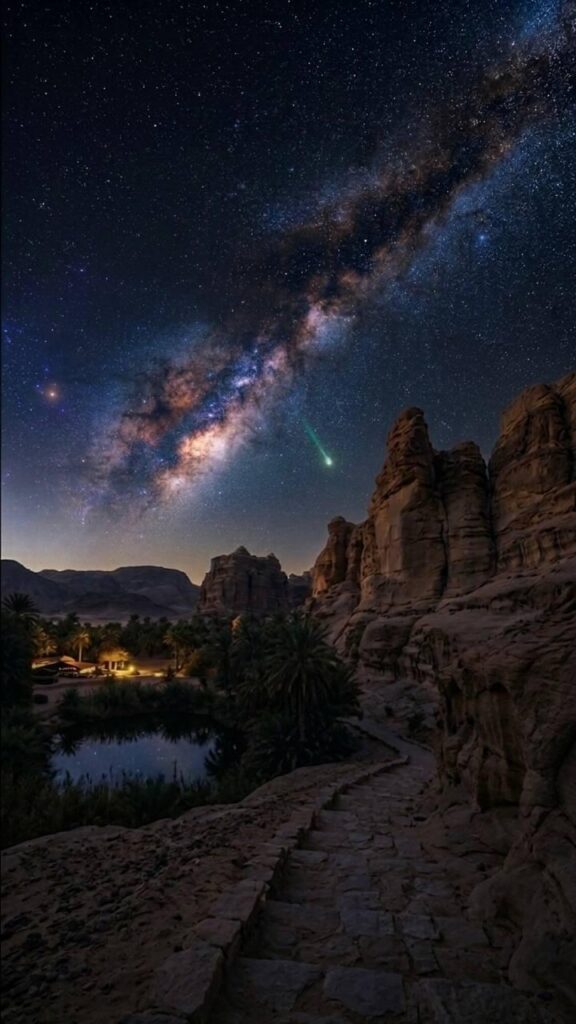
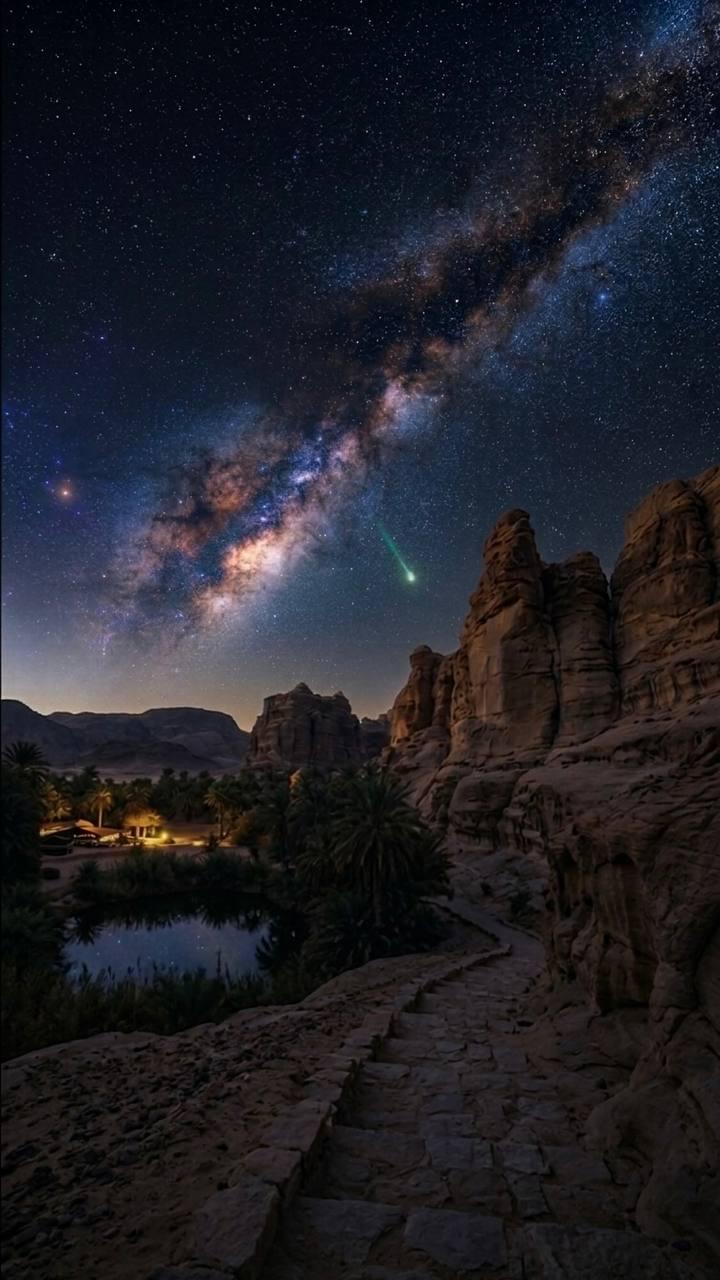
I caught this bright meteor while shooting the galactic core. I’ve read that the green glow is often ionized oxygen or magnesium. Can anyone confirm if this is typical?
Alex_Llamin on
Offtopic but wow this shot is great!
H00ch8767 on
Magnesium, copper, and nickel can all be a cause. But my understanding is that it’s typically magnesium. It’s also just based on the chemistry occurring with the speed and heat interacting with neutral oxygen atoms.
Edit: this also doesn’t appear to be OC. And doing a dig on OP, they have been spam posting random pics like this that have been called out multiple times.
MrFrost7 on
Wow, Amazing shot!
Which gear did you use?
merrywidow14 on
That’s breathtaking! Where did you shoot it?
Busy-Butterscotch121 on
Wow.. where did you shoot this?
batsandvodka on
Wow I could die here and be happy about it, what a beautiful photo
DarthHarrington2 on
How many frames is this?
gabisfunny on
The color of a meteor is extremely complex, and despite an important part of it comes from its elemental composition, it’s not possible to pinpoint the main color to one single element of it. First, part of the color comes from the elements of the rock and part from emissions from the atmosphere (more or less like the colors of the auroras). Second, the rock is a mixture of minerals (and elements), and the main emissions are usually from Mg and Fe (both very similar in the greenish range of the spectrum), Na (yellow) and Ca (purpleish). The intensity of each contribution is not proportional to the concentration of the element as each element has its temperature of ionization. I recommend some works on the emission/elemental analysis of meteors like this one: https://doi.org/10.1051/0004-6361/201833289

9 Comments
I caught this bright meteor while shooting the galactic core. I’ve read that the green glow is often ionized oxygen or magnesium. Can anyone confirm if this is typical?
Offtopic but wow this shot is great!
Magnesium, copper, and nickel can all be a cause. But my understanding is that it’s typically magnesium. It’s also just based on the chemistry occurring with the speed and heat interacting with neutral oxygen atoms.
Edit: this also doesn’t appear to be OC. And doing a dig on OP, they have been spam posting random pics like this that have been called out multiple times.
Wow, Amazing shot!
Which gear did you use?
That’s breathtaking! Where did you shoot it?
Wow.. where did you shoot this?
Wow I could die here and be happy about it, what a beautiful photo
How many frames is this?
The color of a meteor is extremely complex, and despite an important part of it comes from its elemental composition, it’s not possible to pinpoint the main color to one single element of it. First, part of the color comes from the elements of the rock and part from emissions from the atmosphere (more or less like the colors of the auroras). Second, the rock is a mixture of minerals (and elements), and the main emissions are usually from Mg and Fe (both very similar in the greenish range of the spectrum), Na (yellow) and Ca (purpleish). The intensity of each contribution is not proportional to the concentration of the element as each element has its temperature of ionization. I recommend some works on the emission/elemental analysis of meteors like this one: https://doi.org/10.1051/0004-6361/201833289