
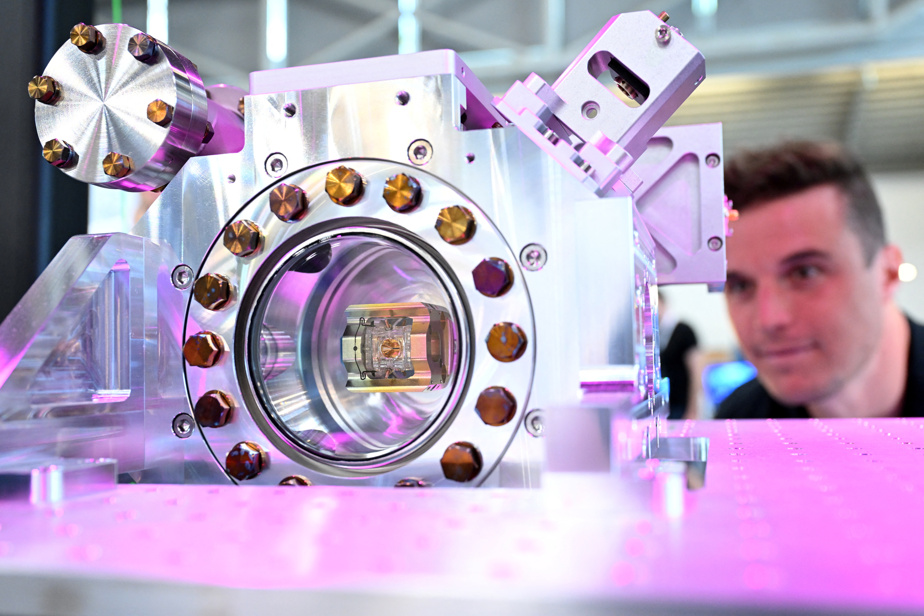
A century on, the quantum landscape remains dazzlingly productive and stubbornly mysterious. Its equations steer lasers and LEDs, guide MRI scanners, and underwrite the transistors that fuel our phones, yet they leave us puzzling over what the math is really telling us about reality. The theory predicts with uncanny accuracy, but its meaning is still contested.
The triumph of prediction, not explanation
From the first hints that classical rules crumble inside the atom, quantum theory surged into a full mathematical framework by the mid‑1920s. It replaced crisp trajectories with wavefunctions and probabilities, describing how particles like electrons and photons can behave like waves and particles at once. The wavefunction’s spread captures many possible outcomes, while measurement yields a single result with odds fixed by the equations. This predictive machinery powers semiconductors, timing in GPS, and the coherence of lasers, making quantum mechanics the most empirically successful theory in the history of physics.
Copenhagen and its discontents
For many practitioners, the Copenhagen viewpoint remains a pragmatic north star: properties are not definite until a measurement occurs, at which point the wavefunction collapses to a specific value. A recent survey reported by Nature found that roughly a third of physicists favor this interpretation, reflecting its longevity in textbooks and labs. Yet even admirers admit to deep gaps: What precisely counts as a measurement? Where, physically, does the collapse happen—if at all? The “measurement problem” persists like a grain of sand inside an otherwise gleaming pearl.
Many worlds and other roads
Others reject collapse entirely, insisting the wavefunction always evolves smoothly while reality branches. In this many‑worlds picture, all outcomes occur, but in non‑communicating universes, leaving each observer with a single thread of experience. According to the same survey, a significant minority favor this view, drawn by its clean mathematics even as it stretches everyday intuition.
Beyond those two, a rich menu of alternatives competes for attention, each trading one set of puzzles for another:
Pilot‑wave (Bohmian) dynamics, adding precise particle paths guided by a nonlocal wave
Objective‑collapse models, where wavefunctions spontaneously localize at rare but physical rates
QBism and related approaches, treating the wavefunction as an agent’s beliefs, not an external thing
Relational views, where properties exist only in relations, not as absolute attributes
Consistent histories, assembling probabilities for entire trajectories without privileged measurements
Each route preserves quantum predictions but tells a different story about what the mathematics means.
Where does the quantum end?
A central riddle is the quantum‑to‑classical transition. Some argue there is a crisp boundary, where quantum strangeness gives way to everyday definiteness. Others see no such line, only environmental decoherence turning superpositions into practical classicality as systems entangle with their surroundings. Experiments now coax quantum behavior into larger, colder, more isolated objects, from massive organic molecules to vibrating membranes, yet the conceptual fault line refuses to close. The split across the community mirrors this ambivalence, with opinions nearly evenly divided.
Practical power, philosophical puzzles
Meanwhile, the engineering frontier charges ahead. Quantum computing leverages superposition and entanglement to accelerate specific tasks; quantum cryptography promises security rooted in physical principles; quantum sensing reaches exquisite precision in time, field, and motion. The design of these devices rarely requires a settled interpretation—just a clear command of the formalism. “Shut up and calculate!” remains a wry, if divisive, mantra.
Still, interpretation is not mere decor. It shapes what questions seem fruitful, which experiments look revealing, and how we knit mathematics to meaning. Some physicists are confident their favored story will endure; many expect a deeper, more unified framework to emerge and absorb today’s riddles. Whether that future theory reads like a refined quantum playbook or a radical rewrite is an open question—and perhaps the most stimulating one in modern science.
What endures, a hundred years after the first great papers, is a paradoxical legacy: unmatched practical success, coupled with a kaleidoscope of interpretations. The theory works wherever we can test it, yet we still debate what it is really trying to say. That tension keeps the field young, the arguments lively, and the next century of quantum thought alive with possibility.