
 Credit: ASI
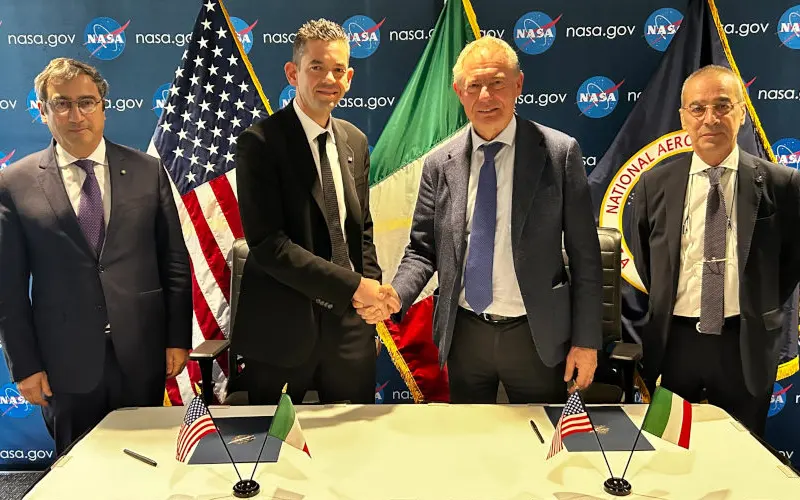
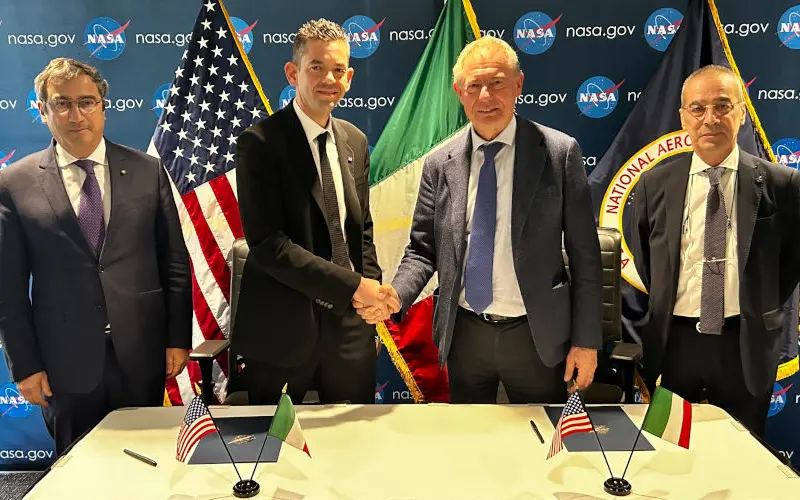
The Italian government and NASA have signed an agreement to cooperate on the development of a U.S.-led lunar surface base. The move is the latest in a series of bilateral efforts between the two nations, including a June 2022 cooperation agreement that tasked Italy with leading the design of a multi-purpose lunar habitation module, currently being developed by Thales Alenia Space Italia under an Italian Space Agency (ASI) contract.
On 24 March, NASA Administrator Jared Isaacman outlined a new vision for the agency’s exploration efforts, including “pausing” the development of the Gateway space station. In its place, Isaacman explained that the agency planned to proceed with the development of a lunar surface base, which would represent the first sustained human presence on the Moon.
Just a week later, on 31 March, Senator Adolfo Urso, the Italian Government’s Delegate for Space and Aerospace Policies, and NASA Administrator Isaacman signed a Statement of Intent to cooperate on the development of the US-led lunar surface base. According to the announcement, the agreement includes cooperation on habitation modules, communications systems, and scientific activities on the lunar surface.
In a statement, Senator Urso explained that, in return for its contributions to NASA’s lunar base, Italy would receive a seat for at least one Italian astronaut on a future Artemis mission.
“We will return to the Moon, and this time to stay. We will do so thanks to Italian technology and with an Italian astronaut on one of the upcoming missions of the Artemis program,” said Senator Urso.
In its 31 March press release, ASI explained that Italy’s Artemis flight opportunities would “add to those available under the NASA-ESA relationship.” It is, however, currently unclear whether ESA will retain those flight opportunities.
ESA secured three spots aboard Artemis missions for its astronauts in return for its contributions to the Gateway space station, which included the Lunar I-Hab and ESPRIT modules. Two of the three flight opportunities had been confirmed to be for missions to the station, with Director General Josef Aschbacher pushing for the third to be a mission to the Moon’s surface. With NASA pausing Gateway, it’s not clear whether ESA will retain any seats for its astronauts on Artemis missions.
In response to NASA’s decision to pause the development of Gateway and instead focus on a lunar surface base, ESA said it is consulting with Member States on the implications of the announcement, and that a decision on the path forward has yet to be made.
Keep European Spaceflight Independent
Your donation will help European Spaceflight to continue digging into the stories others miss. Every euro keeps our reporting alive.