
Core Idea
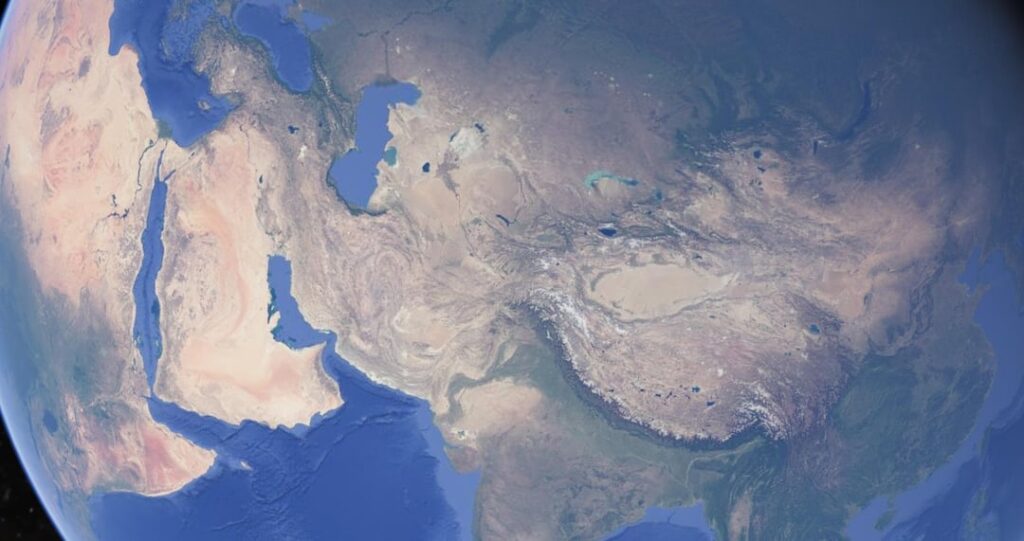
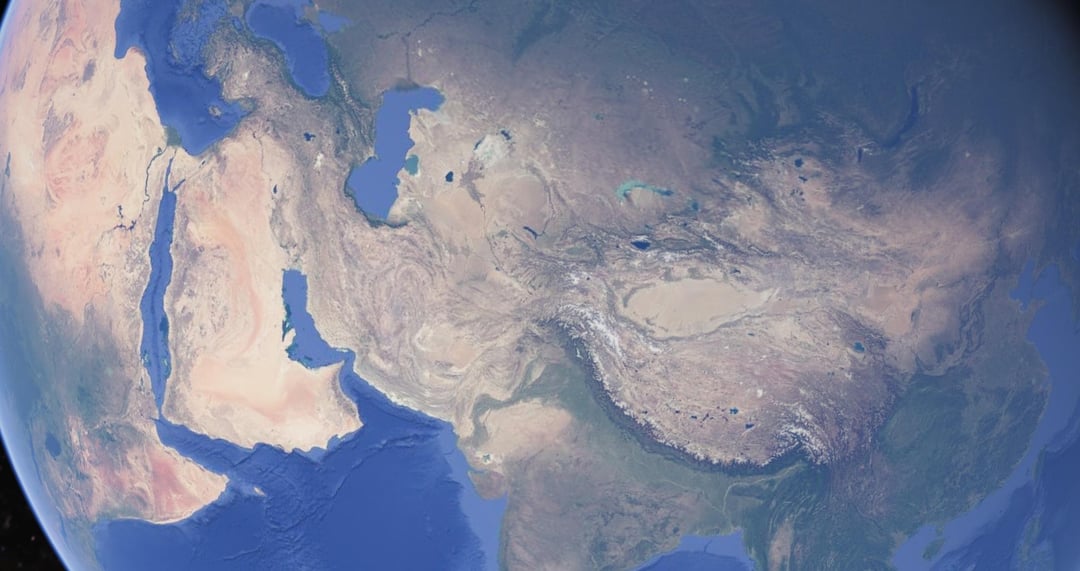
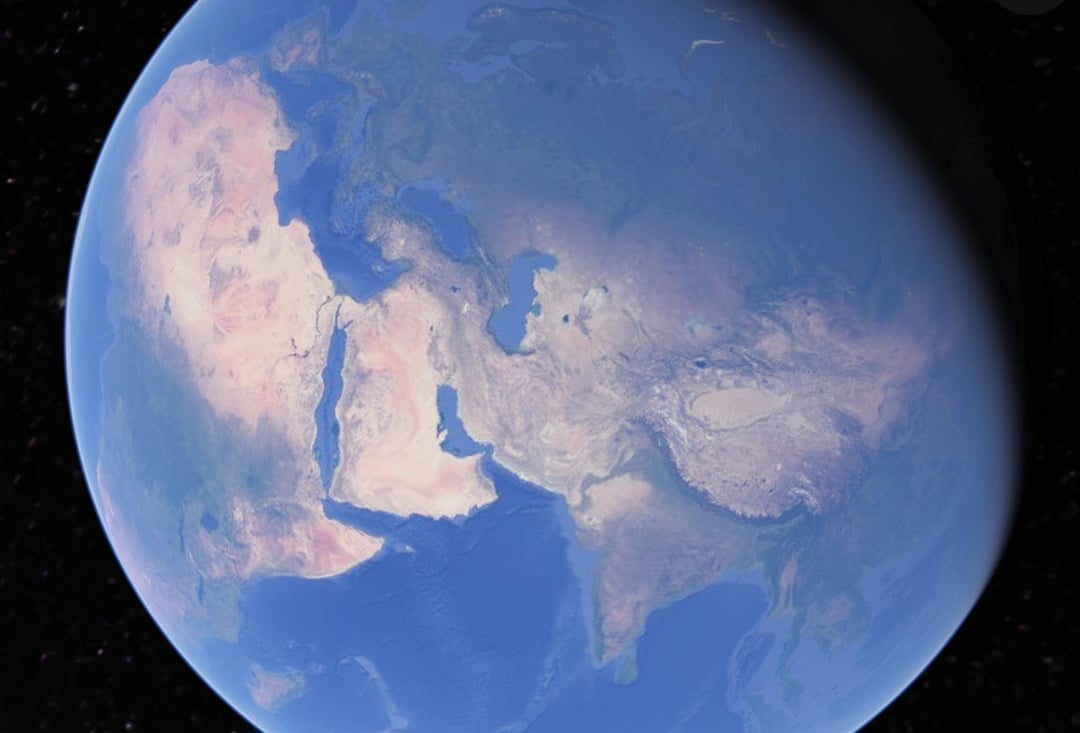
The current configuration of Earth — the Himalayas, the Afro-Asian arid belt, and the distribution of continents — may represent the cumulative effects of a single major oblique impact in the Himalayan region.
The observations underlying this proposal are:
● the existence of an extreme mountain chain (the Himalayas)
● the remarkable alignment of a continuous arid belt: Central Asia → Arabia → Sahara
● the apparent complementary geometry of continental margins
Although these elements are explained individually within existing models, they may be reinterpreted as components of a single causal system.
- Initial Conditions (Hypothetical Model)
A pre-impact Earth is considered, characterized by:
● less extreme relief
● more uniform vegetation distribution
● absence of large persistent arid belts
● a more compact continental configuration
This stage does not contradict existing data, but represents an initial framework compatible with a major subsequent reorganization.
- Entry and Impact Parameters
The hypothesis assumes a celestial body of exceptional scale, with the following parameters:
● estimated diameter: 80–120 km
● velocity: ~20 km/s
● angle of incidence: 5°–15° (oblique impact)
The key feature of this scenario is the very low entry angle, which leads to:
● predominantly horizontal energy transfer
● reduced classical excavation
● amplification of compression and directional propagation effects
The estimated energy (E = ½ m v²) falls within:
● 10⁸ – 10⁹ megatons of TNT
This magnitude implies an event capable of producing continental-scale geological effects.
- Impact Zone – Himalayan Region
The proposed point of contact is the present-day Himalayan–Tibetan region.
In this model, the impact does not generate a classical crater, but instead:
● extreme crustal compression
● lateral displacement of material
● rapid uplift of the terrain
The result would be: the formation of a major mountain arc through a mechanism of “instantaneous folding,” later modified and amplified by tectonic processes.
This interpretation offers an alternative to a strictly gradual model.
- Energy Propagation – Directional Shockwave
A direct consequence of an oblique impact is the generation of a directional energy wave.
This wave would propagate westward, affecting:
● Central Asia
● the Middle East
● North Africa
Expected effects include:
● extreme temperatures along the trajectory
● destruction of vegetation
● major hydrological disruption
● soil degradation
The observable result today: a continuous, geographically aligned arid belt
This alignment represents a key element of the hypothesis.
- Crustal Fragmentation
The energy involved would induce:
● global stresses within the crust
● the formation of major fracture systems
● displacement of lithospheric blocks
These processes may represent:
the initial stage of continental reorganization, later continued through known tectonic mechanisms.
- Absence of a Classical Crater
The hypothesis explains the lack of a typical impact crater through:
● the low angle of impact
● the tangential nature of the interaction
● predominantly lateral energy distribution
As a result, the dominant effect becomes:
● crustal deformation
● rather than circular excavation
This aspect is essential for compatibility with current observations.
- Correlations with the Present-Day Map
The hypothesis allows reinterpretation of several structures:
● Himalayas → zone of maximum compression
● Tibetan Plateau → accumulation and uplift of material ● Central Asia → zone of dissipation and leveling
● Sahara–Arabia → trajectory of the energy wave
● Indian subcontinent → displaced lithospheric block
● continental margins → possible initial fracture boundaries
These correlations do not constitute proof, but provide internal consistency to the model.
- Implications for Dinosaur Extinction
An event of such magnitude would generate:
● widespread fires
● massive injection of particulates into the atmosphere ● reduction of solar radiation
● global climatic disruption
These mechanisms are consistent with the conditions required for a mass extinction event.
The hypothesis suggests a possible major contribution of this impact to the events at the end of the Cretaceous period.
- Persistence of Effects to the Present
Over tens of millions of years:
● erosion reshaped the relief
● tectonics reorganized structures
● climate stabilized current distributions
Thus, an initially violent event may now appear as the result of gradual processes.
Conclusion The “Himalayan Impact” is proposed as an integrative hypothesis that:
● correlates major structures that appear independent
● offers a unified mechanism for their formation
● generates testable predictions regarding their distribution and alignment
It is not a final conclusion, but a working framework.
Is the current configuration of Earth exclusively the result of gradual processes…
or does it also bear the imprint of a single planetary-scale event?
Image source: Google Earth
by LeDian710
2 Comments
Brother please close chatgpt. The meteor impact that took out the dinosaurs happened in the Yucatan Peninsula of Mexico. Its called the Chicxulub Crater.
https://youtu.be/Ye2xEn92i-k?si=tV5BfXfZM_ZEazKT