
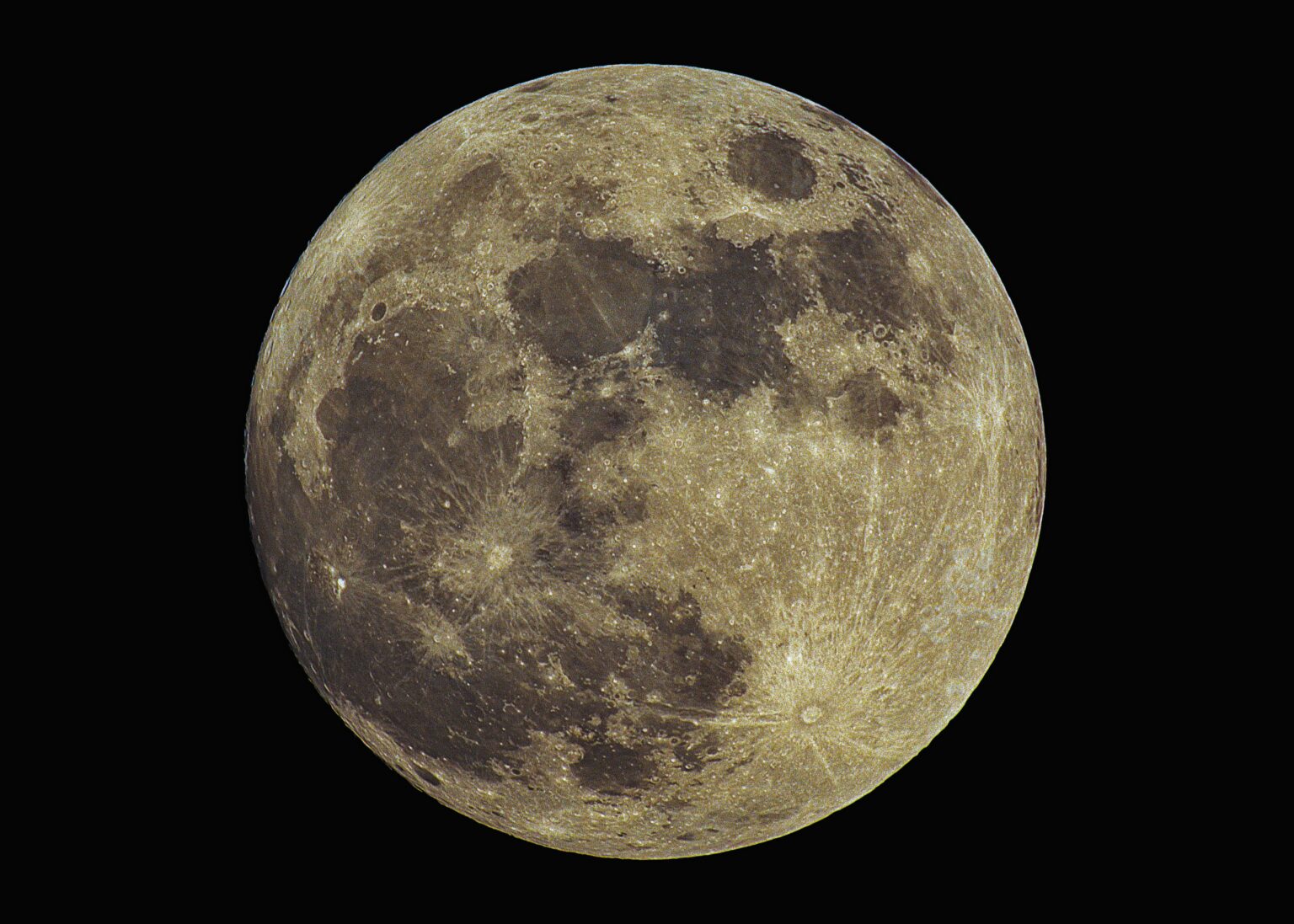
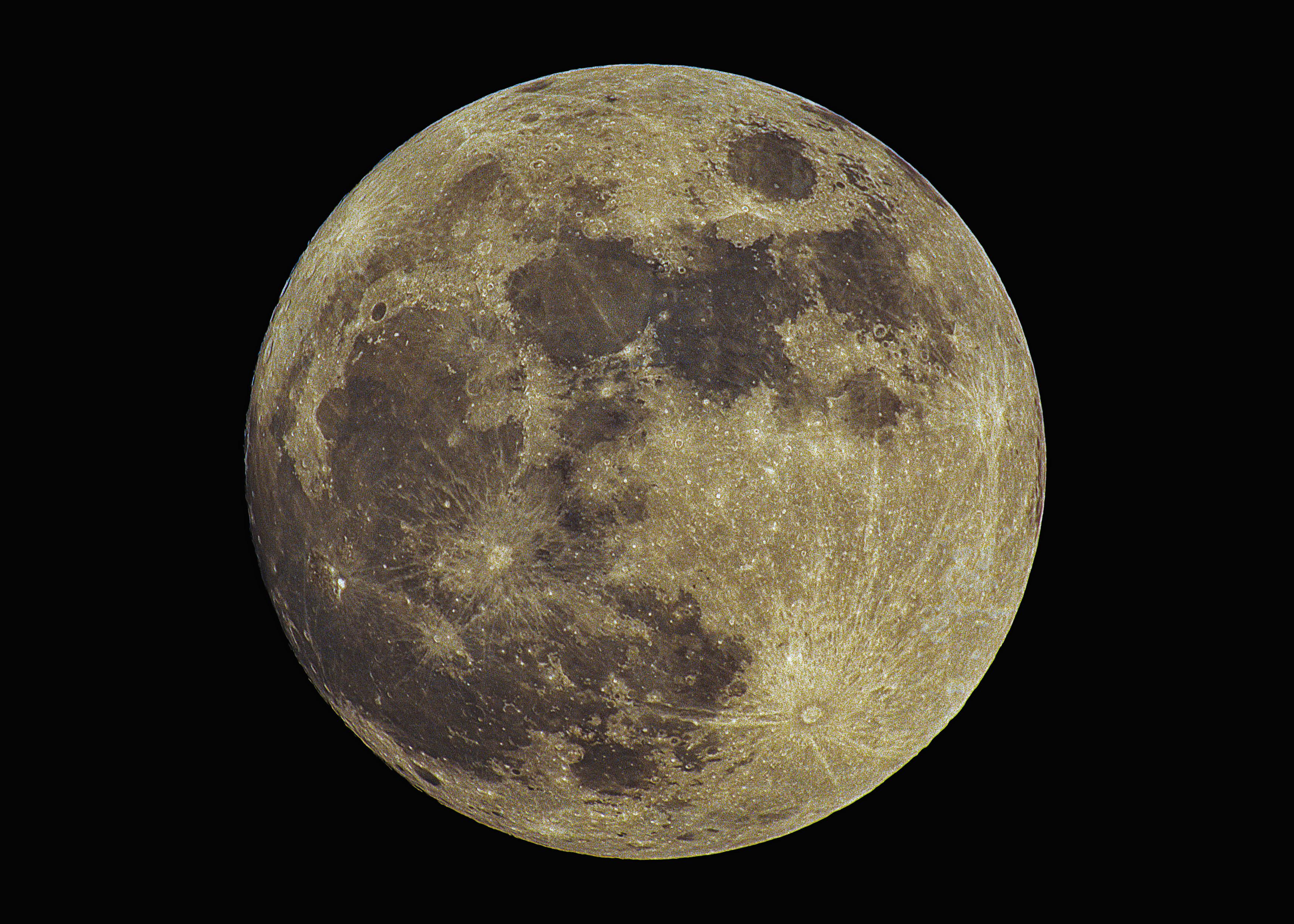
This is my first serious attempt at lunar photography since upgrading to better gear. I previously owned much weaker lenses, so I'm finally happy to show something of this quality, even though I'm a complete novice in processing.
I struggled significantly with field rotation using a regular tripod, but I eventually found a unique workflow that worked for me (described below). I am looking for criticism on how to improve.
Equipment:
Camera: Nikon D7100
Lens: Nikkor 200-500mm f/5.6
Teleconverter: Nikon TC-20E (2x)
(Effective focal length: 1000mm base, ~1500mm with DX crop body)
Standard Tripod (no tracking)
Acquisition:
Shutter Speed: 1/160s
Aperture: f/14
ISO: 125
Frames: 80 frames stacked (out of ~180 total)
Processing Workflow:
PIPP: Used for initial centering and to cull the top 80 best frames. However, the program failed to fix the severe field rotation from the static tripod.
Adobe Photoshop (Part 1): Imported the 80 best TIFF files from PIPP as a stack with "Attempt to Automatically Align Source Images" checked. This worked flawlessly to re-center and, most importantly, correct the rotation of every single frame.
AutoStakkert! 4: Stacking the pre-aligned 80 frames from Photoshop.
Registax 6: Used Wavelets for sharpening and RGB Balance for color (purely experimental, trial-and-error approach).
Adobe Photoshop (Part 2): Final adjustments in Camera Raw to pull out more color and detail (also experimental).
Questions for the Community:
- The Teleconverter Question: My current setup gives immense magnification, but the 2x TC drops me to f/11 base. I shot at f/14. I know the TC adds glass and can introduce softness.
Would I be better off removing the 2x TC, shooting on the native 200-500mm (which on my D7100 is roughly ~750mm effective), and losing magnification but gaining lens sharpness and a brighter aperture (f/5.6 base)? Which approach typically yields better final quality?
-
Acquisition Settings: Are my settings (1/160s, f/14, ISO 125) correct for this type of moon? Should I be aiming for a faster shutter speed with higher ISO to combat atmospheric seeing, or is ISO 125 the right call?
-
General Critique: As a beginner, I know I might have "overcooked" the sharpening in Registax. Any advice on how to improve my processing to get more details without the artifacts would be great.
Thanks for any suggestions!
by ulele