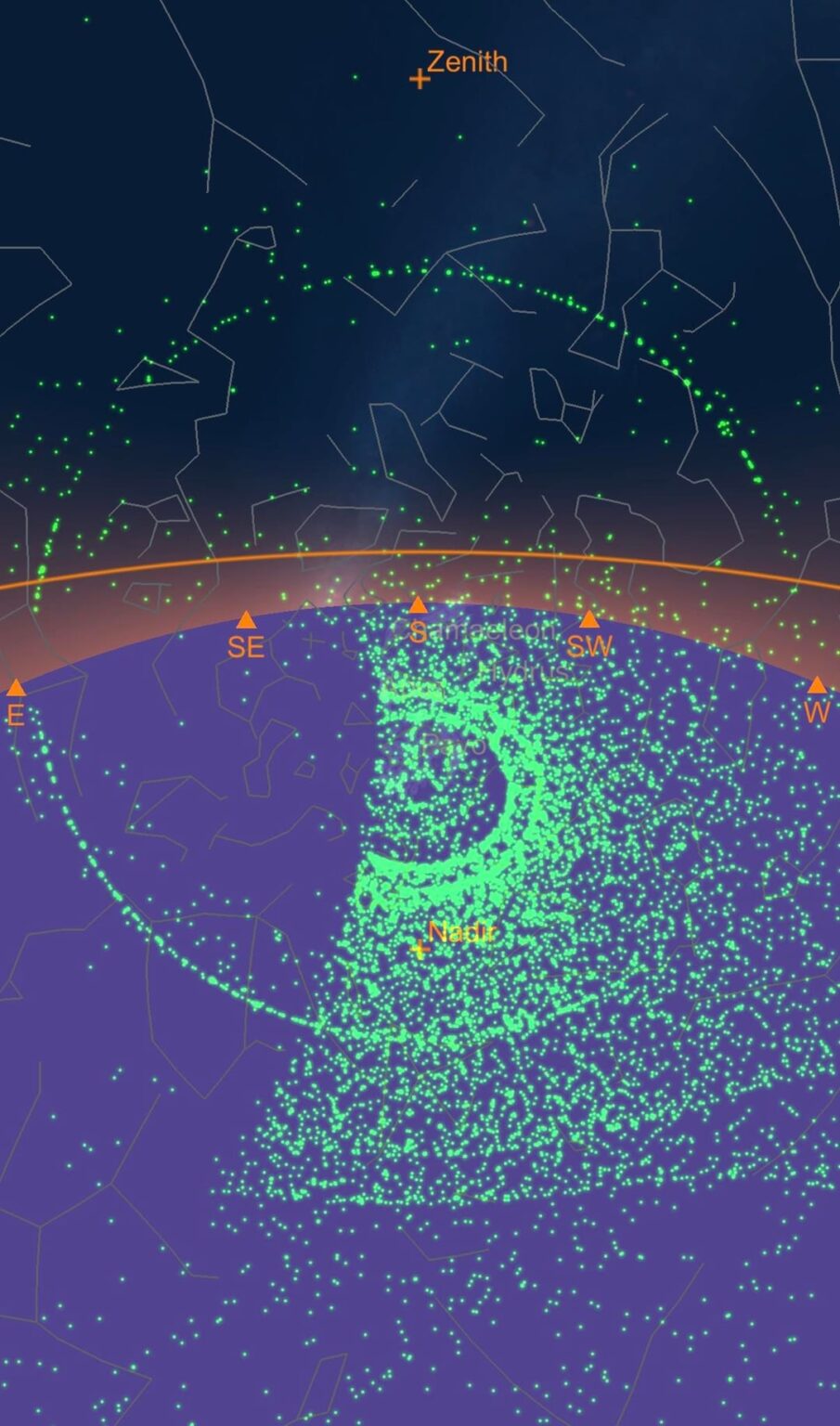
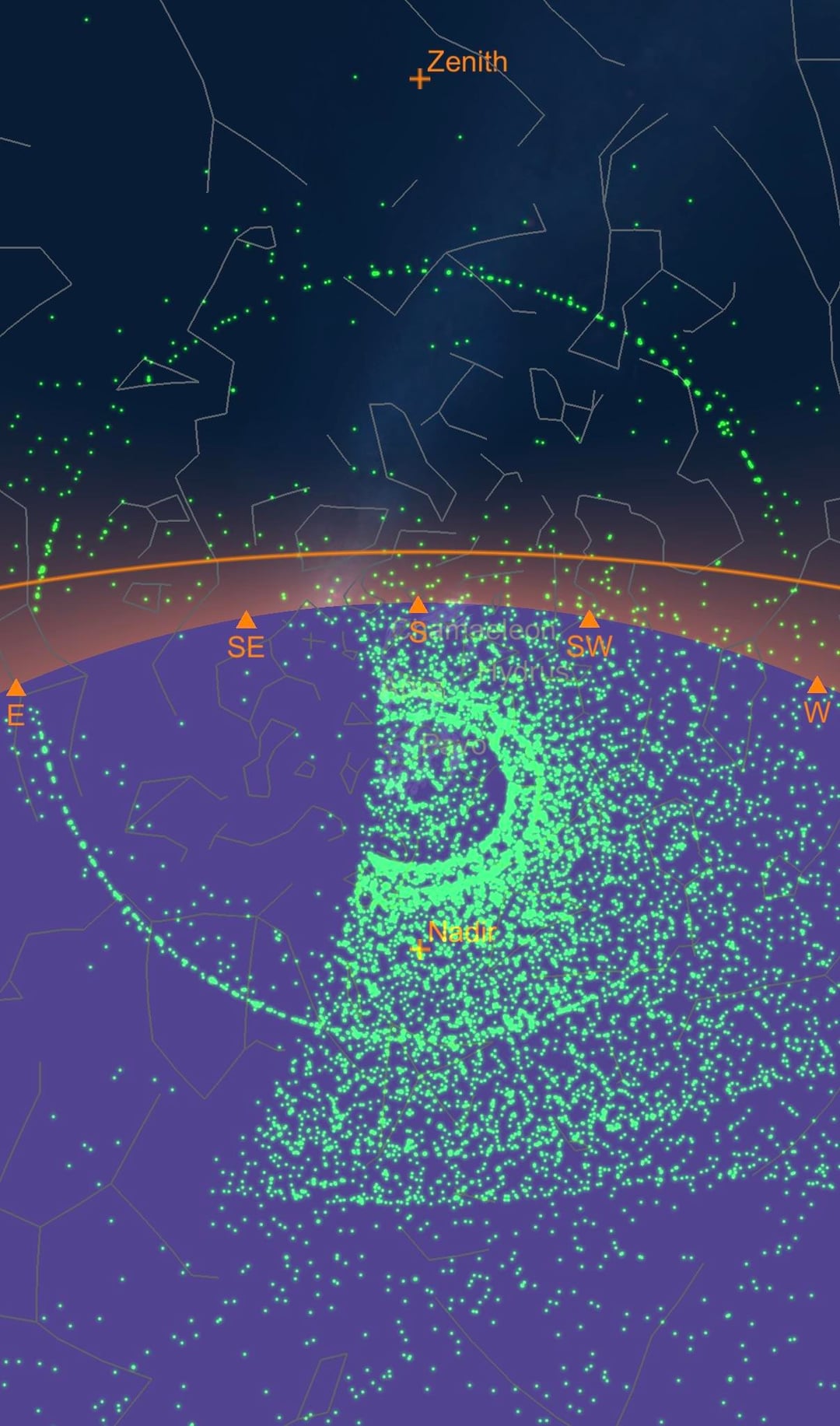
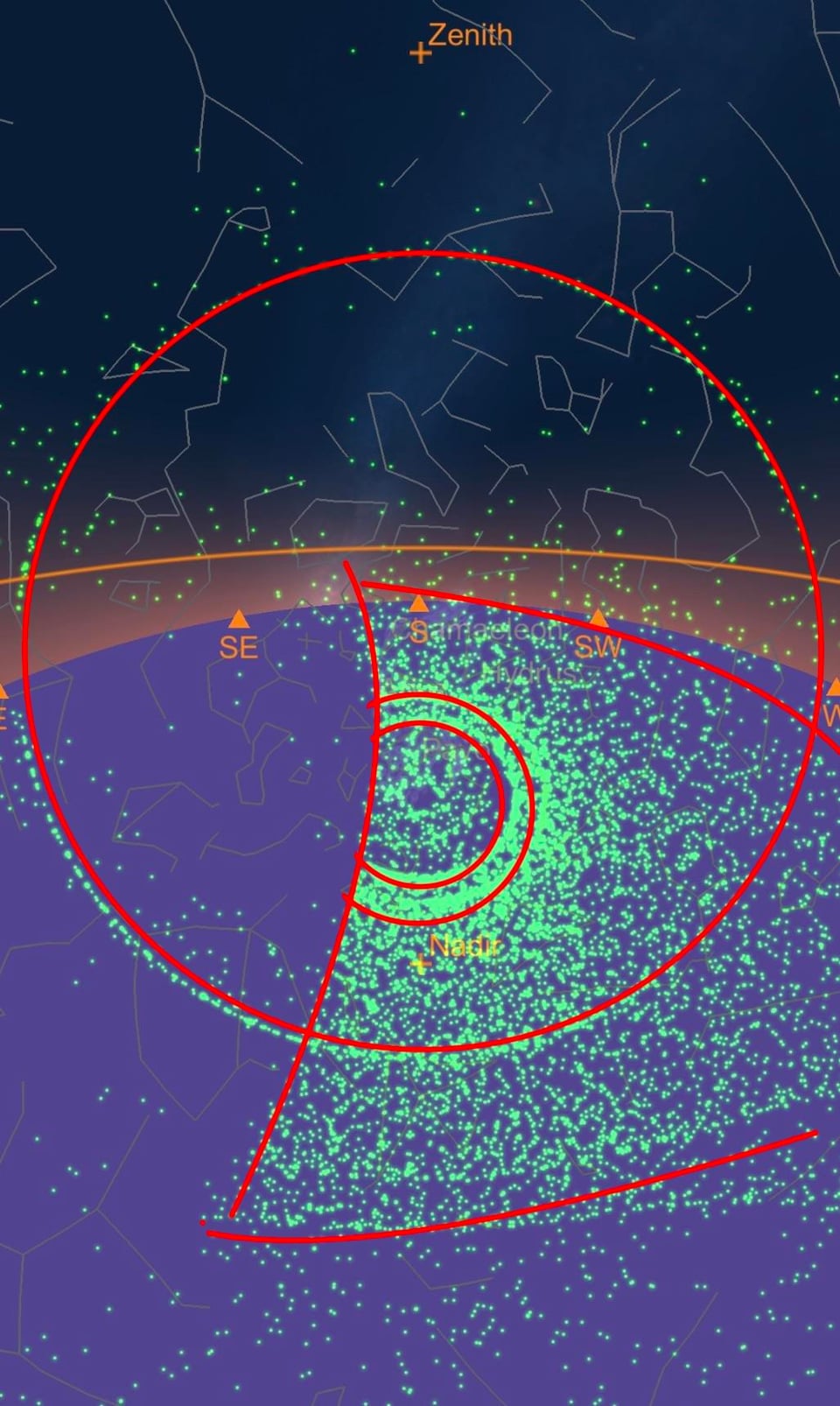
The ring could be the geostationary satellites, which like to hang out over the equater.
snogum on
The pictures wrong
exohugh on
Satellites are visible if they are in the Sun so the half of Earth in shadow is typically devoid of visible satellites (I imagine that is the dark hemisphere on the left).
Satellites with sun-synchronous orbits are pretty common. These have an inclination of 98.7 which means they never approach within 8.7degrees of either pole (and could probably cause a single ring like we see in the middle) if you’re looking at the pole. Not really sure why there’s two rings though.
The large narrow ring is from Geostationary satellites which all hug the ecliptic equator.
EDIT: I want to note that everything looks weird when you zoom out to such an unnatural projection where almost the entire sphere of visibility is fish-eyed into a flat plane.

3 Comments
Where are you and what app are you using?
The ring could be the geostationary satellites, which like to hang out over the equater.
The pictures wrong
Satellites are visible if they are in the Sun so the half of Earth in shadow is typically devoid of visible satellites (I imagine that is the dark hemisphere on the left).
Satellites with sun-synchronous orbits are pretty common. These have an inclination of 98.7 which means they never approach within 8.7degrees of either pole (and could probably cause a single ring like we see in the middle) if you’re looking at the pole. Not really sure why there’s two rings though.
The large narrow ring is from Geostationary satellites which all hug the ecliptic equator.
EDIT: I want to note that everything looks weird when you zoom out to such an unnatural projection where almost the entire sphere of visibility is fish-eyed into a flat plane.