
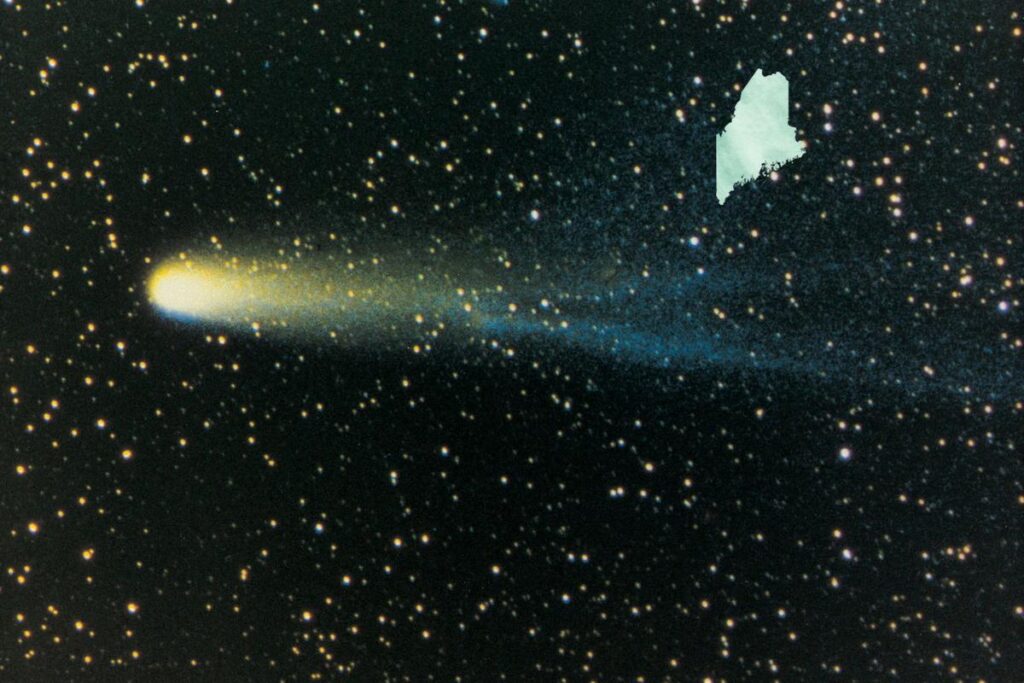
While we often have the ability to see comets, asteroids, and other near Earth objects in our skies, you normally need to use a fairly powerful telescope in order to see them. However, that is not always the case.
Later this spring, a comet will be close enough to Earth in order for you to see it using just a good pair of binoculars.
Comet C/2025 R3
The comet was first identified in images captured by a 1.8-meter Ritchey–Chrétien telescope at Haleakala, Hawaii, during the Pan-STARRS survey.
At the time, it appeared very faint, with a magnitude of around 20. Its core looked soft and diffuse, measuring about 2.5 arcseconds across, and there was no visible tail. However, follow-up observations using the Canada-France-Hawaii Telescope later revealed a broader tail stretching roughly 10 arcseconds.
By September 11, the comet was about 3.6 astronomical units from the Sun, or roughly 539 million kilometers away.
Fast forward to early March 2026, and it became visible through telescopes just before sunrise, sitting about 25 degrees from the Sun. Around mid-March, it brightened significantly to magnitude 9.
On March 20, astronomer Alan Hale was able to spot it using 10×50 binoculars, and by the following day, its tail had grown to about one degree in length.
Looking ahead, the comet will be 33 degrees from the Sun on April 7. It reaches perihelion on April 19, coming within 0.499 AU of the Sun. After that, it will pass between the Earth and Sun, potentially appearing brighter due to forward scattering. It reaches solar conjunction on April 25 and makes its closest approach to Earth the next day at 0.489 AU.
After its journey through the inner solar system, the comet is expected to be flung out, ultimately leaving the solar system behind.
Seeing C/2025 R3 in Maine
According to WGME, as it is currently approaching the Earth, the comet will start getting brighter and brighter. The comet will be at its closest on April 26th. Even at its closest, it will still be more than 73 million kilometers from the Earth.
Also, by that point, it will be moving toward a position so it will be visible in the southern hemisphere. As a result, the comet will be best visible near the horizon.
And, it is more important that even though it is going to be at its closest on April 26th, the best viewing may be on April 17. That’s the date of the new moon, meaning the skies will be the darkest.
Bowl in the Pines Concert ScheduleGet all the details about the 2026 Concert Season at the Bowl in the Pines Amphitheater HERE
9 Pandemic Trends That Stuck Around