
Published April 1st, 2026 at 3:28 pm
By Sara Atencio-Gonzales, The Paper — Albuquerque writer and journalist Ty Bannerman begins his new book with a personal question. Where do we come from, and how does history shape who we become? In his memoir Nuclear Family, Bannerman explores those questions by tracing his family’s connection to one of the most consequential scientific developments in modern history: the nuclear age.
Blending memoir, science writing and cultural history, Nuclear Family examines the legacy of atomic science in the American Southwest. The story follows Bannerman’s family back to Los Alamos National Laboratory, where relatives arrived in 1952 to work in the nuclear weapons program, a moment that became a defining origin story for the family and the foundation of the book.
“This book is a mix of science writing and history,” says Bannerman. “But at its heart it’s a self-reflective memoir.”
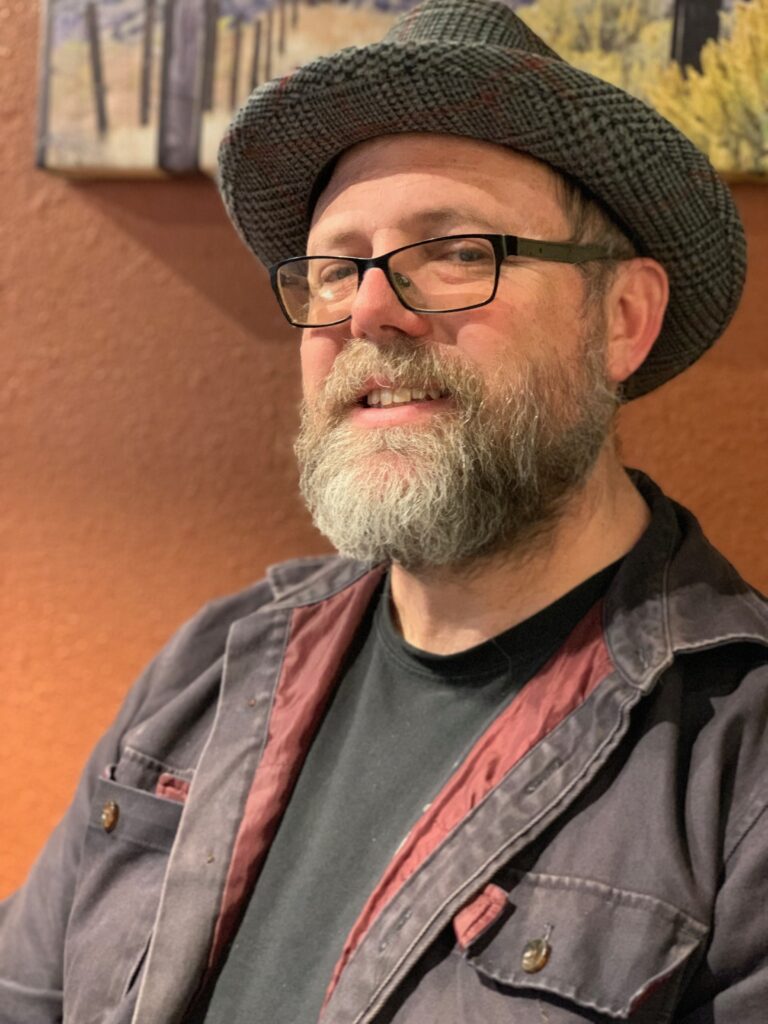 Ty Bannerman (Courtesy photo)
For Bannerman, writing the book was a way to understand how his personal history intersects with a much larger global story. The atomic industry has shaped communities, politics and the environment for decades, but it has also shaped families, including his own.
“What you’re trying to do is understand your place in the world,” says Bannerman. “Looking at my family history also made me try to understand the nature of nuclear science and how that contributed to my family legacy, as well as who we are today.”
Bannerman’s connection to Los Alamos began before he was born. His family moved there in the early 1950s, joining thousands of scientists, technicians and workers who supported the United States nuclear weapons program during the Cold War. Within his family, that moment became a defining narrative. “It became our origin myth,” says Bannerman.
Bannerman spent his earliest years in Los Alamos before his family relocated to Texas when he was 4 years old. Although his memories of the town are faint, they remain vivid in feeling. “My memories are hazy, but they’re very beautiful,” says Bannerman. “They’re filled with pine trees and walks in the woods with my grandmother.”
The move away from New Mexico marked a turning point in his childhood. Bannerman’s family settled in a small town outside Houston, and the contrast shaped how he remembered his early life. “I felt like everything was perfect when we were in Los Alamos,” says Bannerman. “It was like being pulled away from paradise.”
As he grew older and returned to New Mexico for college, Bannerman began to examine the deeper history behind that childhood image. The town that once seemed idyllic was also the birthplace of the atomic bomb and a center of ongoing nuclear research.
“You realize things are much more complicated,” says Bannerman. “Los Alamos is a beautiful place, but it also has tremendous problems.”
That realization became the starting point for years of research. Bannerman immersed himself in scientific texts, historical archives and interviews while writing the book. Research also took him into the New Mexico desert, where traces of the nuclear program still remain.
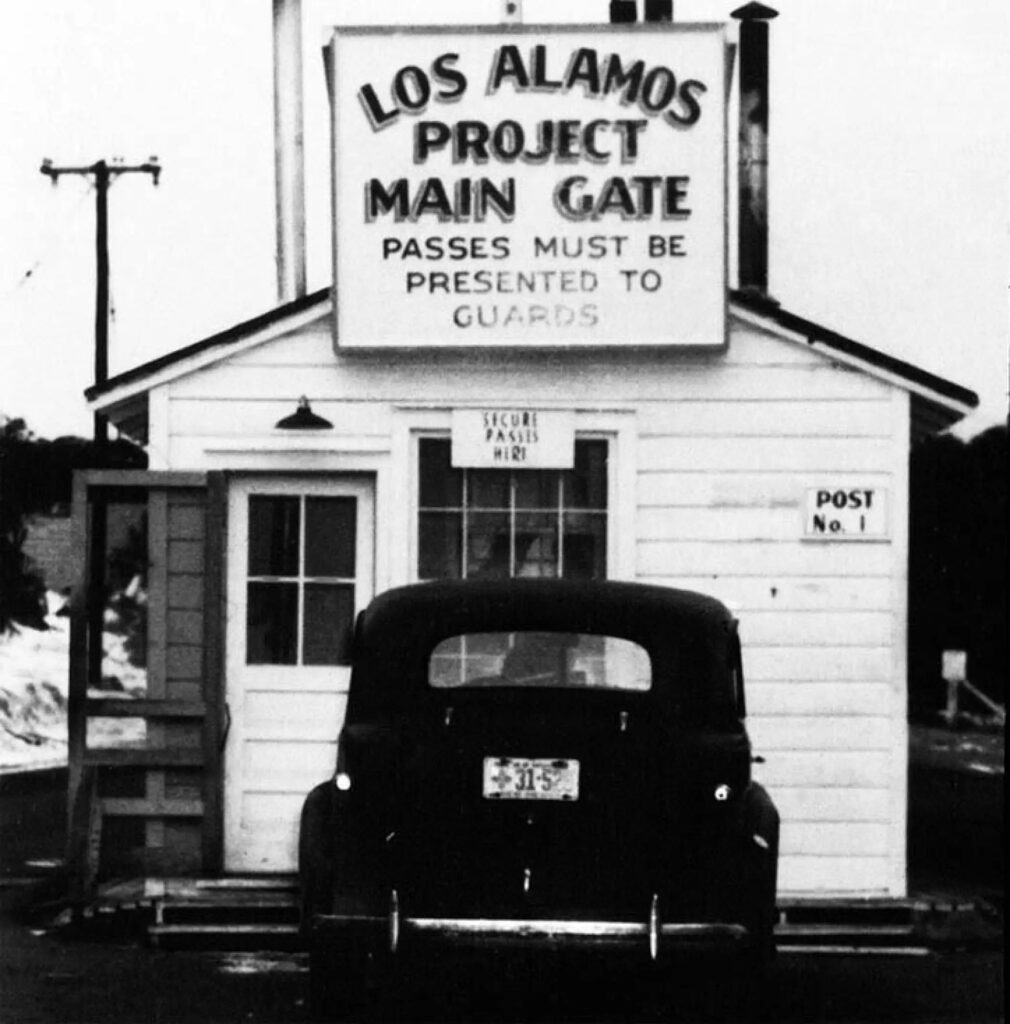 The checkpoint outside of Los Alamos during the Manhattan Project (Courtesy Ty Bannerman/UNM Press)
“I went out looking for long forgotten houses in the New Mexico desert near the Trinity site,” says Bannerman.
Through that research Bannerman pieced together a narrative that moves between personal reflection, historical investigation and scientific explanation. One of the central themes of the book is the complicated relationship he has with his own family history.
Bannerman’s grandfather worked as a technician at Los Alamos and later became a scientist, patenting a device used to measure neutron bursts from radioactive materials.
Growing up, Bannerman explains that accomplishment was a source of pride within the family. But as he learned more about nuclear weapons, he began to wrestle with the moral implications of that work.
“My family was extremely liberal, and yet they came to Los Alamos to help build triggering devices for bombs,” says Bannerman.
Over time, members of his family confronted those contradictions themselves. During the Vietnam War, some relatives protested the conflict and questioned the growing nuclear arms race. “I feel a lot of pride in their journey,” says Bannerman. “And a lot of compassion for them as well.”
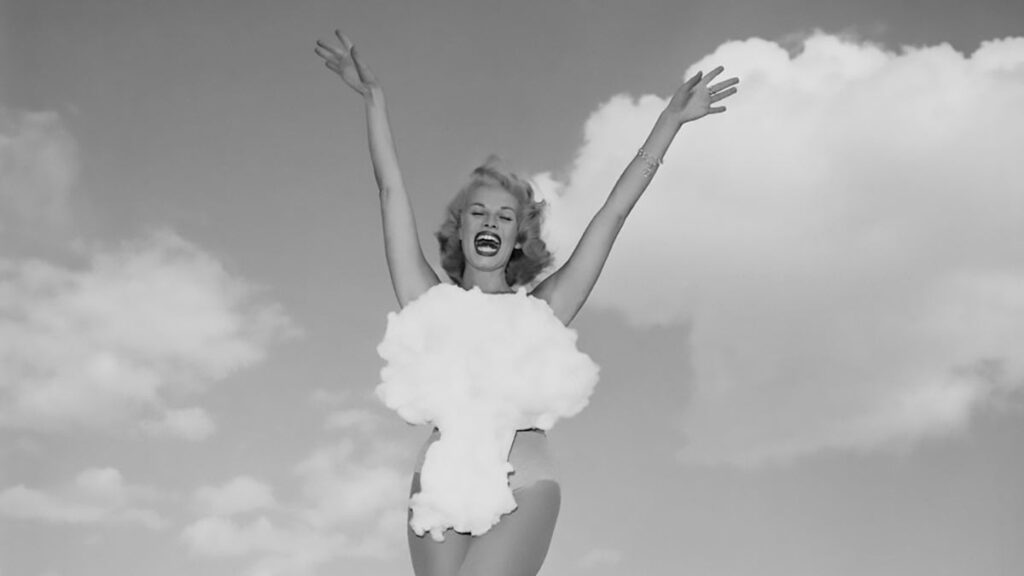 Miss Atomic Bomb 1957 of Las Vegas Nevada (Photo by Anna Lee Mahoney)
Rather than judging earlier generations, Bannerman tries to understand the circumstances that shaped their decisions. “I can’t say it was wrong for you to go and contribute to nuclear weaponry,” says Bannerman. “I understand their decision. It made a lot of sense at the time.”
One of Bannerman’s central arguments is that the nuclear story did not end decades ago. The effects of the Manhattan Project continue to shape modern life.
“The big misunderstanding about the Manhattan Project is that it’s a quaint historic story that happened 80 years ago,” says Bannerman. “It’s an ongoing story.”
Facilities in Los Alamos continue nuclear weapons research, and the waste produced by the industry will remain dangerous for thousands of years. Managing that material is a responsibility that stretches far beyond any generation.
“Some waste is going to have to be dealt with over 300,000 years, even a million years,” says Bannerman. “We as individuals can’t really comprehend that.”
The book also explores how Americans processed the anxiety of the atomic age through pop culture. Bannerman examines everything from Cold War monster movies to comic book heroes as ways people tried to make sense of nuclear power.
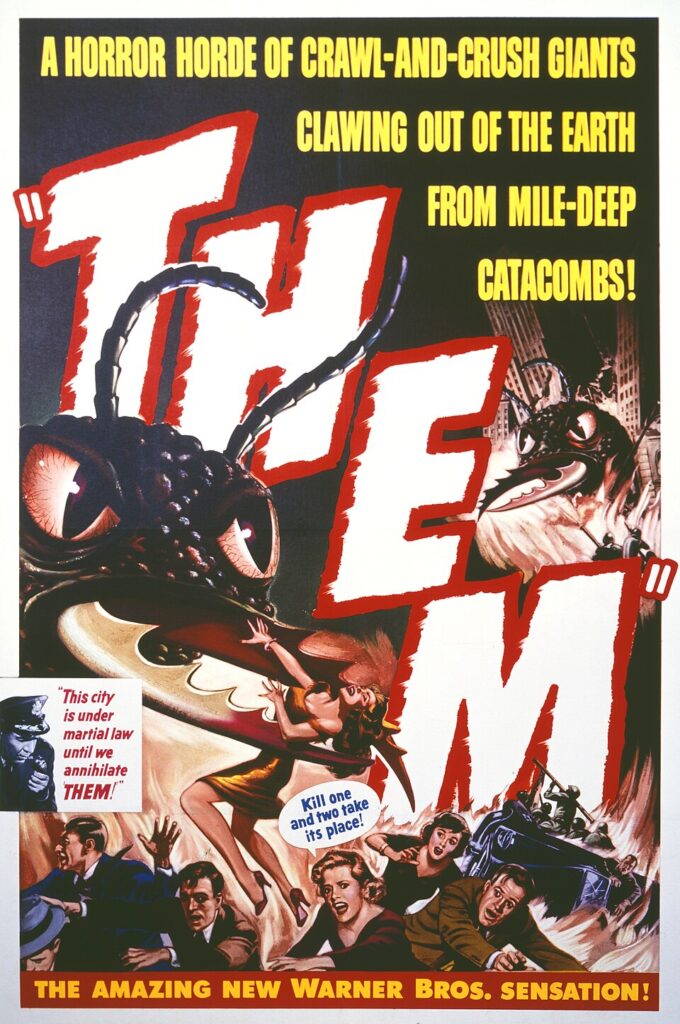 Atomic age horrors by way of Hollywood (Courtesy Warner Bros.)
Those cultural responses ranged from novelty pageants celebrating atomic imagery to films featuring giant monsters created by radiation. Bannerman also reflects on the character of the Hulk, a comic book hero created through gamma radiation.
“The Hulk is a superhero that is part monster,” says Bannerman. “Part of his problem is that it’s made his emotions impossible to control.”
For Bannerman, the character became a metaphor for both nuclear technology and the emotional history within his own family. The book explores generational trauma, anger and unresolved conflicts that echo across decades.
Despite its heavy subject matter, Nuclear Family ultimately returns to the idea of connection. While studying nuclear science, Bannerman became fascinated by the cosmic origins of matter and energy.
“All matter and energy in the universe appeared at roughly the same time,” says Bannerman. “And that was all of us too.”
From that perspective, the nuclear age is not just a scientific or political story. It is a human story that touches everyone. “We are all connected to this now,” says Bannerman.
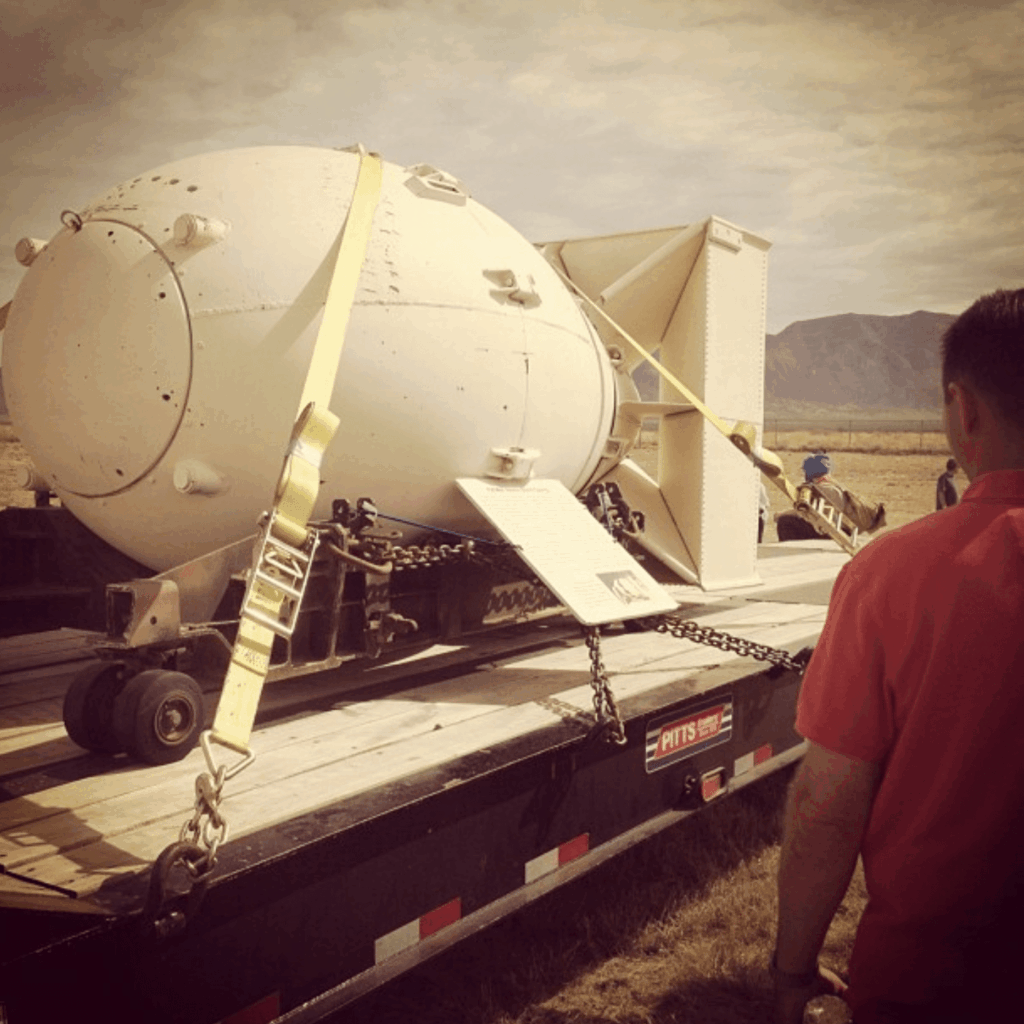
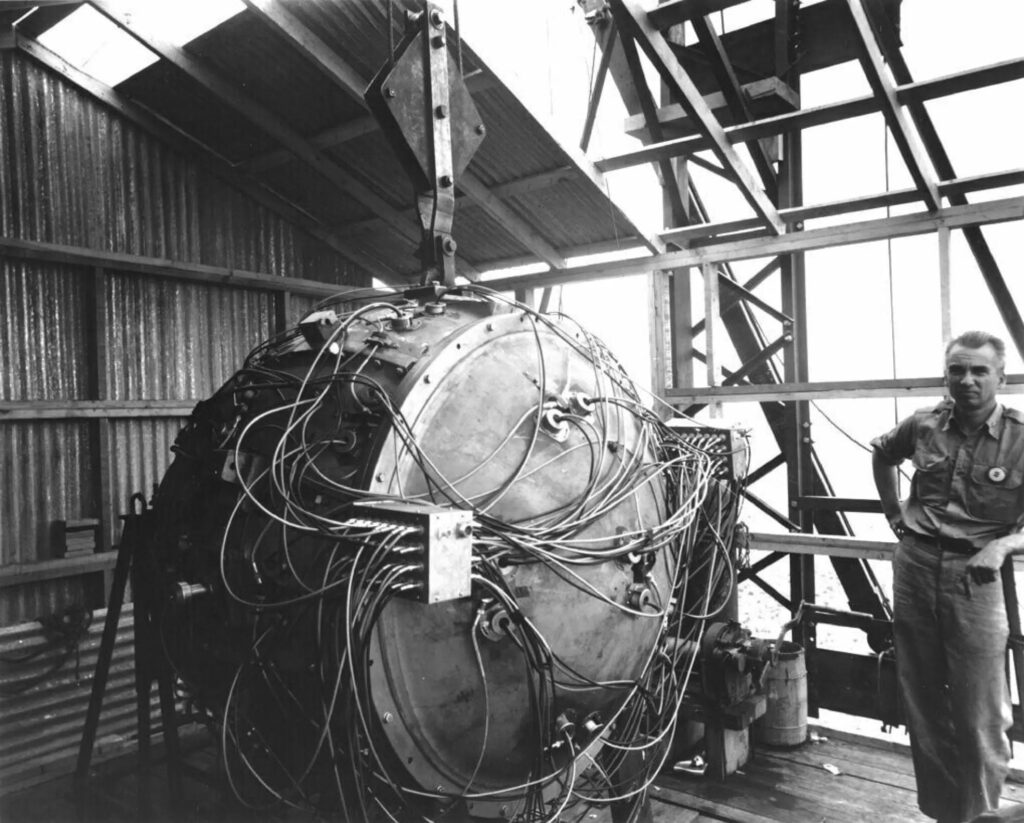 The explosive device detonated at the Trinity Site, known as the Gadget. (Source: Los Alamos National Laboratory)
That sense of connection gives the book both urgency and hope. The nuclear technologies created in the twentieth century carry enormous destructive potential, but Bannerman believes they also challenge humanity to think more carefully about responsibility and the future.
“The story of human history is mostly a story of people trying to do good,” says Bannerman.
Nuclear Family asks readers to confront the complicated legacy of the atomic age while recognizing the human stories behind it. Through the lens of one family’s history, Bannerman invites readers to reflect on how the past continues to shape the present and the world future generations will inherit.
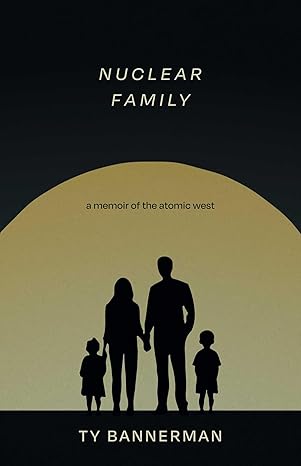 Ty Bannerman
Nuclear Family can be found through the University of New Mexico Press website (unmpress.com), as well as through major online retailers and independent bookstores. Copies are also available at many local bookstores across Albuquerque and Santa Fe.
Related