
The interstellar comet 3I/ATLAS may be more than just the strangest space object astronomers have ever observed within our solar system—it could also be one of the oldest.
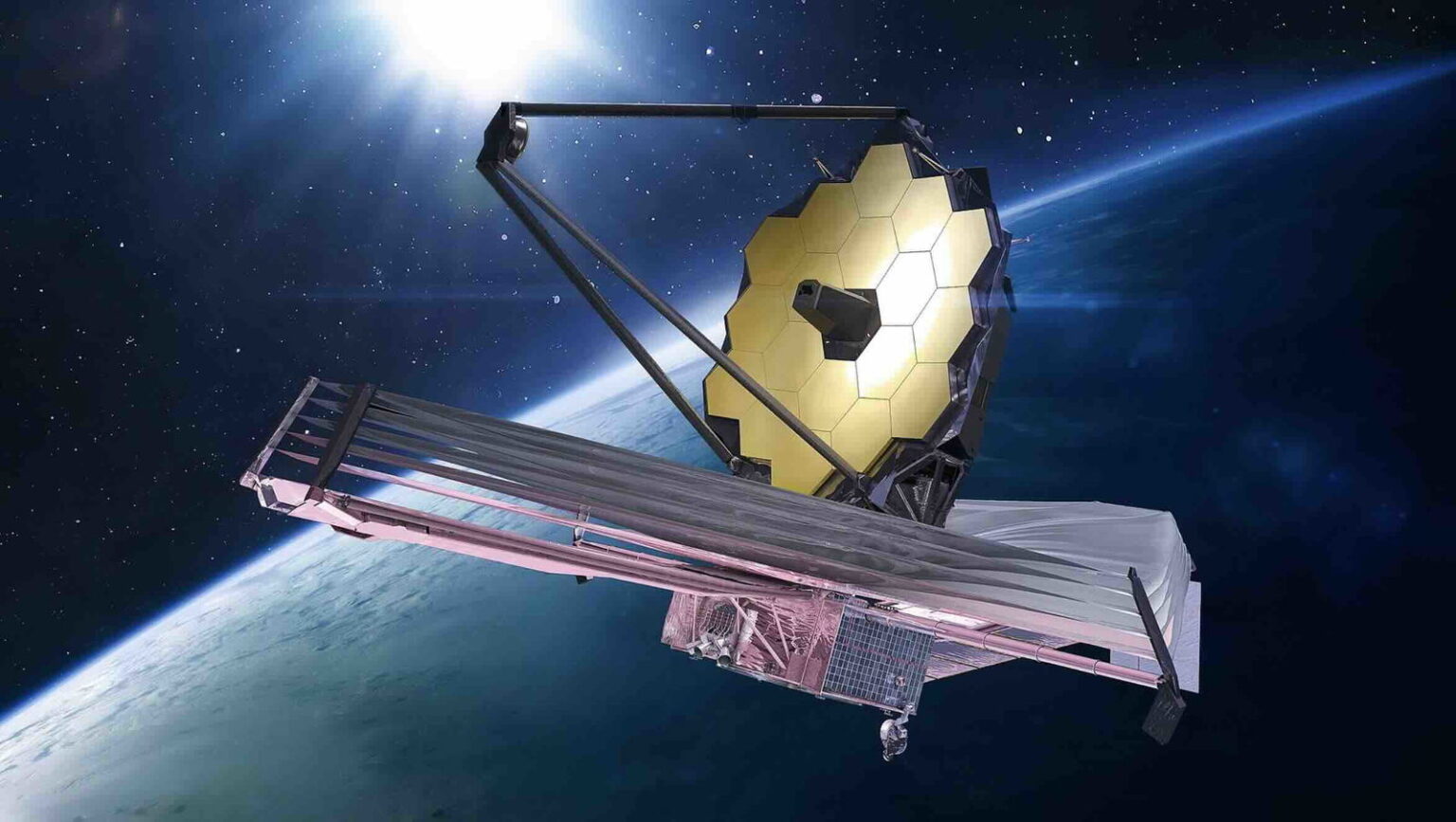
The new findings were made possible by data collected by NASA’s James Webb Space Telescope, as revealed in a new preprint paper, which suggests the mysterious space invader could be up to 12 billion years old, making it as old as the Milky Way Galaxy.
Objects from interstellar space like 3I/ATLAS are relatively rare, and only two others like it—1I/Oumuamua and 2I/Borisov—have been confirmed, although it is very likely that others preceded these space visitors before the technologies that allow us to detect them in the present day.
However, these objects are important because they offer astronomers a unique opportunity to glimpse the chemistry of worlds far distant from our solar system.
“Interstellar objects provide the only directly observable samples of icy planetesimals formed around other stars, and can therefore provide insight into the diversity of physical and chemical conditions occurring during exoplanet formation,” write the authors of a new paper that appeared at the arXiv preprint server.
Their study, which draws from data collected by the James Webb Space Telescope, offers isotopic measurements of 3I/ATLAS, which they say “reveal an elemental composition unlike any Solar System body.”
As previously reported by The Debrief, among the unique discoveries the team behind the new paper found was an unusually high abundance of enriched deuterium, a discovery that has attracted attention in recent days due to its association with nuclear fusion fuel here on Earth, where its presence is far more abundant than in other parts of the cosmos.
However, while the presence of deuterium—also known as “heavy hydrogen”—has prompted the inevitable speculations involving possible alien technosignatures, the team behind the research interprets this discovery a bit differently.
“Such extreme isotopic signatures indicate formation at temperatures [of about 30 Kelvin] in a relatively metal-poor environment, early in the history of the Galaxy,” the team writes in their paper. “When interpreted with respect to models for Galactic chemical evolution, the carbon isotopic composition implies that 3I/ATLAS accreted roughly 10–12 billion years ago, following an early period of intense star formation.”
In other words, based on the isotopic signatures detected during Webb’s observations of 3I/ATLAS, it seems very likely that the strange interstellar visitor is extremely old, hailing from a vastly ancient period in the cosmos.

“3I/ATLAS thus represents a preserved fragment of an ancient planetary system, and provides direct evidence for active ice chemistry and volatile-rich planetesimal formation in the young Milky Way,” the team reports.
Thus, as astronomers continue to observe 3I/ATLAS and its many peculiarities, its unique chemical composition and other unusual qualities have been revealed as only one part of what makes it so intriguing—the comet is also probably one of the oldest objects astronomers have ever observed in relatively near-proximity to Earth, since it entered our solar system last summer.
Altogether, spectroscopic detections of 3I/ATLAS provide a look at the unique chemistry of distant worlds, and with its suspected extreme age, astronomers are now also able to glimpse a window to much earlier events in our universe as the mysterious interstellar visitor continues its journey through our planetary neighborhood, and on towards whatever new cosmic adventures await it.
The team’s new paper can be found at the arXiv.org preprint website.
Micah Hanks is the Editor-in-Chief and Co-Founder of The Debrief. A longtime reporter on science, defense, and technology with a focus on space and astronomy, he can be reached at micah@thedebrief.org. Follow him on X @MicahHanks, and at micahhanks.com.