
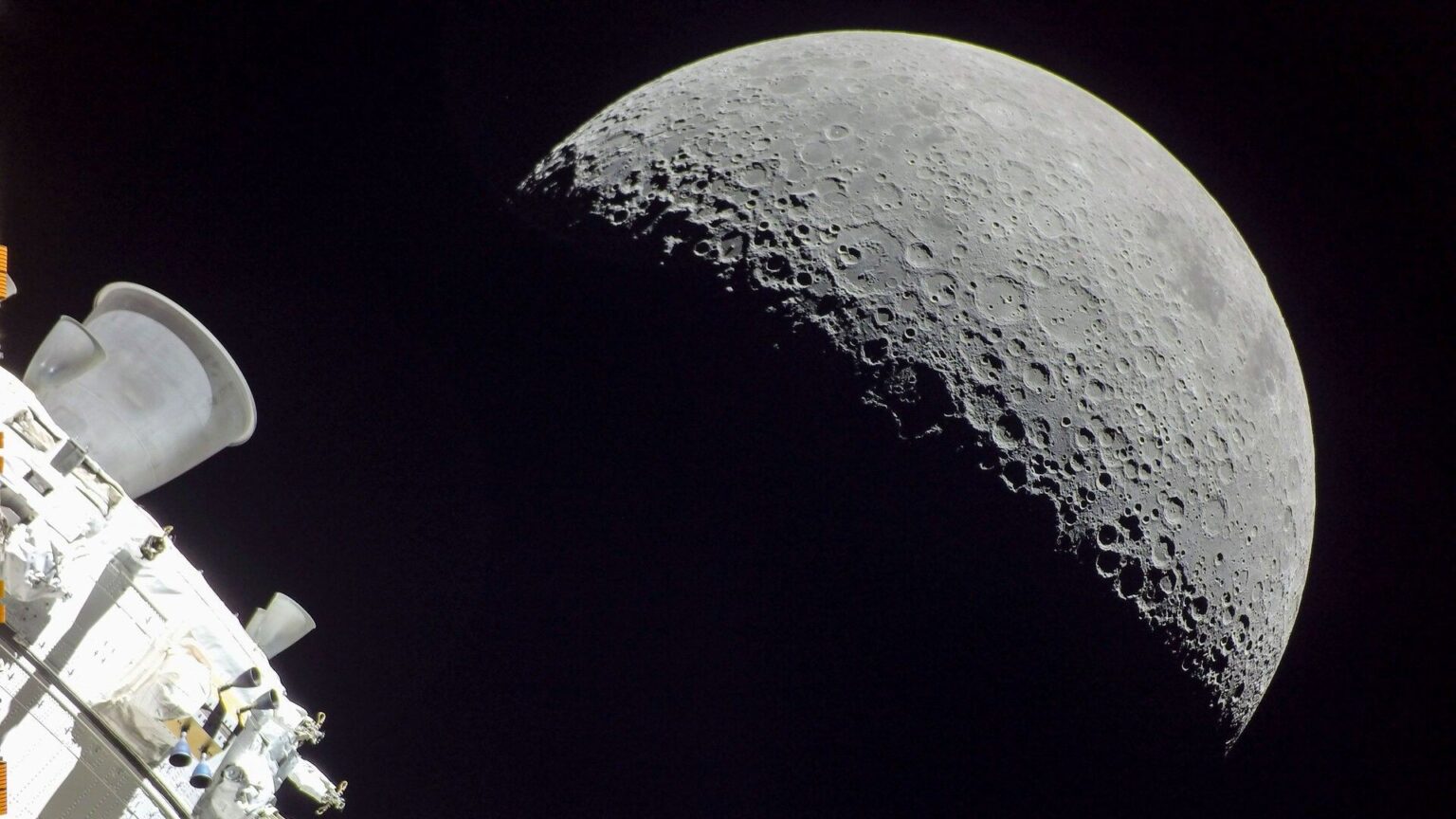
NASA’s Artemis 2 mission will send four astronauts outward to the moon, far beyond the shielding cocoon of Earth’s magnetic field.
This first piloted sojourn of the Artemis program — a 10-day outing targeted to launch on April 1 — will be the first human passage over that distance since the final Apollo flight ended in December 1972.
To support the flight, there has been a sharpening of space weather forecasting skills — an ability to better gauge the sun’s activity and to help assure crew safety if a hazardous uptick in solar action rears its energetic head.
Article continues below
You may like
High doses
Earth’s atmosphere and magnetic field protect us from the steady stream of radiation and charged particles released by the sun. But solar flares and coronal mass ejections (CMEs) — huge eruptions of solar plasma — could be a threat to Artemis astronauts venturing far beyond our planet, as could cosmic rays, which originate far beyond our solar system.
So, how much of a threat does space radiation pose to the four Artemis 2 astronauts, who will journey beyond the moon in their Orion capsule?
For Artemis 2, the National Oceanic and Atmospheric Administration (NOAA) and NASA are partnering to provide space weather support and radiation-hazard warnings.
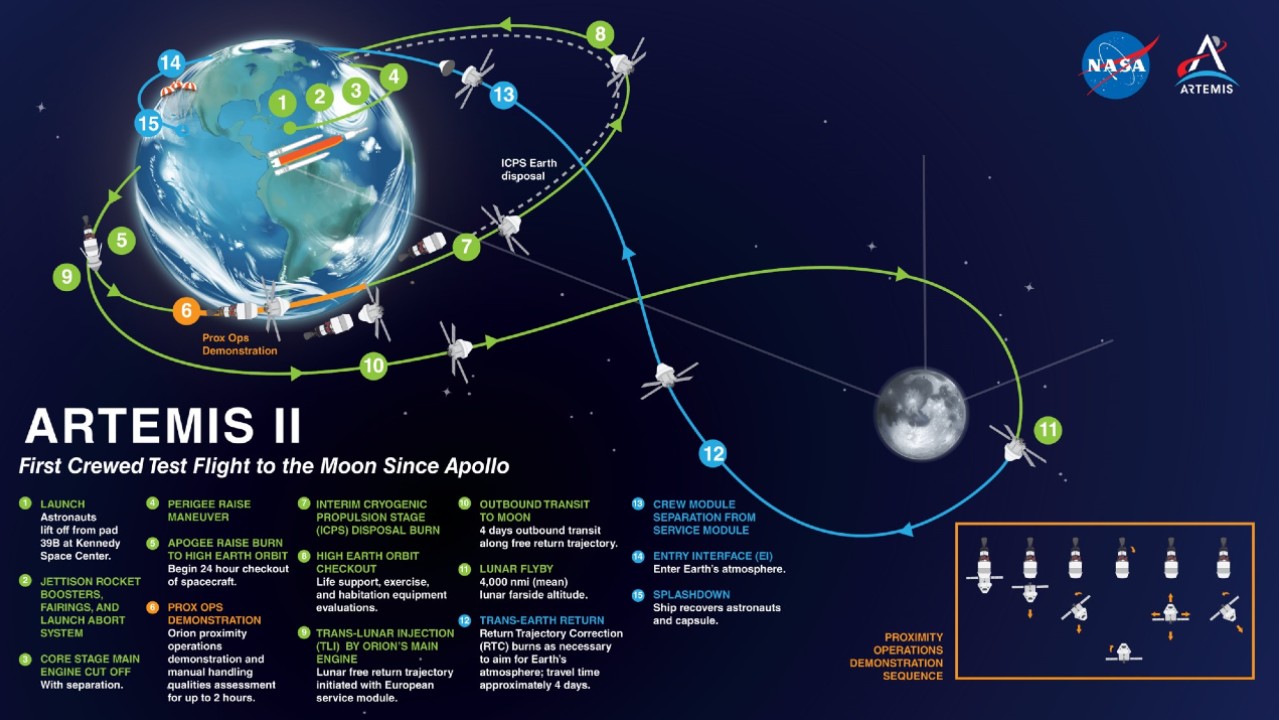
A diagram of the Artemis 2 mission. (Image credit: NASA)Decision-makers
Shawn Dahl is a service coordinator at NOAA’s Space Weather Prediction Center (SWPC) in Boulder, Colorado.
“We at SWPC are fully prepared to support the Artemis 2 mission,” Dahl told Space.com. The SWPC team is currently slated to have a pair of forecasters present at NASA’s Johnson Space Center in Houston, working side by side with Space Radiation & Analyses Group (SRAG) experts for the entirety of the mission, he said.
“SWPC forecast operations here in Boulder will of course be the decision-makers on any forecasts that could impact the mission; however, the in-place forecasters will be there to provide instant decision-support should any solar energetic proton event (SPE) occur during the mission,” Dahl said. “The deployed SWPC forecasters will be in close and continual contact with our SWPC forecasters back in Boulder.”
Read more: Powerful X-class solar flare triggers radio blackout ahead of Artemis 2 launch
What to read next
Justified concern
Dahl said that, at this time, he and his colleagues have no way of knowing what the sun might have in store for the Artemis 2 launch or the mission overall. “Perhaps we will get a better feel for that in the week or so prior to launch,” he said.
A thing to keep in mind, Dahl said, is that we are still in solar maximum, a high point in the sun’s 11-year activity cycle — although activity may now be trending down.
“But, significant solar radiation storms have happened as we are coming down from solar maximum in the past,” said Dahl. “Therefore, there is still justified concern for planning’s sake should an extreme storm occur during the mission.”
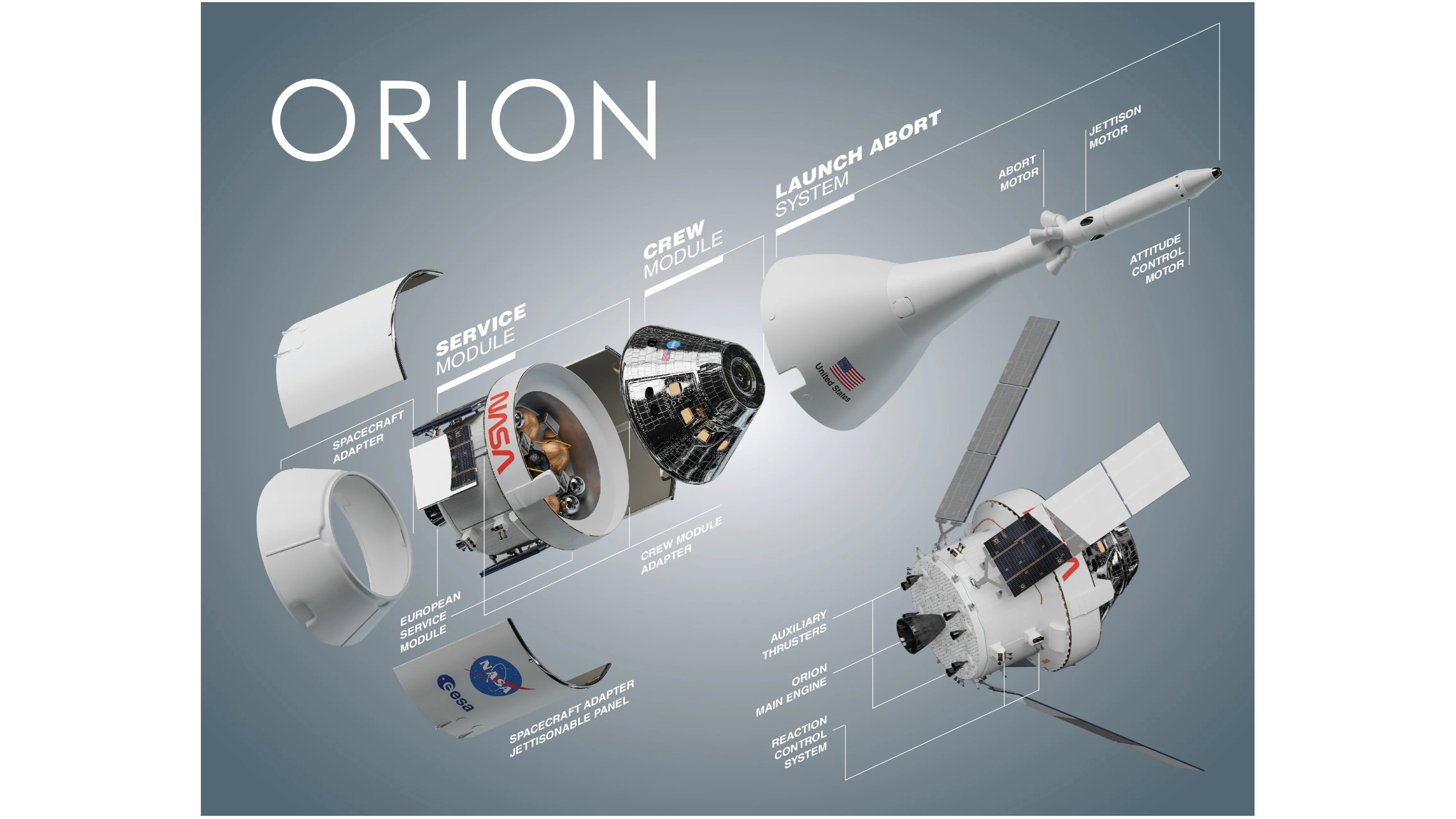
Artist’s concept of the components of the Orion spacecraft. (Image credit: NASA)Testbed exercise
In support of Artemis 2, a testbed exercise was held at SWPC in April and May of 2025. More than 70 participants from NASA, the U.S. Air Force, commercial space companies and leading research institutions took part in the exercise.
Each exercise spanned 2.5 days and was designed to strengthen collaboration among the SWPC, NASA’s SRAG, the space agency’s Moon to Mars Space Weather Analysis Office, the Department of Defense (DoD), private-sector industry experts and the academic research community.
Participants collaboratively worked through a simulated radiation storm scenario and evaluated space weather products.
The hands-on, immersive experience assisted in honing space weather forecasting activities, not only for Artemis 2 but also the future. NASA, after all, wants to build a crewed lunar outpost in the next few years and eventually launch human expeditions to Mars.
‘Optimistically confident’
“From a purely space weather perspective, I think we’re feeling optimistically confident right now,” said Jamie Favors, space weather program director in the Heliophysics Division at NASA headquarters in Washington, D.C.
“We have continued to improve, both on the technical side and in communications, how the various groups talk to each other,” he told Space.com.
Favors said an array of consensus-building space weather modeling tools will be in play during the Artemis 2 flight, which will be the Artemis program’s first crewed mission.
“It’s very similar to hurricane forecasting. You want to see what all the models are saying and to see where there’s a central line, to get a sense of confidence in what might be coming,” said Favors.
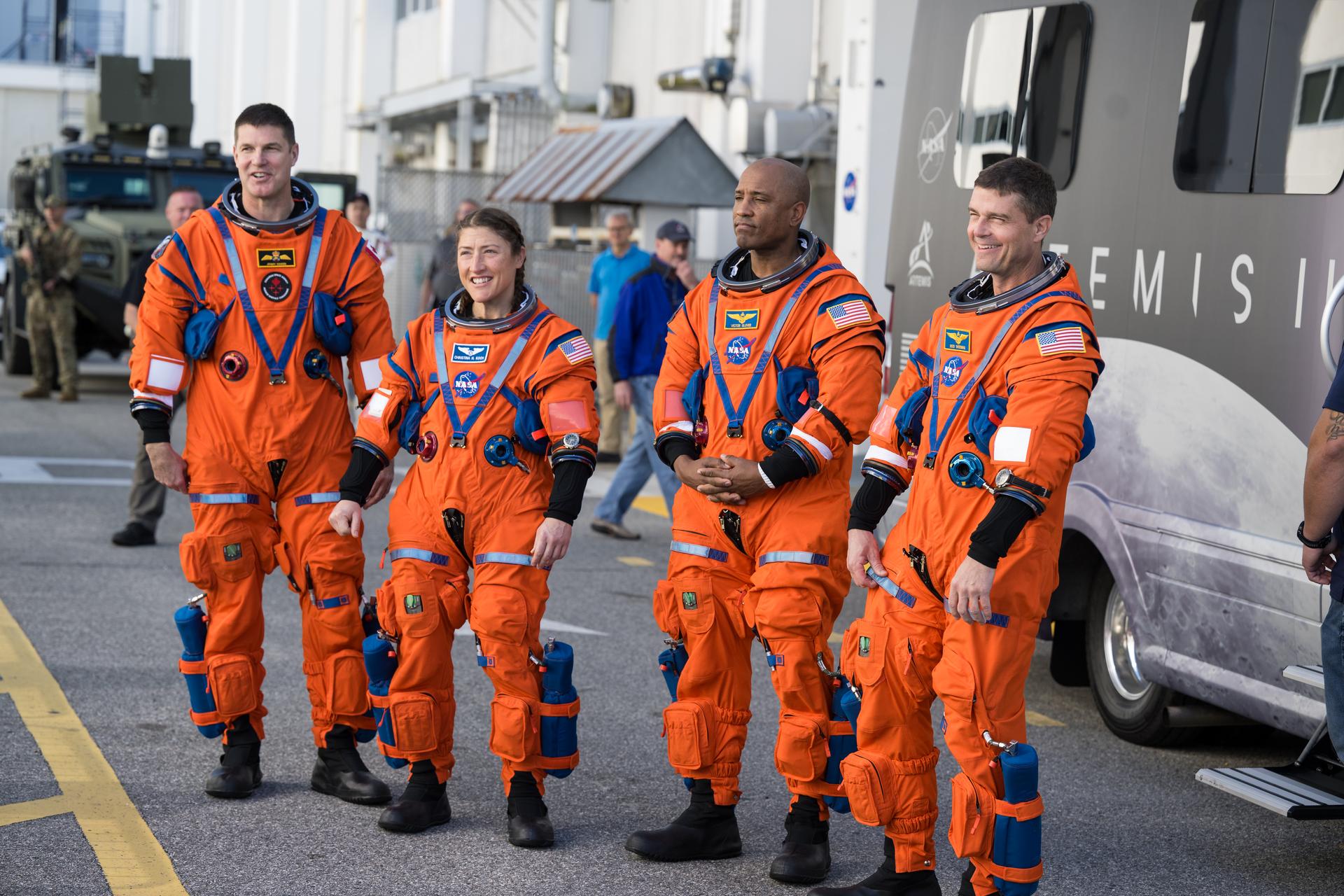
The Artemis 2 astronauts. From left: Canada’s Jeremy Hansen and NASA astronauts Christina Koch, Victor Glover and Reid Wiseman. (Image credit: NASA/Aubrey Gemignani)Working 24/7
The trio of space weather teams — NOAA’s SWPC, NASA’s SRAG and the Moon to Mars Space Weather Analysis Office — “will be working 24/7 during the mission, keeping an eye on everything as the mission goes on,” Favors said. “We provide both the all-clear forecasting and ‘Hey, we’ve had an event.’”
Data gleaned from in-space assets and ground observations will be fed into space weather forecasting models, Favors said. A huge part of the story is data — and the more data the better, he said.
“There’s a lot of analogous thinking on what’s happening in our ability to forecast weather here on Earth. And it’s very true for space weather,” said Favors. “We have put a lot of work into this for decades now. I think we’re in a good spot to make sure the crew knows exactly what the space weather environment is and could be for them during the 10-day mission.”